
Where does Europe stand on the US-Israel war with Iran?
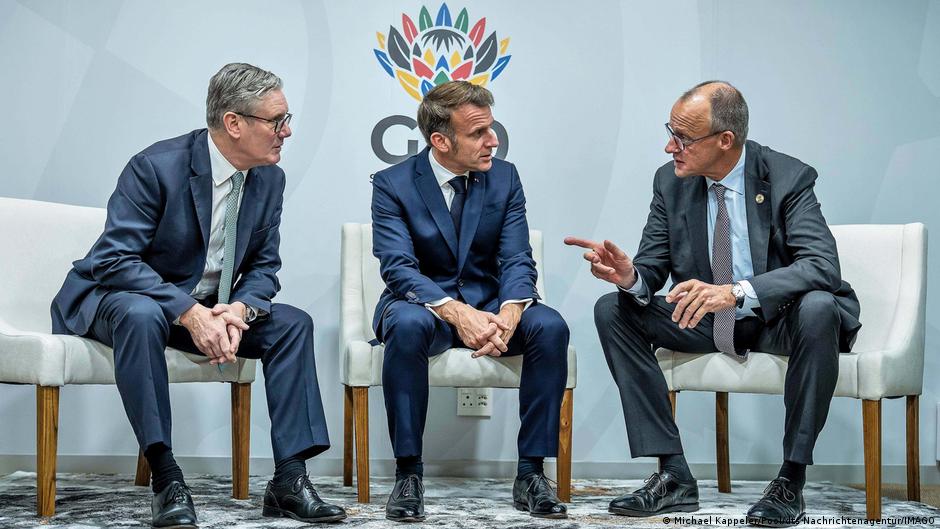
Where does Europe stand on the US-Israel war with Iran?
European Responses to Escalating Tensions
As the conflict between the United States, Israel, and Iran grows more intense, the European Union and its allies are being closely watched for their stance. Despite urging adherence to international law and criticizing Iran’s leadership, European nations have struggled to present a cohesive strategy. The lack of unity has raised concerns about their effectiveness in addressing the crisis, which could have far-reaching consequences for the region and beyond.
Defensive Posturing and Strategic Divisions
Experts suggest that European countries are primarily adopting a defensive posture rather than committing to military action. Cornelius Adebahr of the German Council of Foreign Relations notes that EU members and the UK share a consensus on protecting European territories and supporting Gulf nations through available means. However, they remain split on the extent of their support for the US’s aggressive approach against Iran.
“There will be no unified position on the war,” Adebahr stated. “None of the member states will enter the war directly; they will not play an active role alongside the US or Israel.”
Trump’s Pressure on European Allies
White House Press Secretary Karoline Leavitt emphasized President Donald Trump’s expectation for European allies to back the US and Israel’s campaign against Iran. She framed the objective as dismantling “the rogue Iranian regime” that endangers both American interests and European partners. This pressure followed a visible delay in European backing, with Trump critiquing the UK’s hesitation, likening it to a lack of resolve compared to historical leaders.
Country-Specific Approaches
While the UK allows US forces to use its bases, it has expressed skepticism about the legality of the conflict. In contrast, German Chancellor Friedrich Merz earned praise from Trump for aligning with the goal of removing Iran’s “terrible regime.” France, too, has permitted American planes to use its facilities, but only after securing assurances they would not target Iran. Italy remains noncommittal, having not received direct requests from the US to deploy its bases, though it is open to supplying air defense systems to Gulf states.
Iran’s Actions and European Concerns
The recent drone strike on a British Royal Air Force base in Cyprus has intensified European anxiety. This attack, seen as a direct challenge to an EU territory, has prompted several nations to deploy naval forces to the area. Trita Parsi of the Quincy Institute for Responsible Statecraft remarked that Iran’s actions signal its intent to widen the conflict, not only into the Persian Gulf but also into Europe. “For the war to end, Europe too has to pay a cost,” he noted, highlighting Tehran’s strategy of escalating pressure.
NATO’s Warnings and Regional Implications
NATO’s leader, Mark Rutte, warned that Iran poses a threat to Europe itself, calling it “an exporter of chaos” responsible for “terrorist plots and assassination attempts” affecting European citizens. This underscores the growing perception that the conflict could spill beyond the Middle East, prompting Europe to rethink its balance between diplomatic engagement and military preparedness.