
The Greens’ Gorton and Denton by-election win was about inclusion — not sectarianism
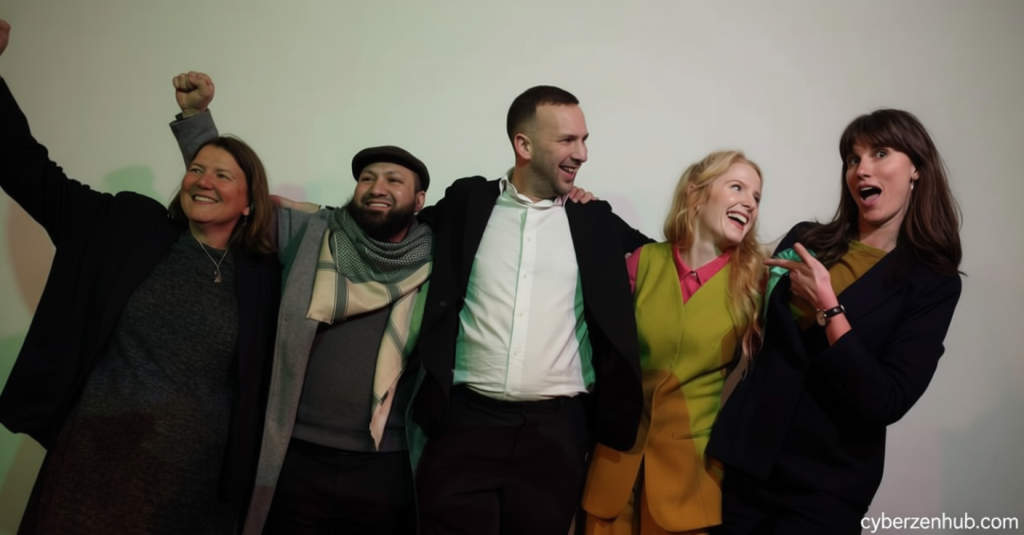
The Greens’ Gorton and Denton by-election win was about inclusion — not sectarianism
Last night’s result in Gorton and Denton marked a historic moment for the Green Party. It wasn’t just the first parliamentary by-election victory in their history, nor the overturning of a steadfast Labour majority that exceeded 13,000 votes. The triumph carried deeper significance, signaling a shift in how politics can connect with voters across the UK.
For the first time, a Green MP has been elected in the North of England, but this win transcends regional politics. It represents a broader movement toward a politics that prioritizes unity over division, hope over hostility, and belonging over exclusion. The message was clear: people in this community now see their voices as central to the democratic process.
Language played a crucial role in this transformation. For years, UK politics has often spoken to voters in a singular, Westminster-style English—a version shaped by southern England and private education. Reform’s defeated candidate, Matt Goodwin, exemplified that approach, yet it failed to resonate in areas like Gorton and Denton, where nearly 40% of residents are Muslim and many grow up with Urdu, Bangla, or Arabic at home.
That’s where the Greens made a deliberate choice. They didn’t just translate messages; they embraced the lived realities of their community. Campaign materials were crafted in multiple languages, including a viral Urdu video. This wasn’t a superficial tactic—it was a genuine effort to ensure that everyone, regardless of their native tongue, felt included in the conversation.
You can’t put a price on that – even as the sore losers in Labour and Reform try and invalidate our inclusive campaign as something sinister.
Some critics, like Matt Goodwin, have labeled this strategy as divisive. But that misunderstanding overlooks the core purpose: to invite people into the political dialogue, not push them aside. Multilingual outreach is about recognition, not separation. It’s about making sure that the experiences of marginalized communities are not only acknowledged but integrated into the mainstream narrative.
Look at Zohran Mamdani’s campaign in New York. By producing videos in Arabic, Spanish, and Urdu, he expanded political engagement in communities often overlooked by mainstream parties. His success, which even drew praise from within Labour, highlights how language can be a bridge, not a barrier. The same principle applied in Gorton and Denton.
When we talk about rent, bills, the NHS, or issues like racism and peace, these concerns matter to everyone. Whether they speak English, Punjabi, Somali, or any other language, the Greens’ message was consistent: your voice counts. Your story is part of the bigger picture.
This by-election wasn’t just about gaining seats. It was a demonstration of what happens when diverse communities feel truly represented. A 26.5% shift toward the Greens shows that people are ready for a politics that respects their identities and amplifies their priorities. That’s the kind of change the Greens aim to build—one that doesn’t just talk about inclusion but lives it.
Ultimately, this victory proves that language can be a powerful tool for connection. When it’s used to bridge divides rather than create them, it fosters trust and hope. And that’s what made the difference in Gorton and Denton.