
The Greens’ Gorton and Denton by-election win was about inclusion — not sectarianism
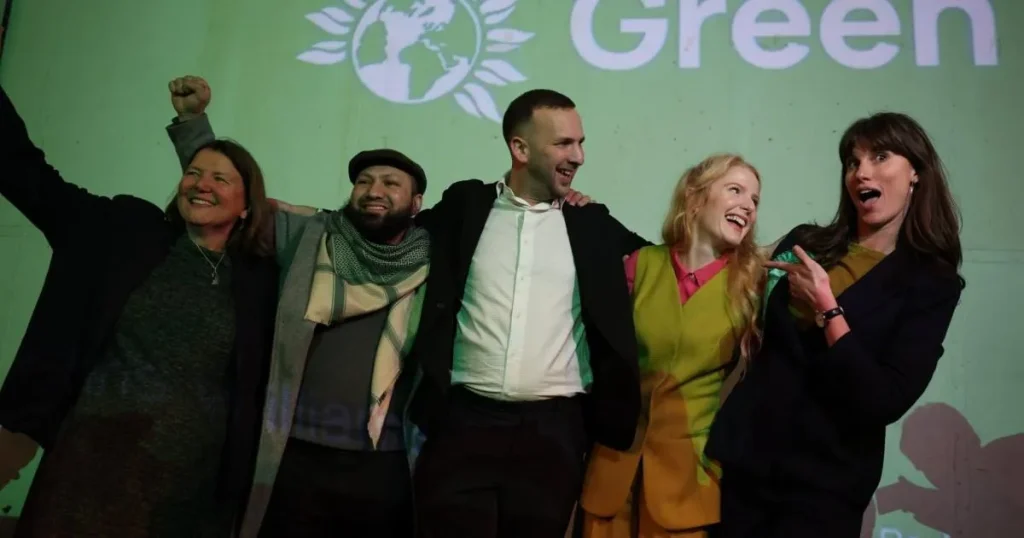
The Greens’ Gorton and Denton by-election win was about inclusion — not sectarianism
What a night it was. The Green Party’s first parliamentary by-election victory in Gorton and Denton marked a turning point, as it challenged a Labour majority that had stood for over 13,000 votes. This outcome wasn’t just a political shift—it was a powerful statement about the potential of a more inclusive approach in British politics.
For years, the North of England has been a Labour stronghold. Yet, the Greens’ win in this area signals a broader change. It’s not just about securing a representative for the first time; it’s about proving that diverse communities can be central to the political narrative, not sidelined by it.
Communicating in the language of the people
The campaign’s success hinged on something deeper than policy or candidate appeal. It was about how the message was delivered. In regions where nearly 40% of residents are Muslim and many speak languages like Urdu or Bangla at home, traditional English-centric politics often falls short.
“You can’t put a price on that – even as the sore losers in Labour and Reform try and invalidate our inclusive campaign as something sinister.”
The Greens’ outreach included campaign materials in multiple languages, including a viral Urdu video. Critics like Matt Goodwin, Reform’s defeated candidate, dismissed this as a divisive tactic. But the strategy was clear: to bridge the gap between the party and communities whose voices had long been overlooked.
Language, in this context, wasn’t just a tool—it was a barrier that needed to be broken. While opponents relied on a polished, Westminster-style English, the Greens chose to speak the languages people actually use. This wasn’t about splitting communities, but about making politics feel personal and accessible.
Lessons from global campaigns
Examples from other countries show that multilingual engagement isn’t about division. In New York, Zohran Mamdani’s campaign used Arabic, Spanish, and Urdu videos to connect with communities often neglected by mainstream politics. His success, praised even by Labour allies, highlights the value of such inclusive methods.
“You belong here. Your voice counts. Your concerns matter.”
When the Greens spoke about rent, bills, the NHS, and issues like racism, they did so in a way that resonated with everyone. Whether someone grew up speaking Punjabi or Somali, their lived experiences were acknowledged. This approach reflects the party’s vision: one where diversity isn’t just represented, but actively embraced.
The 26.5% swing toward the Greens in this by-election underscores a growing demand for politics that values inclusion over exclusion. This victory isn’t just about increasing parliamentary representation—it’s about showing that when people feel seen and heard, they can find hope in the democratic process again.
When language is used to reflect the realities of everyday life, it becomes a bridge, not a wall. The Greens’ campaign in Gorton and Denton proved that connecting with communities through their own voices can reshape the political landscape. This is the kind of politics they aim to build—where every citizen, regardless of background, has a meaningful place in the conversation.
To view this video, enable JavaScript and use a web browser that supports HTML5 video. Metro’s senior politics reporter Craig Munro breaks down the election’s significance in the politics newsletter “Alright, Gov?” Sent weekly, sign up here.
This site is protected by reCAPTCHA, and the Google Privacy Policy and Terms of Service apply. Your information will be used in line with our Privacy Policy.