
Your Cybersecurity Career Path: A Roadmap to Success
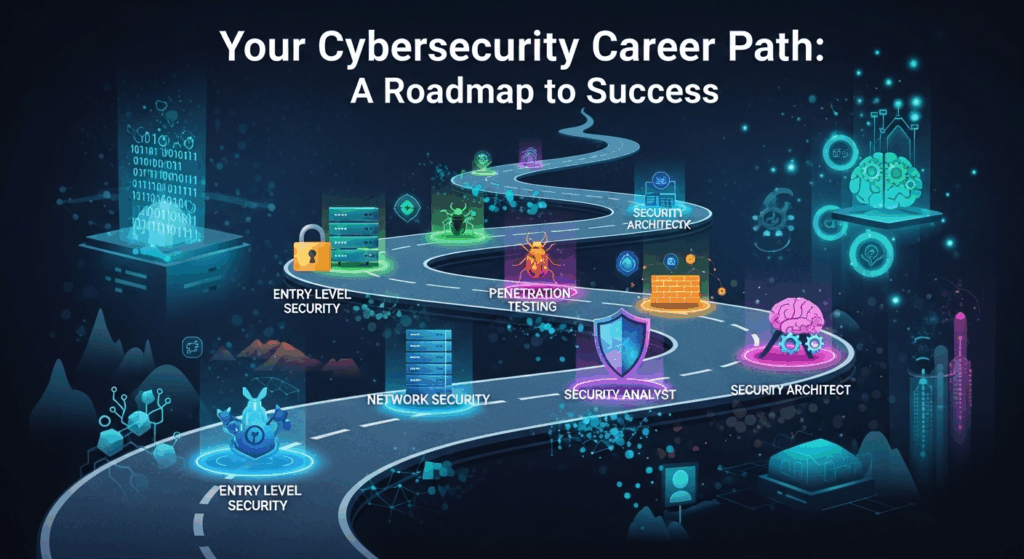
In our increasingly digital world, where data is the new currency and connectivity is constant, the need for robust security has never been more critical. Businesses, governments, and individuals are under a constant barrage of cyber threats, from sophisticated nation-state attacks to opportunistic ransomware gangs. This reality has fueled an explosive demand for skilled cybersecurity professionals, creating a field ripe with opportunity, growth, and rewarding challenges. If you've ever considered a career in this dynamic domain, you need a clear plan. This article provides exactly that: a detailed cybersecurity career path roadmap designed to guide you from foundational knowledge to the highest echelons of leadership.
Understanding the Cybersecurity Landscape
Before embarking on any journey, it's crucial to understand the terrain. The cybersecurity field is not a monolithic entity; it is a vast and diverse ecosystem of specializations, each addressing a different aspect of protecting digital assets. At its core, cybersecurity is the practice of defending computers, servers, mobile devices, electronic systems, networks, and data from malicious attacks. These practices are often categorized into a few key domains, including network security, application security, cloud security, information security (InfoSec), and operational security (OpSec).
A career in this field means becoming a lifelong learner. The threat landscape evolves at a blistering pace, with new vulnerabilities discovered and new attack techniques developed daily. What is a "best practice" today might be an obsolete defense tomorrow. This constant evolution is what makes the career so exciting and challenging. Professionals must stay updated on the latest threats, technologies, and compliance regulations. This adaptability is perhaps the most important non-technical skill you can cultivate.
The demand for these adaptable professionals is staggering. Reports from organizations like (ISC)² consistently show a massive global workforce gap, with millions of cybersecurity positions remaining unfilled. This imbalance of supply and demand translates into excellent job security, competitive salaries, and a wide array of opportunities for those who are qualified. Whether your passion lies in breaking into systems to find flaws, designing impenetrable security architectures, or analyzing threat data to predict the next attack, there is a place for you in cybersecurity. This roadmap will help you find it.
Laying the Foundation: Your Starting Point
Every expert was once a beginner. Your journey into cybersecurity begins with building a solid foundation of knowledge and skills. This initial phase is less about specializing and more about understanding the fundamental principles that govern technology and security. Without this bedrock, advanced concepts will be difficult to grasp.
Building Core Knowledge (Education and Self-Study)
There is no single "correct" way to acquire foundational knowledge. Many successful professionals come from traditional academic backgrounds, while others are entirely self-taught. A bachelor's degree in Computer Science, Information Technology, or a dedicated Cybersecurity program provides a structured, comprehensive curriculum that covers everything from programming fundamentals to network theory. This path is highly valued by many employers, especially larger corporations and government agencies, as it demonstrates a long-term commitment and a verified level of understanding.
However, a degree is not a mandatory prerequisite. The cybersecurity community is a meritocracy that values demonstrable skills above all else. You can build an incredibly strong foundation through self-study using online platforms like Coursera, edX, Cybrary, and TryHackMe. These resources offer courses, hands-on labs, and learning paths curated by industry experts. Supplement this learning by reading seminal books on the topic, such as The Cuckoo's Egg by Clifford Stoll for inspiration or Hacking: The Art of Exploitation by Jon Erickson for technical depth. The key is to be disciplined, proactive, and curious.
Essential Foundational Skills
Before you can secure a system, you must understand how it works. This is where foundational technical skills become non-negotiable. You don't need to be a master in all areas, but you must have proficiency in several key domains:
- Networking: This is the absolute cornerstone of cybersecurity. You must understand the TCP/IP model, routing and switching, common protocols (HTTP, DNS, SMTP, TCP, UDP), subnetting, and the function of firewalls and proxies. You cannot defend a network if you don't know how it communicates.
- Operating Systems: Gain a deep understanding of at least two major operating systems: Windows and Linux. Learn about their file systems, permission structures, command-line interfaces (CLI), process management, and logging mechanisms. Much of cybersecurity involves analyzing activity on these systems.
- Basic Programming/Scripting: While you don't need to be a software developer, knowing how to write simple scripts is a superpower. Python is the de facto language for security automation, data analysis, and tool development. Similarly, learning Bash for Linux and PowerShell for Windows will allow you to automate repetitive tasks and interact with systems more efficiently.
Beyond the technical, "soft skills" are equally important. Analytical and problem-solving skills are paramount, as you will constantly be diagnosing issues and deconstructing complex problems. Strong communication is also vital; you will need to explain complex technical vulnerabilities to non-technical stakeholders, write detailed reports, and collaborate with your team during high-stress incidents.
Entry-Level Positions: Getting Your Foot in the Door
With a solid foundation in place, you are ready to take your first professional step. Entry-level roles are designed to immerse you in a real-world security environment, allowing you to apply your theoretical knowledge and learn from experienced professionals. This is where your career truly begins to take shape.
The Most Common Entry-Level Roles
Your first job in cybersecurity might not have "security" in the title. Many people transition from adjacent IT roles like a Network Administrator or Systems Administrator. However, if you are aiming directly for a security position, a few roles are common starting points:
- Security Operations Center (SOC) Analyst (Tier 1): This is arguably the most popular entry point. As a SOC Analyst, you are on the front lines, monitoring security alerts from various tools (like a SIEM), triaging potential incidents, and escalating true positives to senior analysts. It's a high-pressure, high-learning environment that exposes you to a wide variety of threats.
- IT Auditor: An IT auditor helps organizations assess their security controls against a specific framework or regulation (like ISO 27001 or PCI DSS). This role is less about hands-on keyboard hacking and more about understanding risk, policy, and compliance. It's an excellent path for those with strong organizational and analytical skills.
- Cybersecurity Technician: This is a generalist role, often found in smaller companies. A technician might be responsible for configuring firewalls, managing antivirus solutions, patching systems, and responding to user-reported security issues. It provides broad, hands-on experience across multiple security domains.
These roles are your training ground. Embrace the opportunity to learn, ask questions, and understand how your individual tasks fit into the organization's broader security posture. Your performance and attitude in your first role will lay the groundwork for all future advancement.
The Power of Foundational Certifications
In the absence of years of experience, certifications act as a third-party validation of your skills and knowledge. For entry-level positions, HR departments and hiring managers often use certifications as a filter to identify promising candidates. Earning a respected foundational certification proves your commitment to the field and shows you have mastered a specific body of knowledge.
For beginners, the most recognized and valuable certifications include:
- CompTIA Security+: This is the gold standard for entry-level cybersecurity knowledge. It covers foundational topics in threats, attacks, vulnerabilities, architecture and design, implementation, operations, and incident response. Many consider it the minimum certification to be taken seriously for a security role.
- CompTIA Network+: While not strictly a security certification, it validates the critical networking knowledge that all cybersecurity professionals need. If your networking foundation is weak, this is an excellent certification to pursue first.
- (ISC)² Certified in Cybersecurity (CC): A newer certification from the creators of the CISSP, designed specifically to help beginners prove their knowledge and enter the field.
These certifications require dedicated study, but the return on investment is significant. They not only make your resume more attractive but also provide you with a structured learning path that ensures you cover all the essential foundational topics.
Intermediate Advancement: Specializing and Growing
After spending one to three years in an entry-level role, you will have gained valuable real-world experience and a better understanding of the cybersecurity landscape. Now is the time to start specializing. Focusing on a specific domain allows you to develop deep expertise, making you a more valuable and sought-after professional. This is the phase where you transition from a generalist to a specialist.
Choosing Your Specialization
The path you choose will depend on your interests, skills, and the experience you've gained. There are many areas to specialize in, but most fall into a few broad categories:
- Offensive Security (Red Team): This involves thinking like an attacker to find and exploit vulnerabilities. Roles include Penetration Testers and Ethical Hackers. This path is ideal for those who are creative, persistent, and enjoy breaking things to make them stronger.
- Defensive Security (Blue Team): This is focused on protecting, detecting, and responding to attacks. Roles include Security Engineers, Incident Responders, and Threat Hunters. This path is suited for those who are analytical, detail-oriented, and enjoy building and defending systems.
- Governance, Risk, and Compliance (GRC): This domain focuses on the "big picture" of security. GRC professionals develop security policies, assess risk, and ensure the organization complies with legal and industry regulations. It's a great fit for those with strong communication, organization, and strategic thinking skills.
- Security Architecture and Engineering: This involves designing and building secure systems and networks from the ground up. Security Architects are the master planners who ensure security is an integral part of the IT infrastructure, not an afterthought.

The table below outlines a few potential specialization paths, showing how roles and certifications evolve.
| Career Path Specialization | Entry-Level Role | Mid-Level Role | Advanced/Senior Role | Key Certifications |
|---|---|---|---|---|
| Offensive Security | SOC Analyst, Junior Pentester | Penetration Tester | Senior Penetration Tester, Red Teamer | OSCP (Offensive Security Certified Professional), GPEN |
| Defensive Security | SOC Analyst | Incident Responder, Threat Hunter | Senior Incident Response Manager | GCIH (GIAC Certified Incident Handler), CySA+ |
| Security Engineering | Cybersecurity Technician | Security Engineer | Senior Security Engineer/Architect | GSEC (GIAC Security Essentials), CISSP (later) |
| Risk & Compliance (GRC) | IT Auditor | Security Analyst (GRC) | GRC Manager, Security Auditor | CISA (Certified Information Systems Auditor),CRISC |
Key Intermediate Roles and Responsibilities
As you specialize, your job title and responsibilities will evolve. A Penetration Tester, for example, is hired to legally hack into an organization's systems and provide a detailed report of their findings. They use the same tools and techniques as malicious attackers to uncover real-world risks. An Incident Responder is a digital firefighter. When a security breach occurs, they are the first on the scene, working to contain the threat, eradicate the attacker's presence, and restore normal operations.
A Security Engineer has a more proactive role. They are responsible for implementing and maintaining the organization's security tools and infrastructure. This could involve configuring next-generation firewalls, managing endpoint detection and response (EDR) solutions, or hardening servers to security standards. This role requires a perfect blend of networking, system administration, and security knowledge. Becoming proficient in one of these roles will cement your status as a true cybersecurity practitioner.
Advanced Certifications for Career Growth
Just as foundational certifications help you get your first job, more advanced, specialized certifications help you command a higher salary and secure mid-level to senior roles. The Certified Information Systems Security Professional (CISSP) is perhaps the most respected and comprehensive certification in the industry. It is broad and managerial, covering eight domains of security, and is often a requirement for senior and leadership positions.
For those on the offensive path, the Offensive Security Certified Professional (OSCP) is a legendary certification. It is a grueling 24-hour, hands-on exam where you must hack into multiple machines in a live lab environment. Earning your OSCP is a badge of honor that proves you have practical, real-world hacking skills. For defenders, certifications like the GIAC Certified Incident Handler (GCIH) validate your ability to manage and respond to security incidents. Choosing the right certification depends on your chosen specialization and will act as a powerful catalyst for your career growth.
Reaching the Summit: Advanced and Leadership Roles
After years of dedicated work, deep specialization, and proven success, you can ascend to the highest levels of the cybersecurity field. These roles shift from day-to-day technical tasks to strategy, management, and leadership. Here, you are not just defending a system; you are responsible for the security posture of an entire organization.
Senior and Principal Positions
Advanced practitioner roles like Senior Security Architect or Principal Incident Responder represent the pinnacle of technical expertise. A Senior Security Architect is responsible for an organization's entire security design. They make high-level decisions about the technology, processes, and policies that will protect the company's assets. They must have a deep, holistic understanding of both business goals and the technical landscape to create a security strategy that is both effective and enabling.
A Principal Incident Responder or Threat Intelligence Lead is a subject matter expert with years of experience hunting down the most sophisticated adversaries. They lead major incident response efforts, perform advanced digital forensics, conduct malware reverse-engineering, and develop threat intelligence to proactively defend the organization. These roles require not only immense technical skill but also the ability to stay calm and lead under extreme pressure. Professionals in these positions are highly respected and compensated accordingly.
Moving into Management
For those who wish to transition from technical leadership to people leadership, the path leads toward management. A Security Manager or Director of Security is responsible for managing a team of security professionals, setting priorities, managing the budget, and reporting to executive leadership. Their success is measured not by the number of vulnerabilities they find, but by the effectiveness of their team and the overall reduction of risk to the organization.
The ultimate leadership role in this field is the Chief Information Security Officer (CISO). The CISO is a C-level executive responsible for the entire information security program. They establish and maintain the enterprise vision, strategy, and program to ensure information assets and technologies are adequately protected. The CISO must be a master communicator, a savvy business leader, and a strategic thinker, capable of aligning security initiatives with business objectives and articulating risk to the Board of Directors. This role is the culmination of a long and successful cybersecurity career.
Frequently Asked Questions (FAQ)
Q: Do I need a college degree to get a job in cybersecurity?
A: No, a degree is not strictly required. While a degree in Computer Science or a related field is helpful and preferred by some employers, many successful professionals are self-taught. Demonstrable skills, hands-on experience (from home labs or freelance work), and respected industry certifications like the CompTIA Security+ can be just as, if not more, valuable than a degree.
Q: What is the fastest way to get into cybersecurity?
A: There are no shortcuts to true expertise, but an accelerated path would look like this: 1) Focus intensely on foundational skills (networking, Linux, Windows). 2) Study for and pass the CompTIA Security+ certification. 3) Build a home lab to practice skills and create projects for a portfolio. 4) Apply relentlessly to entry-level SOC Analyst or Cybersecurity Technician roles. This focused effort can potentially land you a role in under a year.
Q: Which cybersecurity certification is the best for beginners?
A: The CompTIA Security+ is widely considered the best all-around certification for beginners. It is vendor-neutral, covers a broad range of essential security topics, and is recognized and respected by HR departments and hiring managers globally. It provides the perfect body of knowledge to prepare for an entry-level job.
Q: How much can I earn in cybersecurity?
A: Salaries in cybersecurity are highly competitive and vary greatly based on role, experience, location, and certifications. Entry-level roles like a SOC Analyst might start between $60,000 to $80,000 USD. Mid-level roles like a Penetration Tester can easily earn over $100,000. Senior and leadership roles, such as a CISO, can command salaries well over $200,000, with some earning significantly more.
Conclusion
The cybersecurity career path is a challenging, dynamic, and incredibly rewarding journey. It offers a unique opportunity to be at the forefront of technology, solving complex puzzles and making a tangible impact by protecting critical information and infrastructure. This roadmap provides a clear, structured guide, but your personal journey will be unique. It will be shaped by your curiosity, your persistence, and your passion for learning.
Start by building a strong foundation, get your foot in the door with an entry-level position, and then specialize in an area that genuinely excites you. Never stop learning, stay engaged with the community, and continuously challenge yourself. The demand for your skills is higher than ever, and the path to a successful and fulfilling career is waiting. Your roadmap to success in cybersecurity starts now.
***
Article Summary
This article, "Your Cybersecurity Career Path: A Roadmap to Success," serves as a comprehensive guide for individuals aspiring to build a career in the rapidly growing field of cybersecurity. It begins by highlighting the immense demand for skilled professionals due to the escalating landscape of digital threats, establishing the article's purpose to provide a clear, actionable roadmap.
The guide is structured into a logical progression:
- Laying the Foundation: This section emphasizes the importance of core knowledge, acquired through either formal education (like a Computer Science degree) or disciplined self-study. It details the non-negotiable foundational skills required, including a deep understanding of networking, operating systems (Windows/Linux), and basic scripting (Python).
- Entry-Level Positions: The article outlines the first professional steps, detailing common starting roles like SOC Analyst, IT Auditor, and Cybersecurity Technician. It strongly recommends pursuing foundational certifications like the CompTIA Security+ to validate skills and stand out to employers.
- Intermediate Advancement: This stage focuses on career growth through specialization. It explores different paths such as Offensive Security (Red Team), Defensive Security (Blue Team), and GRC (Governance, Risk, and Compliance). A detailed table compares these paths, and the importance of advanced certifications like OSCP (for offense) and CISSP (for management) is explained.
- Reaching the Summit: The final stage of the career path covers advanced and leadership roles. It differentiates between elite technical positions like Senior Security Architect and management tracks leading to roles like Security Manager and, ultimately, the Chief Information Security Officer (CISO).
The article concludes with a practical FAQ section addressing common questions about degrees, career entry speed, and salary expectations, reinforcing that while the path is challenging, it is also highly accessible and rewarding. The core message is that a successful cybersecurity career is a journey of continuous learning, starting with a solid foundation and progressing through specialization to leadership.