
Beijing promised to ‘fight back’ over Taiwan leader’s US visit. But this time it has more to lose
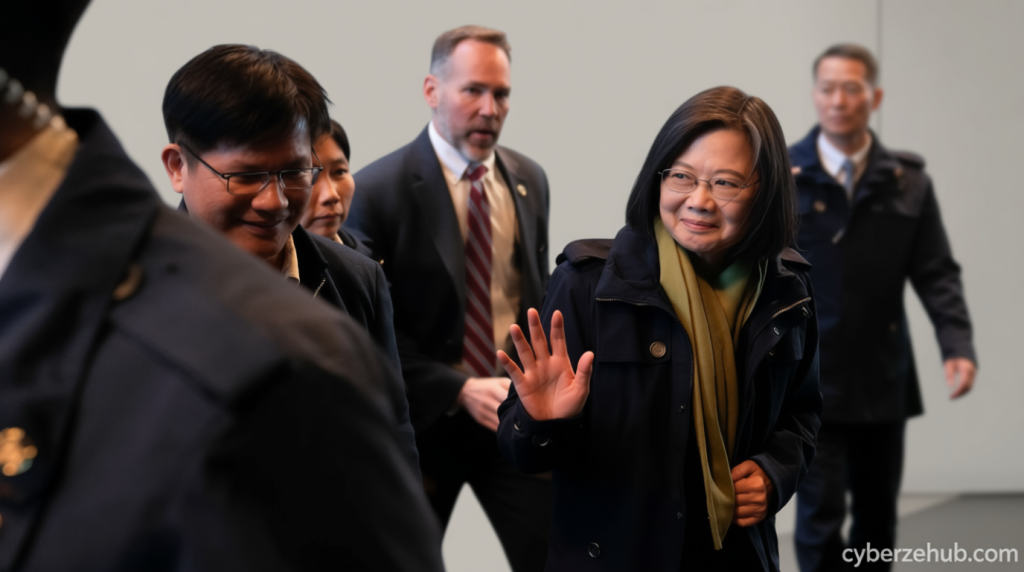
Tsai Ing-wen and Kevin McCarthy Meet Amid Beijing’s Threats
The impending meeting between Taiwan’s President Tsai Ing-wen and U.S. House Speaker Kevin McCarthy in California has reignited fears of a renewed diplomatic push from China. This follows Beijing’s recent declaration to “resolutely fight back” should the encounter proceed, marking a shift from previous strategies. Analysts suggest the timing may influence China’s approach, as it balances escalating tensions with global priorities.
Last Year’s Escalation: China’s Response to Pelosi’s Visit
When then-Speaker Nancy Pelosi visited Taiwan in August 2022, Beijing responded with massive military exercises, targeting the island’s waters and airspace. The campaign included missile launches, warplane incursions over the Taiwan Strait, and a temporary suspension of U.S.-China dialogue on matters ranging from trade to climate. This move was framed as retaliation for perceived challenges to China’s sovereignty.
Analysts Predict a More Cautious Beijing Response
Yun Sun, director of the China Program at the Stimson Center, notes that Beijing’s current approach might differ. “This puts the burden on China not to overreact, because any overreaction is only going to push China further away from the world,” he remarked. While China will monitor Tsai’s actions closely, the meeting’s location on American soil and the broader geopolitical context may temper its military display. The opacity of China’s decision-making process, however, complicates precise predictions of its reaction.
Timing and Stakes in U.S.-China Relations
The meeting occurs at a critical juncture for U.S.-China ties, as both nations grapple with rising disputes over issues like the downed Chinese surveillance balloon and semiconductor supply chains. A sharp response from Beijing could exacerbate these tensions, risking a deeper rift. Taiwan, still recovering from last year’s confrontations, now faces the possibility of renewed military activity, with forces frequently crossing the strait’s previously informal boundary.
Taiwan’s Strategic Importance and Tsai’s Position
Taiwan’s Central News Agency confirmed the planned meeting with McCarthy, emphasizing Tsai’s commitment to international engagement. For the president, entering her final year in office, the event represents a symbolic milestone. Wen-Ti Sung, a political scientist at the Australian National University’s Taiwan Studies Program, described it as a “capstone moment” for her leadership, highlighting her efforts to elevate Taiwan’s global profile through U.S. collaboration.
China’s Communist Party continues to assert Taiwan as part of its territory, despite never having controlled it. Under Xi Jinping’s leadership, the nation has significantly expanded its military capabilities, reinforcing its claim through economic and diplomatic pressure. Yet, the current scenario may force Beijing to prioritize strategic stability over aggressive posturing, as the world watches its next move.