
The five big sticking points in US-Iran talks
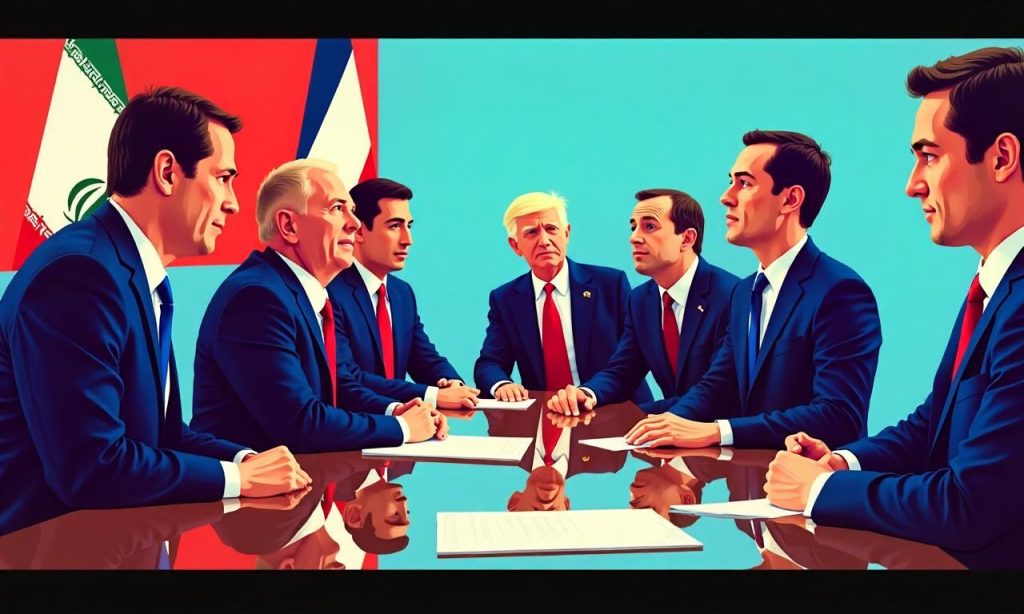
The Five Major Challenges in US-Iran Negotiations
Islamabad has set the stage for pivotal US-Iranian discussions, with officials expressing cautious optimism. The venue is prepared, security measures are in place, and the road leading to the site features newly painted yellow and black markings. Pakistani diplomats stress that their position as intermediaries is unique, as they are trusted by both the United States and Iran. Vice President JD Vance, leading the American delegation, conveyed a positive outlook, stating, “If the Iranians are open to meaningful talks, we’re ready to offer our hand.” However, he also hinted at potential resistance: “If they attempt to mislead us, we won’t be as forgiving.”
Israel’s Conflict with Hezbollah
The ongoing Israeli assault on Hezbollah in Lebanon poses a significant risk to the talks. Iran’s president, Masoud Pezeshkian, asserted on X that, “Continuing these attacks will make negotiations irrelevant.” He emphasized Iran’s commitment to supporting Hezbollah, declaring, “Our stance remains firm. Iran will not let go of its Lebanese allies.” Despite this, Israel’s prime minister, Benjamin Netanyahu, insists there is “no pause” in targeting the group. Meanwhile, Trump suggested the strikes might ease, with the US State Department planning to host Israel-Lebanon talks in Washington the following week.
The Strait of Hormuz Blockade
Another major hurdle is Iran’s control of the critical oil shipping route through the Strait of Hormuz. Trump criticized Iran’s performance, claiming, “They’re failing to let ships pass through.” He pointed to a recent report that some vessels had paid a $2m toll to navigate the strait, warning, “Iran shouldn’t be charging fees to tankers.” Iran, meanwhile, has asserted sovereignty over the waterway, introducing new transit routes to bypass anti-ship mines. This move aims to solidify its influence, though the effectiveness of the plan remains uncertain.
Nuclear Dispute
The nuclear issue remains a longstanding sticking point. Trump unveiled Operation Epic Fury, targeting Iran’s ability to develop weapons of mass destruction. He demanded that Iran “end all uranium enrichment on its soil.” Iran, however, argues it has the right to enrich uranium under the Nuclear Non-Proliferation Treaty, a claim met with skepticism by Western governments. The 2015 Joint Comprehensive Plan of Action (JCPOA) addressed this complex issue, but the question lingers: will a new agreement be achievable?
Regional Alliances and Proxies
Iran’s network of allies, including Hezbollah in Lebanon, the Houthis in Yemen, Hamas in Gaza, and militias in Iraq, has bolstered its regional power. This coalition allows Tehran to assert a form of “forward defense” in its rivalry with Israel and the US. However, the Gaza war has intensified pressure on this network, with parts of it, such as the former Syrian regime under Bashar al-Assad, now weakened. Israel views this alliance as an “Axis of Evil,” but the extent of its threat to global security remains debated.
As the negotiations unfold, the success of the talks hinges on resolving these five core issues. Whether the parties can overcome their differences remains to be seen, with the outcome potentially shaping the future of Middle East dynamics.