
What the US military could do if Iran fails to meet Trump’s ultimatum
What the US military could do if Iran fails to meet Trump’s ultimatum
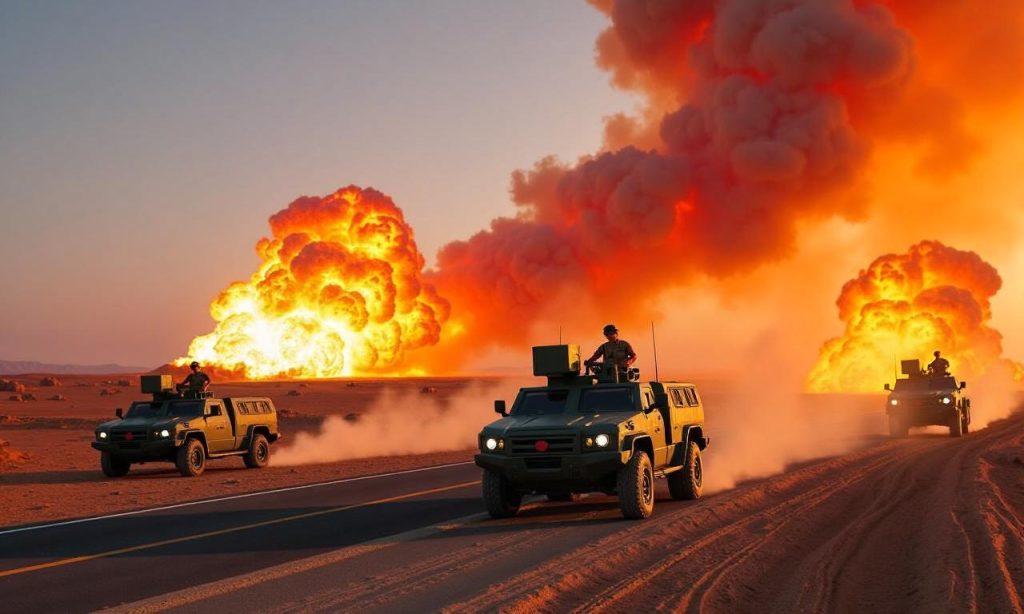
Time is running out for President Donald Trump’s promise to obliterate Iran’s civilian infrastructure if a deal isn’t finalized by Tuesday evening. However, military analysts suggest the president may have overreached with his threats, as the U.S. forces face challenges in executing such a massive strike within a short timeframe. Experts caution that even a large-scale assault might not compel Iran to quickly accept a ceasefire.
Trump issued his most severe warning on Monday, pledging to destroy “every bridge” and power station in Iran within four hours if an agreement isn’t reached by 20:00 EST. He intensified the threat on Tuesday, declaring that “a whole civilisation will die” if Iran refuses to comply. These statements mark a significant escalation in the rhetoric surrounding the standoff.
International law scholars argue that targeting civilian infrastructure could qualify as a war crime. Some even suggest Trump’s remarks might be interpreted as encouraging genocide. Despite these concerns, the president downplayed them during a press briefing. The U.S. military, while capable of hitting key targets, struggles to identify and destroy thousands of bridges in a nation as vast as Iran within hours, according to experts.
“To meet this threat literally would be an absolute herculean task. And would it have the desired strategic effect?”
A former senior U.S. defense official, who requested anonymity, noted that Trump appears to be searching for a new level of threat to shift the balance in favor of American interests. While a broad attack on Iran’s power sector is more practical, experts emphasize that such strikes could cripple the regime’s access to oil revenue and critical maritime routes.
In a separate development, Pakistan’s Prime Minister Shehbaz Sharif called for a two-week extension of Trump’s deadline, urging diplomacy to proceed. “Pakistan, in all sincerity, requests the Iranian brothers to open Strait of Hormuz for a corresponding period of two weeks as a goodwill gesture,” Sharif stated on X. Islamabad has become a vital mediator between the U.S. and Iran, potentially hosting high-level discussions if a truce is near.
White House press secretary Karoline Leavitt confirmed Trump had been informed of Sharif’s proposal. The administration remains undecided on its next move. Meanwhile, Vice-President JD Vance announced earlier that the U.S. had conducted airstrikes on Kharg Island, a strategic hub for Iran’s oil exports. These strikes, he clarified, do not signal a strategic shift, but serve as a reminder of the economic pressure the U.S. can apply.
Despite the attacks, the White House denied claims that a nuclear strike was implied. The focus remains on negotiations, with Trump emphasizing that the U.S. will use its remaining tools to inflict “much greater pain” on Iran’s economy if talks stall. The clock continues to tick toward the deadline, with the outcome of these talks shaping the next phase of the conflict.