
Britain once jailed suffragettes. Now it jails Palestine activists
Britain once jailed suffragettes. Now it jails Palestine activists
A Silent Arrest in London’s Heart
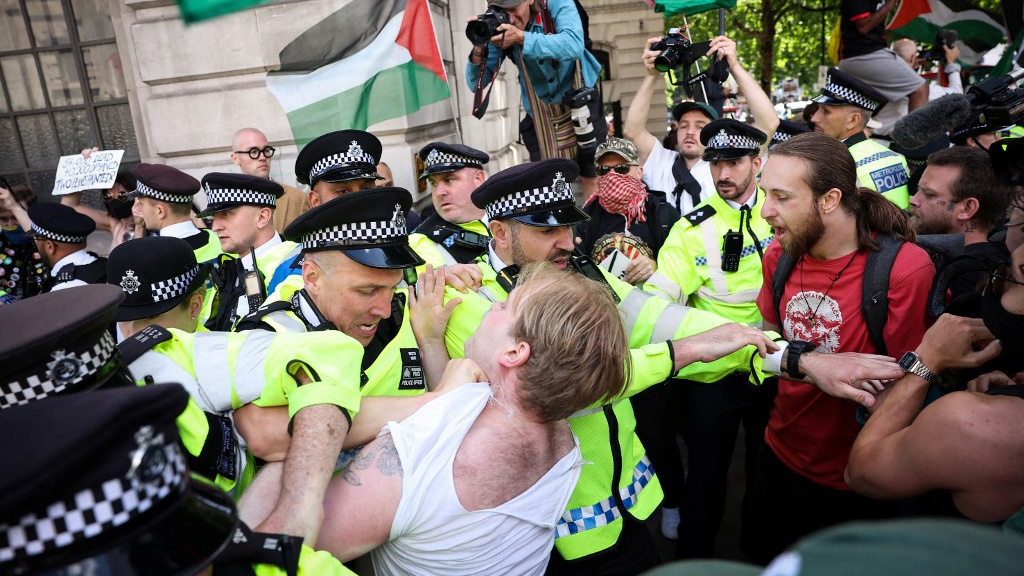
On a serene Saturday in London, beneath the Gandhi statue in Parliament Square, police detained Reverend Sue Parfitt, an 83-year-old activist. Her alleged wrongdoing? Displaying a sign that declared, “I oppose genocide. I support Palestine Action.” She met the arrest with a calm demeanor, her expression serene as officers led her away.
The New Definition of Terror
That day, more than two dozen others were similarly detained—many women and seniors, each holding only banners and conviction. Their “crime” lay in aligning with Palestine Action, a collective recently designated a terrorist organisation by the British government. Despite never harming a person, the group’s non-violent tactics, such as spray painting, lock-ons, and blocking roads, now face legal condemnation.
Suffragette Echoes in Modern Politics
The timing of this crackdown is striking. It coincides with the anniversary of women securing the right to vote, a milestone once celebrated through militant protests. Yet today, female MPs who champion suffragette history in rhetoric often endorse the criminalisation of those who challenge British support for Israel’s actions in Gaza.
Comparing Acts of Resistance
The Women’s Social and Political Union, led by Emmeline Pankhurst, once disrupted political gatherings, smashed windows, and even set fires. Palestine Action, by contrast, employs methods like red dye applications and machinery sabotage—tactics that, according to Baron Peter Hain, pale in comparison to the suffragettes’ boldness. Still, the political class now equates their peaceful demonstrations with extremism.
Defying the Double Standard
Among those in Parliament, Baroness Jenny Jones stands as a rare voice of consistency. A Green peer, she fiercely defends Palestine Action while condemning the state’s support for Israel’s military campaigns. Her actions mirror the suffragettes’ legacy: unyielding, principled, and unafraid to challenge the establishment.
A Movement Born of Heartbreak
At the same protest, a Welsh nurse stood alongside the activists. Just weeks prior, he had pleaded with Egyptian security forces at the Rafah border to allow aid into Gaza. Now, back in the UK, he continues to voice his anguish, undeterred by the violence his homeland enables.
The Court’s Verdict and the Political Divide
Two days after the arrests, London’s high court affirmed the legality of supplying F-35 fighter jet components to Israel—a decision that flattened Gaza with precision. The ruling underscored a stark contradiction: while chanting “Death to the IDF” at Glastonbury sparked outrage, the very arms that fuel such violence remain unquestioned.
“If you want Palestine Action to disappear, then stop sending arms to Israel and giving military support to a foreign government engaged in ethnic cleansing,” Jones asserted in Parliament.
A Legacy of Contradiction
History repeats itself in the courtroom and the crowd. The same spirit that once rallied women to defy the law now faces suppression in the name of order. As the suffragettes declared at their trials, “We are here, not because we are law-breakers; we are here in our efforts to become law-makers.” Today’s politicians, however, seem content to criminalise resistance while endorsing the very forces that perpetuate it.