
Israel’s closure of Al-Aqsa Mosque is an act of war
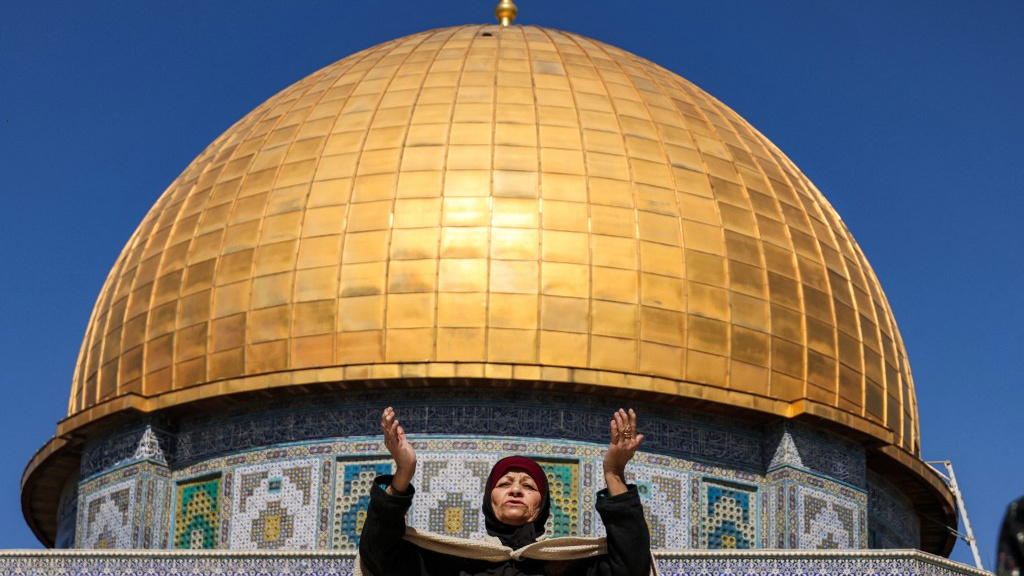
Israel’s closure of Al-Aqsa Mosque is an act of war
Within hours of the US-Israeli military strike on Iran, Israeli forces sealed off the Ibrahimi Mosque in Hebron and Al-Aqsa Mosque in East Jerusalem, displacing worshippers and citing wartime “preventive measures” as justification.
The Strategic Timing of Closures
Israeli occupation forces expelled attendees from the mosques, asserting that such closures were necessary for security. However, the absence of bomb shelters in Palestinian homes across the occupied West Bank and East Jerusalem leaves nearly half the population vulnerable to aerial attacks, according to Israel’s state comptroller.
Confining worshippers to their residences, markets, or workplaces during the closures does little to ensure safety. Amid the genocidal conflict in Gaza, the notion that Israeli authorities prioritize Palestinian safety is not only dismissible but deeply unsettling.
Preventing worshippers from reaching the mosques, and instead confining them to their homes, markets, streets or workplaces, does not make them any safer.
Religious Replacement and Sovereignty Claims
The closures reflect a broader strategy by Israel’s Zionist government to reshape religious narratives. Religious Zionists, now dominant in Israeli society, refer to the Al-Aqsa complex as the Temple Mount. Adherents instinctively erase its Islamic identity upon hearing this term.
Similarly, the Ibrahimi Mosque is recast as the Cave of the Patriarchs by the Zionist right. These symbolic reconfigurations underscore an intent to assert Israeli control over sacred sites, sidelining Islamic administrators as mere observers of policy decisions.
Historical Precedents and Escalating Control
Israeli emergency measures to close the mosques aim to solidify territorial claims. By restricting access, the occupying government marginalizes the waqf, reducing its role to that of a passive recipient of Israeli dictates.
The closures also serve as a test for future occupation. During Ramadan, the mosque’s temporary shutdown mirrors plans to permanently restrict its use, leveraging the holy month as a platform for aggressive control.
From a month of heightened sensitivity, it has become a month for testing the machinery of elimination. What can be imposed during Ramadan opens the door to far more afterwards.
Recent Measures and Institutional Aggression
In June 2025, during the 12-day war with Iran, Al-Aqsa was again closed for the conflict’s duration. This follows prior instances, such as the 2017 closure after a deadly attack at the Lion’s Gate, and the 2020 lockdown during the Covid-19 pandemic.
Israel’s efforts to dominate Al-Aqsa have intensified. In 2020, the mosque remained shut for two months, including the entire month of Ramadan, despite its open-air layout. Recently, Israeli authorities have reportedly barred some guards from duty and halted supply deliveries, further disrupting operations.
During Ramadan, entry to the mosque was limited to 10,000 worshippers, with restrictions favoring older individuals and children. These measures signal a calculated approach to erode the site’s autonomy and reinforce Israeli dominance.