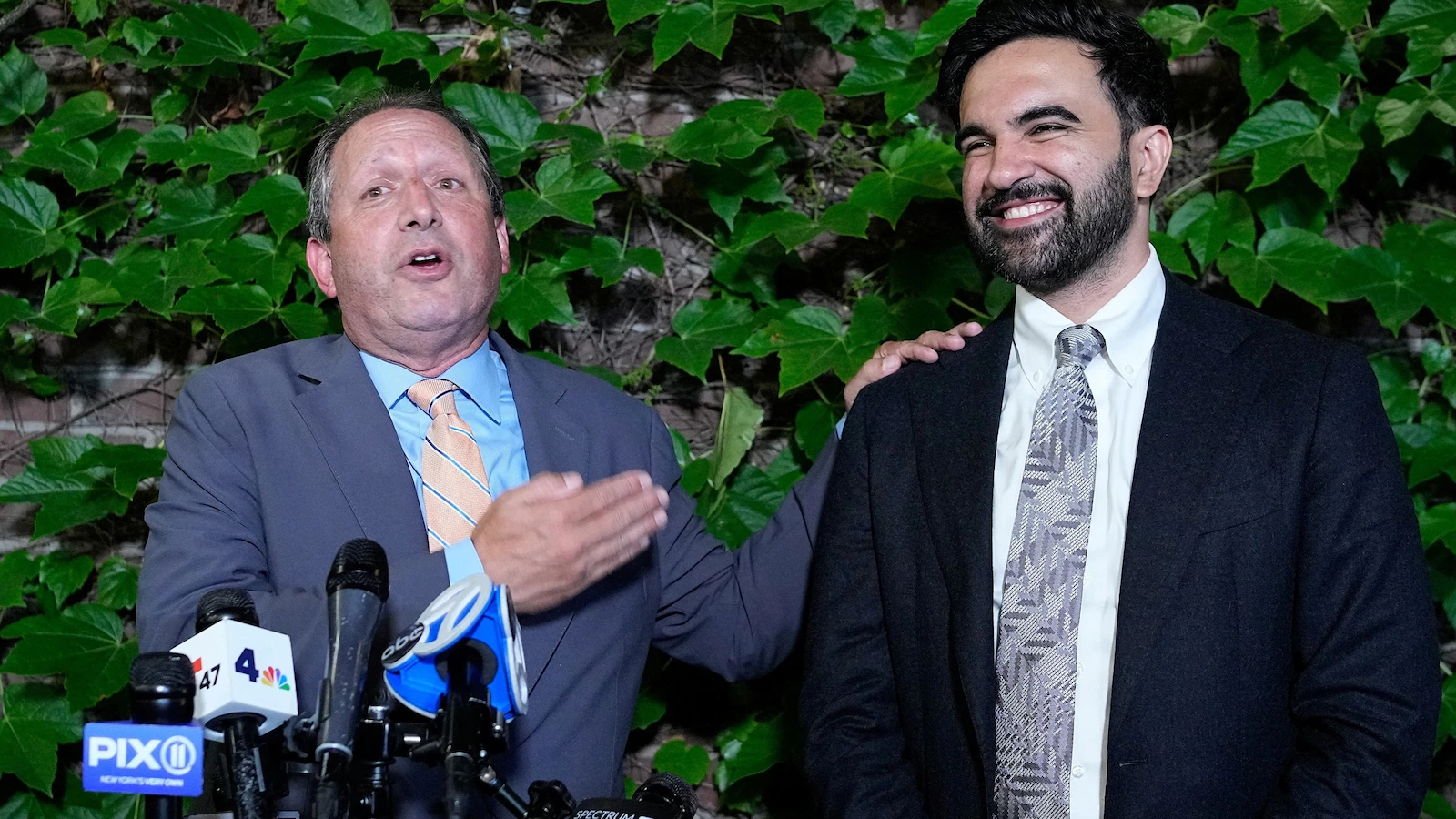
Congressional Races in New York Show Strong Support for Mamdani’s Endorsements
Cyberzenhub.com – On Tuesday, New York City Mayor Zohran Mamdani demonstrated significant political influence as his three endorsed congressional candidates secured victories in key races, advancing to the general election in November. This outcome marked a decisive shift in the state’s political landscape, with two Democratic incumbents losing their seats to Mamdani’s allies. The primaries, which took place across multiple states, underscored the mayor’s growing role in shaping electoral outcomes.
New York’s 7th Congressional District: A Victory for Valdez
In New York’s 7th Congressional District, state Assemblywoman Claire Valdez emerged as the clear winner, defeating Brooklyn Borough President Antonio Reynoso in a closely contested race. Valdez, who has long advocated for progressive policies in the state legislature, now faces the challenge of translating her primary success into a competitive general election campaign. Her victory signals a strong endorsement of Mamdani’s strategy, which prioritizes candidates with robust local ties and clear policy platforms.
10th District: Lander’s Path to Congress
Brad Lander, a former city comptroller and Mamdani-backed candidate, secured the Democratic nomination in New York’s 10th Congressional District. Lander’s win comes after a campaign focused on urban development and climate resilience, themes that align with Mamdani’s broader agenda. His opponent, Rep. Dan Goldman, will now have to contend with the energy of a candidate who has gained traction through grassroots mobilization and media appearances.
13th District: Avila Chevalier’s Rise
Community advocate Darializa Avila Chevalier also advanced in New York’s 13th Congressional District, defeating Rep. Adriano Espaillat. Avila Chevalier’s campaign highlighted her commitment to education and social equity, resonating with voters in a district that has seen increasing political polarization. Her win is expected to strengthen Mamdani’s influence in the state’s congressional delegation.
Upstate Race: Constantino’s Trump Connection
Meanwhile, in a race to replace retiring Republican Rep. Elise Stefanik, businessman Anthony Constantino was projected as the Republican nominee for New York’s 21st District. Constantino, who gained national attention in 2024 for displaying a massive “Vote for Trump” sign at his Mohawk Valley factory, received direct support from President Donald Trump. Trump’s endorsement, released on Monday, reinforced Constantino’s position as a candidate with strong party backing.
“Anthony Constantino’s campaign is a clear testament to the power of grassroots messaging and the impact of high-profile endorsements,” said a political analyst. “His ability to connect with voters through a bold, visible statement has set him apart in a crowded field.”
However, the Republican Party in New York was not unified in its support. While Constantino emerged as the frontrunner, the state Republican Party chair endorsed Robert Smullen, a state assemblyman with a military background. This split reflects ongoing tensions within the party, as some members favor traditional candidates while others look to business leaders for a different approach.
Broader Implications for Congressional Control
The results in New York have far-reaching implications for the balance of power in Congress. With Mamdani’s candidates winning in three districts, Democrats face the prospect of losing two seats in the House, potentially altering the party’s majority. Analysts suggest that these victories could also signal a shift in voter sentiment toward progressive leaders, especially in urban areas.
Maryland Primaries: Moore and Boafo in the Spotlight
While New York’s races dominated headlines, Maryland’s primaries also drew attention. State Delegate Adrian Boafo, a former aide to retiring Rep. Steny Hoyer, is projected to win the Democratic nomination for the 5th District. Boafo’s campaign received endorsements from Hoyer himself, as well as Governor Wes Moore and U.S. Senator Angela Alsobrooks, highlighting the collaborative nature of Maryland’s Democratic establishment.
Moore, the governor, is also expected to secure a second term in the upcoming Democratic primary. His campaign has positioned him as a potential presidential contender in 2028, leveraging his popularity and experience in state politics. Moore’s rematch against state Del. Dan Cox, the Republican nominee, is seen as a critical test of his ability to maintain momentum.
South Carolina Governor’s Runoff: Wilson’s Resilience
South Carolina’s gubernatorial runoff, held on June 23, 2026, saw Attorney General Alan Wilson prevail over his opponent. Wilson, who received endorsements from President Trump and state Republican Reps. Nancy Mace and Ralph Norman, has positioned himself as a centrist candidate in a traditionally conservative state. His victory in the primary runoff was celebrated with a victory party, attended by his family and supporters.
Although Wilson secured the win, he did not achieve the 50% threshold needed for an outright victory. This outcome underscores the competitive nature of the race, even as Trump’s endorsement provided a decisive edge. Wilson will now face state Rep. Jermaine Johnson in the general election, a matchup that could determine the state’s direction in the coming years.
Utah’s 1st District: A Democratic Gambit
Utah’s primaries also yielded notable results, with former U.S. Rep. Ben McAdams projected to win the Democratic nomination for the 1st District. McAdams, a former Republican, has aligned himself with progressive causes, aiming to flip the district from Republican to Democratic control. His victory follows a court-ordered redistricting effort that has reshaped the political map around Salt Lake City.
The projections indicate that McAdams’s campaign will face a formidable challenge in the general election, as the district’s conservative leanings remain strong. Nonetheless, his win represents a strategic move by Democrats to reclaim seats in a state that has historically supported Republican candidates.
The Role of Endorsements in Shaping Outcomes
Endorsements played a pivotal role in determining the winners of Tuesday’s primaries. In New York, Mamdani’s backing was instrumental in securing victories for Valdez, Lander, and Avila Chevalier. Conversely, in South Carolina, Trump’s endorsement of both Lt. Gov. Pamela Evette and Wilson demonstrated the president’s continued influence in state-level politics.
Evette, who finished first in the Republican gubernatorial primary, narrowly missed the 50% threshold, forcing a runoff. Her campaign, bolstered by Trump’s support, focused on economic growth and tax reforms. The split between Evette and Wilson highlights how endorsements can both unite and divide party factions, depending on the candidate’s appeal to different voter bases.
As the primary results solidify, the focus now shifts to the general election. The races in New York, Maryland, Utah, and South Carolina will serve as bellwethers for broader trends in the 2026 midterms. With control of Congress hanging in the balance, the momentum generated by these victories could have lasting effects on national politics.
A Look at the Candidates’ Backgrounds
Claire Valdez, a state Assemblywoman known for her advocacy on education and affordable housing, brings a strong legislative record to the 7th District race. Brad Lander, the former city comptroller, has positioned himself as a leader in environmental policy and urban innovation. Darializa Avila Chevalier, a community organizer, has focused on empowering local residents through grassroots initiatives.
Anthony Constantino, the businessman backed by Trump, has built his campaign on economic messaging and a strong connection to the Mohawk Valley region. In South Carolina, Alan Wilson’s experience as attorney general has shaped his approach to governance, emphasizing law and order. Meanwhile, Ben McAdams’s shift from Republican to Democratic candidate reflects his alignment with progressive priorities in Utah’s 1st District.
These candidates’ diverse backgrounds and platforms highlight the varied strategies at play in the primaries. Their success underscores the importance of both party endorsements and individual campaign efforts in a competitive electoral environment. As the general election approaches, the focus will remain on consolidating support and preparing for the challenges ahead.