SCOTUS Greenlights White House Ballroom Build
Cyberzenhub.com – The Supreme Court on Monday issued an unsigned opinion that lets the administration press ahead with its East Wing project. SCOTUS greenlights White House ballroom construction above ground while the underlying lawsuit continues to wind through the appeals process. By the government’s own accounting, the structure was already roughly two-thirds complete when the briefs were filed.
Chief Justice John Roberts broke from the majority, joined by Justices Sotomayor, Kagan, and Jackson, to dissent. His view: the ruling hands no branch of government a clean win.
“No victory for the separation of powers,” Roberts wrote, noting the decision allows a “likely” encroachment on congressional authority to proceed without judicial check.
Standing, Not Substance
The unsigned majority held that the National Trust for Historic Preservation — the plaintiff — likely lacks Article III standing to sue over the project. Separately, the court found the government would suffer irreparable harm if above-ground work were enjoined pending appeal. The question before the court was not whether SCOTUS greenlights White House ballroom construction permanently, but whether the plaintiff had a judicially cognizable injury and whether the balance of equities favored letting the work continue.
“Today, we do not pass upon the legality of the government’s East Wing project. We conclude only that, based on the submissions before us, the government is likely to prevail in showing that the Trust lacks Article III standing to challenge the project in federal court and that the remaining stay factors favor relief.”
The justices deliberately stopped short of ruling on whether a president may unilaterally demolish a wing of the Executive Residence and replace it with a new structure. That substantive question remains open.
How the Dispute Unfolded
In late 2025, President Trump ordered the East Wing razed to make way for what the administration calls a ballroom and military complex. No congressional authorization accompanied the order. The National Trust for Historic Preservation sued, arguing that federal statutes vest control over federal property in Congress and that no delegation authorizes a project of this magnitude.
Statutes do permit presidents to handle the “care, maintenance, repair, alteration, refurbishment, and improvement” of the Executive Residence. The Trust contends that tearing down an entire wing and erecting a 90,000-square-foot replacement crosses from routine upkeep into legislative territory. A lower court agreed, finding Trump had exceeded his authority in demolishing the wing and commencing construction without congressional approval.
Earlier this month, Roberts issued an administrative stay of that lower-court order, temporarily permitting most above-ground work to resume. Monday’s opinion extends that permission, tying continued construction to the pendency of the litigation rather than to any final merits ruling.
A Structure Already Rising
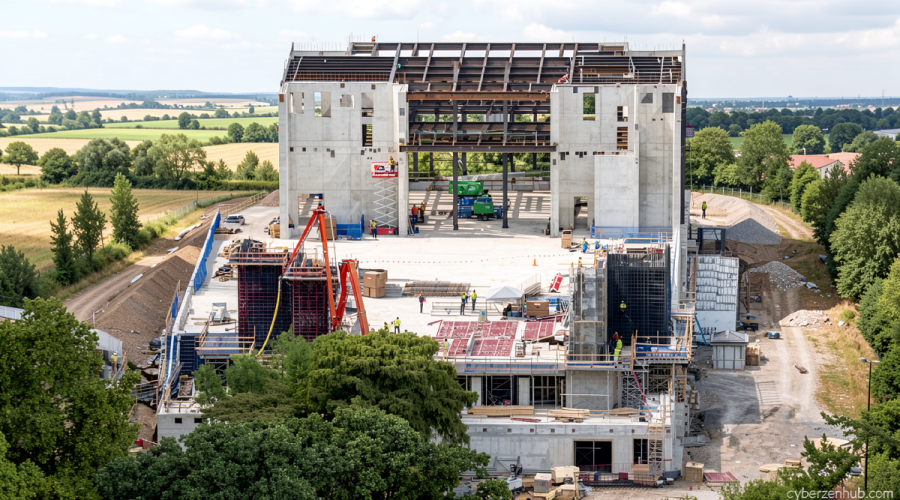
The administration told the court that roughly 250 workers operate around the clock and that the structure stood at about 65 percent completion at the time of filing. With the court’s blessing now in place, work will continue without interruption. The practical consequence: the building will likely be substantially finished before any final judgments land, making a later order to halt or reverse construction logistically difficult.
Trump celebrated the ruling on his social media platform Monday.
“I am pleased to report that the United States Supreme Court has just ruled in favor of the Ballroom/Military Complex being built without any further contingency, doubt, or threat. We are living in the Golden Age of America, and this Building will be one of the Greatest ever constructed in Washington, D.C.”
FAQ
Does this ruling mean the ballroom project is final? No. The court addressed only standing and the stay factors. Whether the project itself complies with federal property statutes remains undecided and could still be litigated on the merits.
Can construction be ordered to stop later? In principle, yes, if a final merits ruling goes against the administration. In practice, once the structure is substantially complete, unwinding it becomes enormously costly and logistically complex.
What role does Congress play in White House construction? Under the Trust’s reading