America 250: David Muir’s Ascent to the Statue of Liberty’s Torch
Cyberzenhub.com – During a special segment commemorating the United States’ 250th anniversary, “World News Tonight” anchor David Muir took a daring step by ascending to the torch of the Statue of Liberty. The climb, which involved navigating the statue’s internal structure, marked the launch of ABC News’ broader “Disney Celebrates America” programming. This multi-platform celebration spans over 24 hours, featuring content across ABC, Disney+, Hulu, ESPN, National Geographic, FX, Freeform, and ABC News Live. The event aims to highlight the nation’s history, culture, and enduring spirit, beginning at 10 p.m. ET on July 3 and concluding on July 4.
A Legacy of Welcome
The Statue of Liberty, a gift from the French people in 1886, has stood as a beacon for millions of immigrants arriving in New York Harbor. Over the course of more than six decades, from the opening of Ellis Island in 1892 to its closure in 1954, the statue welcomed an estimated 12 million newcomers. These individuals, often arriving with little more than hope and determination, found solace and opportunity in the sight of Lady Liberty’s iconic flame. The statue’s role as a symbol of freedom and opportunity is deeply rooted in its design and purpose.
Behind the Scenes of the Celebration
As Muir made his way to the torch, he was joined by Matt Housch, a historian with the National Park Service. Housch provided insight into the statue’s engineering, explaining how its copper structure was crafted to endure the elements. “The copper is so thin, it’s like holding two pennies in your hand,” he remarked, describing the contrast between the statue’s weathered exterior and the darker, rivet-filled interior. This unique construction allows the monument to sway slightly with the wind, a feature designed to protect it from damage over time.
A Conversation with Immigrant Historians
While traveling to Liberty Island via ferry, Muir engaged with Captain Hamilton Clancy, whose family has lived in the shadow of the statue for generations. Clancy’s grandfather once served as the superintendent of the island, offering a personal connection to the site’s history. “It’s impossible to fully imagine what it was like for the immigrants all those years ago, turning the corner and seeing that torch for the first time,” Clancy shared. His words underscored the profound impact the statue had on early arrivals, who saw it as a promise of a better future.
Muir also met Tony Soraci, the grandson of Italian immigrants and a key figure in the 1980s restoration project that preceded the statue’s centennial. Soraci described the original torch as a fragile artifact, having withstood the test of time for over a century. “She’d been up there for 100 years—she’s out in the middle of the ocean,” Soraci said, emphasizing the challenges of preserving the monument. The original torch, now displayed inside the museum on Liberty Island, was eventually replaced due to severe damage, though its historical significance remains intact.
The Vision of Frédéric-Auguste Bartholdi
French sculptor Frédéric-Auguste Bartholdi conceived the statue with a clear intention: to greet every traveler arriving in New York Harbor. His design ensured that the figure of Lady Liberty would be the first thing newcomers encountered. “Bartholdi didn’t know that the most immigrants in history would come into New York City,” Housch noted, highlighting the foresight of the architect. The statue’s placement and scale were calculated to make its message unmistakable, even as the city’s population grew exponentially.
Experiencing the Torch from Above
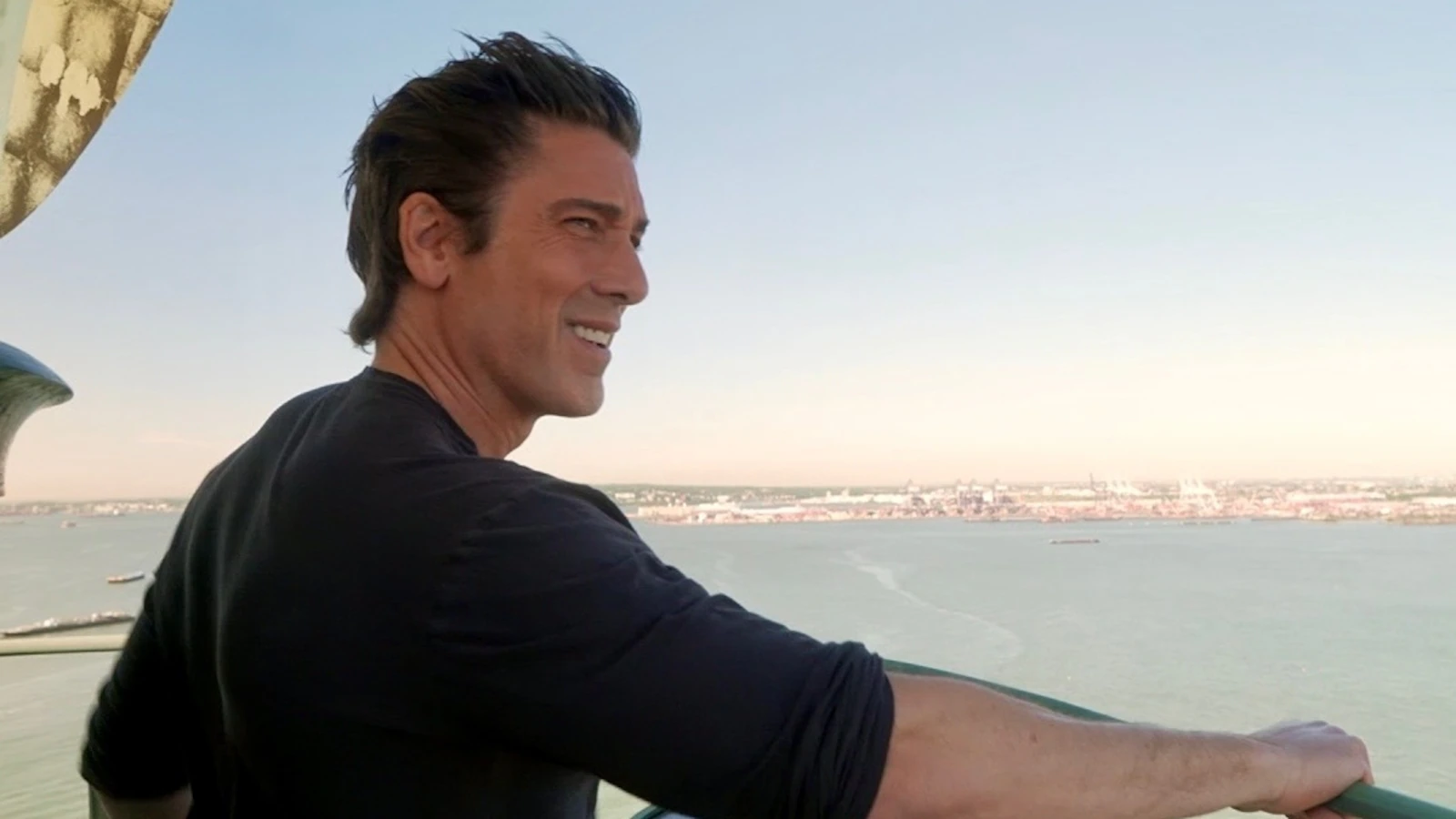
As Muir reached the torch, he was struck by the breathtaking view of the harbor. “Welcome to New York Harbor. You can hear the ferry pulling off. Wow,” he said, capturing the moment’s emotional weight. The torch, standing over 300 feet above the ground, symbolizes not just the nation’s founding ideals but also the resilience of those who sought refuge within its borders. The experience was both a personal milestone and a tribute to the generations of immigrants who once stood where Muir now gazed.
Engineering and Symbolism
The climb revealed the statue’s intricate design, a blend of artistry and functionality. Housch explained that the double helical staircase, which Muir traversed, is a marvel of engineering, allowing visitors to ascend to the crown. The copper sheets, painstakingly assembled, create a patchwork effect that has aged gracefully over time. “The inside we see is dark like a penny, and you can really see all the rivets that are in each copper piece,” Housch added, emphasizing the craftsmanship behind the monument.
Muir’s journey to the torch also highlighted the statue’s adaptability. Designed to sway with the wind, the structure withstands storms and strong currents, a testament to its enduring strength. “You can actually feel the Statue of Liberty swaying with the wind,” Muir observed, noting that architects intentionally built it this way. The movement, though subtle, is a reminder of the natural forces that have shaped the monument over the years.
Reflecting on Immigrant Courage
As the climb concluded, Muir and Clancy reflected on the bravery of those who arrived in New York Harbor. “They were the bravest people I can possibly imagine,” Clancy said, underscoring the risks immigrants took to pursue a new life. The statue, with its welcoming face and radiant torch, has long served as a silent witness to these journeys. Its presence continues to inspire, offering a visual narrative of hope, perseverance, and the American dream.
The National Park Service estimates that nearly 40% of Americans can trace their ancestry back to Ellis Island, reinforcing the statue’s place in national identity. Muir’s climb, combined with interviews and historical insights, brings this legacy to life. From the perspective of a modern journalist, the event bridges past and present, honoring the enduring legacy of the Statue of Liberty as both a physical monument and a symbol of collective aspiration.