
Declassified Intelligence Reports Challenge Trump’s Election Security Claims
Cyberzenhub.com – President Donald Trump presented newly declassified documents during his Thursday address on election security, yet these same reports cast considerable doubt on several of his assertions regarding vulnerabilities within the nation’s electoral framework. While the President characterized the country’s voting systems as susceptible to “hacking, exploitation, and foreign interference,” the intelligence assessments released by the White House reached a notably different conclusion. The overarching finding stated that the primary infrastructure supporting American elections “would be difficult to manipulate on a wide enough scale to alter the election outcome.”
During his speech, Trump emphasized the severity of perceived threats without offering supporting evidence. “Great damage has been done to our country. Our elections were left vulnerable to being rigged and stolen, and the trust of the American people was lost,” he declared. However, the declassified materials suggest a more nuanced reality regarding the resilience of U.S. electoral systems against both domestic and international threats.
Scale Matters in Election Manipulation
The documents clarify an important distinction between localized vulnerabilities and systemic weaknesses. While certain internet-connected components—such as voter registration databases and digital pollbooks—remain susceptible to cyberattacks, the core systems responsible for tabulating, transmitting, and displaying results demonstrate considerable resistance to large-scale manipulation. Furthermore, comprehensive audits and paper trails “would uncover such efforts in the nearly all U.S. states,” providing multiple layers of verification.
“We assess that hostile actors could also manipulate systems that count or tabulate votes — such as voting machines — on a localized basis, but it probably would be difficult to coordinate a campaign to alter voting results on a wide scale,” stated an August 2020 report from the National Intelligence Council.
This assessment extends to mail-in voting as well. The report indicated that foreign actors “would have difficulty coordinating a large scale campaign to manipulate mail-in voting,” noting that robust postal tracking mechanisms “probably would detect any large-scale effort.” Consequently, while cyber attacks might potentially delay the voting process, the report concluded they “probably would not affect the integrity of certified results.”
Foreign Adversaries and Their Capabilities
Another intelligence assessment identified that foreign adversaries including Russia, China, Iran, and North Korea “have the capability to access and potentially manipulate data in U.S. election-related computer systems.” Importantly, however, the report did not uncover “specific plans to interfere with the functioning of these systems” nor did it document past instances where foreign actions directly changed election results.
“We assess that vote tabulation systems would be difficult to manipulate on a wide enough scale to compromise election results,” said a January 2020 report from the National Intelligence Council. “Although an adversary could manipulate voting results across multiple jurisdictions and enough states to influence a presidential election, we judge that conducting such a campaign would be difficult and that postelection audits and paper trails very likely would uncover such an effort.”
According to the August 2020 National Intelligence Council assessment, Russia emerged as the sole nation observed attempting to target or manipulate election systems during the 2020 election cycle. Moscow employed “a range of measures primarily to denigrate former Vice President Biden” while simultaneously sharing largely favorable information about President Trump.
Potential for Election Day Disruptions
The January 2020 National Intelligence Council report identified specific systems vulnerable to disruption. These include official election websites and registration databases, which are frequently publicly accessible, as well as poll books utilized by election officials to verify eligible voters. The document warned that malicious actors could “alter data to potentially prevent individual voters or groups of voters from voting, causing delays on Election Day or forcing voters to use provisional ballots.” Crucially, such actions would not impact the actual votes cast.
“We assess that cyber operations targeting the electronic tabulation of results could delay results reporting from affected jurisdictions, potentially creating public uncertainty but probably not affecting the integrity of certified results,” the report noted.
A 2026 report from the Cybersecurity and Infrastructure Security Agency further contextualized these concerns, stating that election-related software is “subject to the same security concerns as most other software systems.” The agency emphasized the importance of transparency, calling for election officials to openly acknowledge incidents and describe mitigation steps. By doing so, vendors and localities can demonstrate they are proactively defending critical infrastructure rather than obscuring problems.
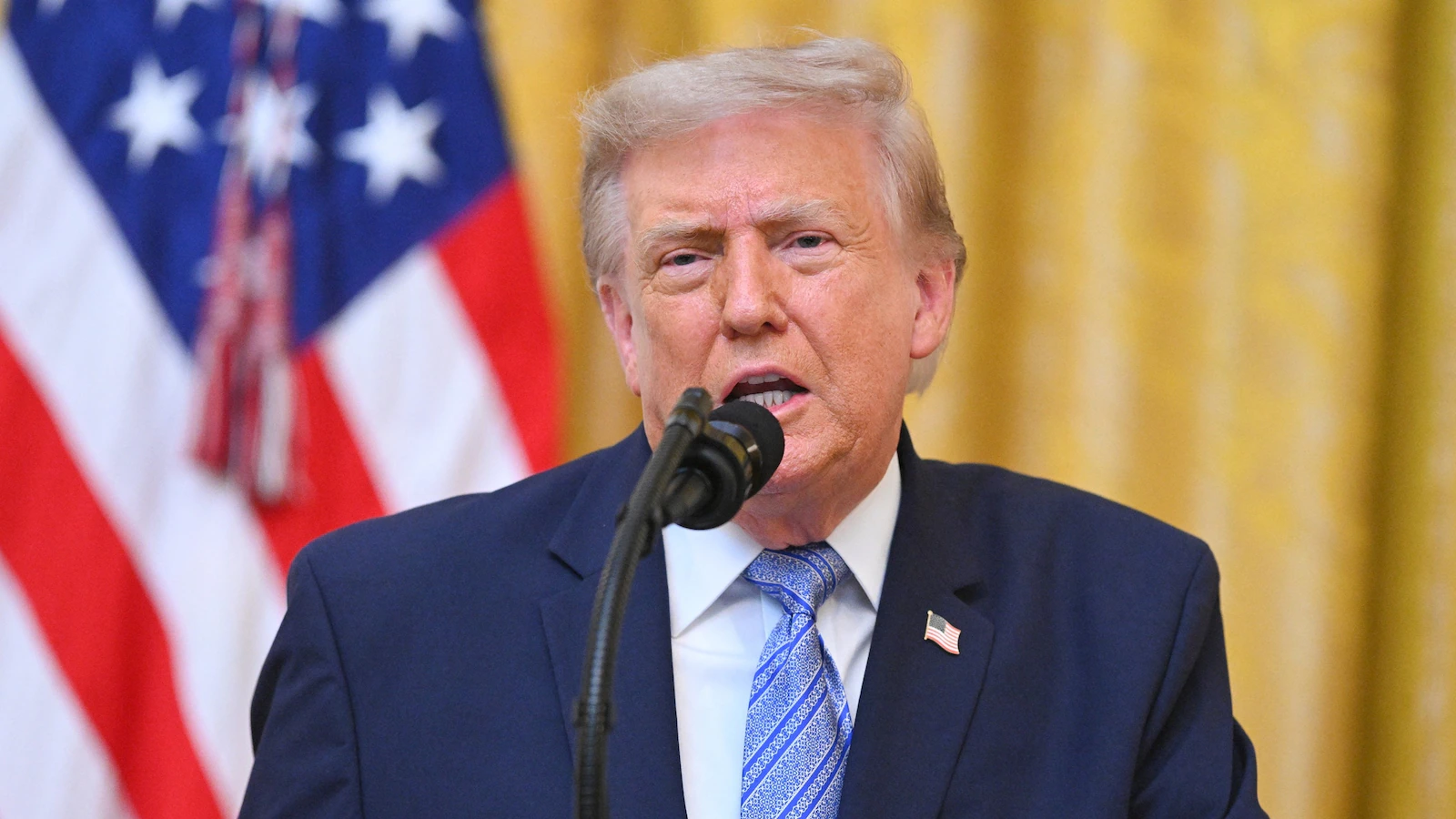
The visual documentation of President Trump’s address shows him speaking from the East Room of the White House in Washington on July 16, 2026, with the declassified documents serving as the foundation for his claims about election security challenges facing the nation.