
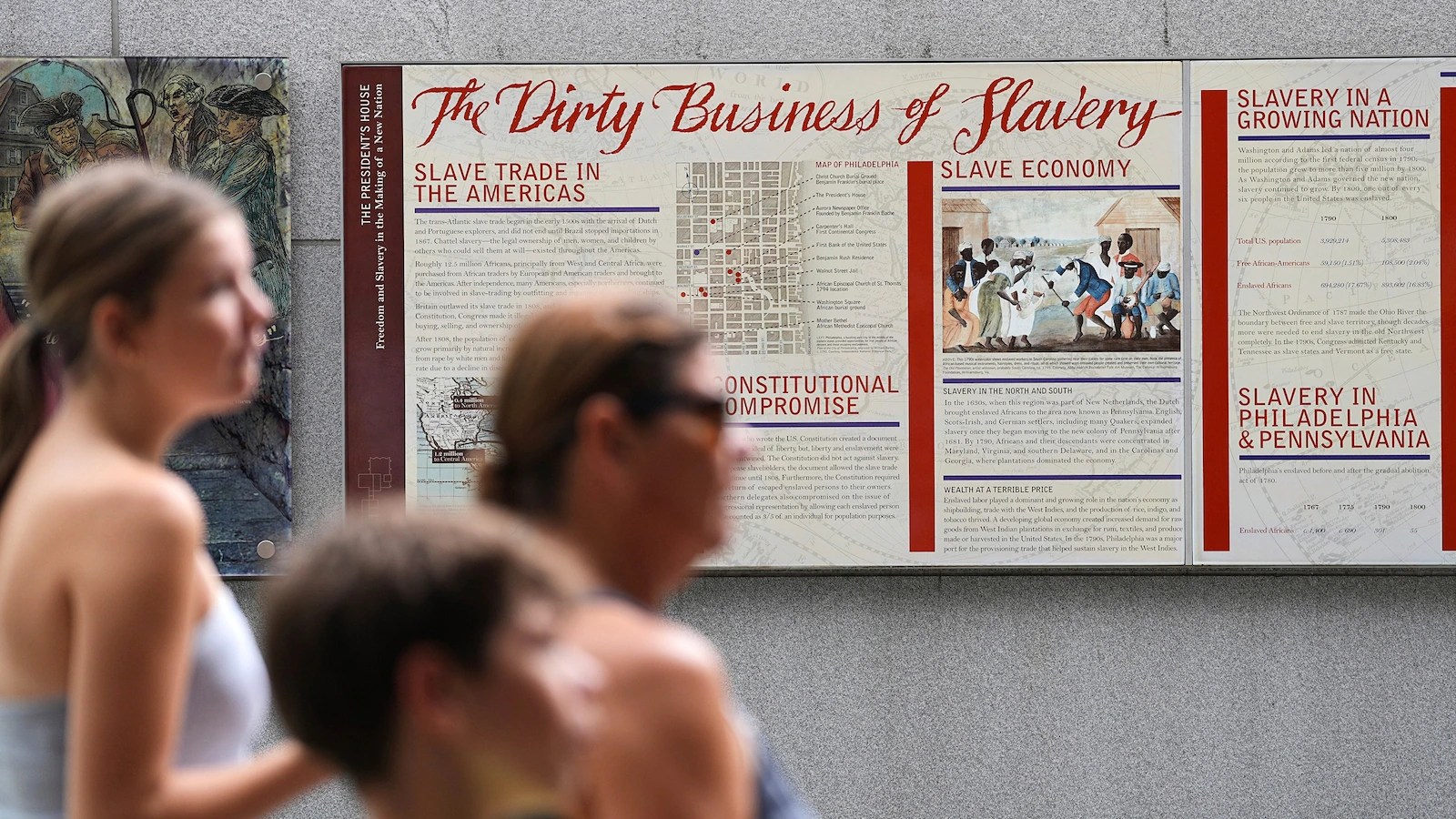
Federal Government Swaps Out Panels at Philadelphia’s Historic Slavery Memorial Following Legal Victory
Cyberzenhub.com – The National Park Service has unveiled a fresh set of informational displays at the President’s House exhibit in Philadelphia, a decision that has sparked considerable pushback from supporters of the original memorial. This historic location served as the residence for President George Washington during most of his time in office, spanning from 1790 through 1797. During those years, Washington held nine enslaved men and women in bondage at the property.
Official Response and New Panel Content
According to a statement released on Wednesday, the Interior Department confirmed the exhibit changes. A department spokesperson emphasized that the updated displays provide comprehensive historical background and showcase significant occurrences at the President’s House alongside other locations within Independence National Historical Park.
“These new panels are full of historical context and highlight the momentous events that took place in the President’s House and the other sites at Independence National Historical Park,” the spokesperson explained.
The representative further noted that the panels recognize the wrongs of slavery, encompassing both its injustices and contradictions. By narrating the experiences of the nine individuals Washington enslaved at the residence, the displays aim to underscore their fundamental humanity.
Community Backlash and Legal Challenges
Previously, the Interior Department indicated that the former panels had unfairly criticized Washington. However, the Avenging the Ancestors Coalition (ATAC), established in 2020 by Philadelphia lawyer Michael Coard, has been leading efforts to secure a slavery memorial at this location. ATAC contends that the updated language downplays both the harsh realities of slavery and Washington’s involvement in the institution.
During a Wednesday press conference, Coard declared that their campaign continues. He asserted that the current approach fails to present complete honesty about the historical record.
“You got to tell the truth, the whole truth and nothing but the truth, and that’s not what they’re doing here,” Coard stated.
Coard characterized the new displays as “mythological panels,” noting that advocates and community members have been observing the site continuously to document any modifications. The panel replacement occurred during the night, adding to concerns about transparency in the process.
Ongoing Court Battle and Political Response
The timing of the panel swap coincides with an active federal lawsuit initiated by Philadelphia. The city is pursuing the reinstatement and preservation of the slavery memorial in its initial configuration. While the litigation remains unresolved, an appellate court recently determined that the National Park Service may proceed with replacing the exhibit during the pending legal proceedings.
Philadelphia Mayor Cherelle Parker addressed the situation through her X platform on Wednesday. She expressed determination to maintain the legal struggle against what she described as a hasty federal action.
“Overnight, under the cover of darkness, the federal government removed panels at the President’s House that told a thorough history of Philadelphia,” Parker wrote. “It was allowed to do this by the decision of the federal court, but that it did so at night shows it understands this action is shameful, that it violates community trust.”
The mayor confirmed that Philadelphia plans to petition for a rehearing before the Third Circuit Court of Appeals judges.
Details on the New Exhibition
In April, the National Park Service released photographs depicting eleven new panels slated for installation. A spokesperson verified on Wednesday that these specific panels had been positioned at the site. It remains uncertain whether any of the original thirty-four panels continue to be part of the revised exhibit.
Coard has previously criticized the administration’s approach, suggesting it amounts to whitewashing and censorship of the historical narrative. He specifically referenced one panel that argued slavery under Washington in Philadelphia was not particularly severe because the enslaved Black residents possessed “a modicum of autonomy.” Additionally, Coard highlighted new wording that emphasizes Washington’s personal discomfort with slavery, even though the first president enslaved more than three hundred Black men, women, and children at his Mount Vernon estate.
The Interior Department’s statement regarding the new panels continues to outline their position on the changes, though further details about the complete exhibition remain under review by historians and community stakeholders alike.