
People of Burkina Faso should forget about democracy, says military ruler
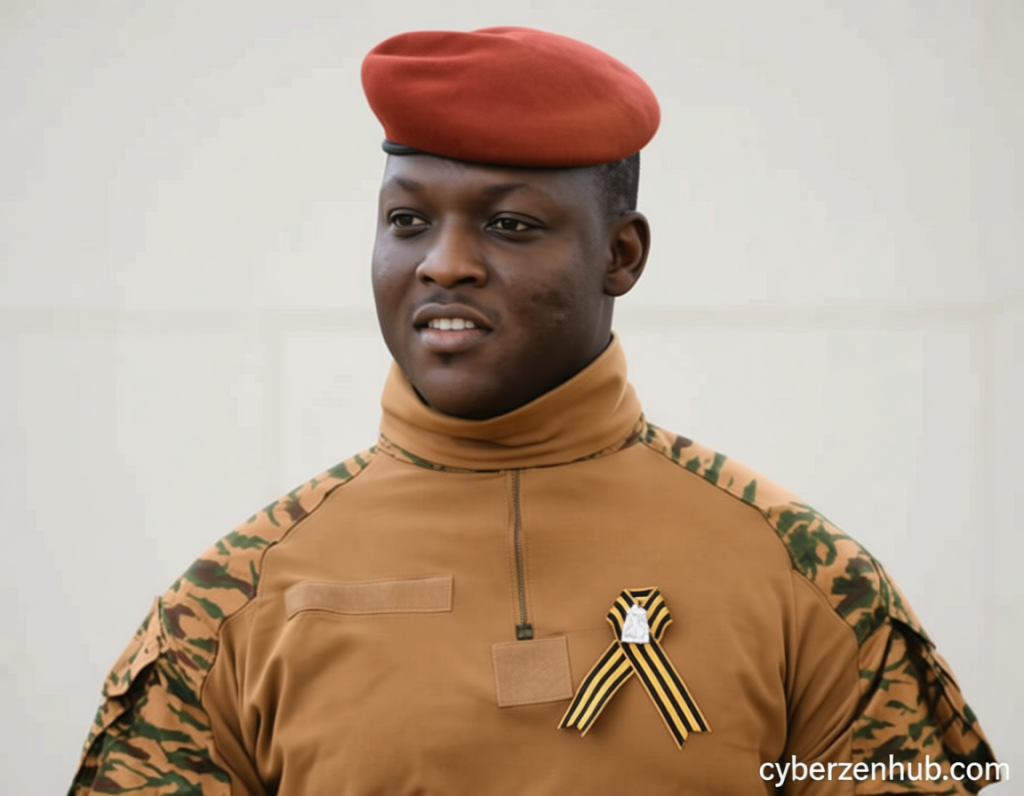
People of Burkina Faso Should Abandon Democratic Hopes, Says Military Leader
President Ibrahim Traoré Challenges Democratic Ideals in Nation’s Transition
In a recent interview with the state-run Radiodiffusion Télévision du Burkina (RTB), military leader Ibrahim Traoré dismissed democratic aspirations, asserting they are no longer relevant to the nation’s progress. Traoré, who seized control through a coup in September 2022, succeeded a previous junta that had governed the country since September 2021. His administration has since restricted political dissent, culminating in the outright banning of parties in January 2024.
Originally scheduled for 2024, the democratic transition was indefinitely postponed when the military junta extended Traoré’s leadership through 2029. During the interview, he emphasized that democracy should be forgotten, stating, “We’re not even talking about elections, first of all… People need to forget about the question of democracy… We must tell the truth, democracy isn’t for us.”
“Democracy, we kill children. Democracy, we drop bombs, we kill women, we destroy hospitals, we kill civilian population. Is that democracy?”
Traoré, 37, has aligned himself with anti-Western rhetoric, drawing inspiration from the revolutionary legacy of Thomas Sankara. The former Marxist leader, who renamed the country from Upper Volta and ruled until his 1987 assassination, is frequently invoked in Traoré’s speeches. However, critics argue that the current junta has struggled to curb the jihadist insurgency that has caused widespread devastation since 2014.
As of the latest data, the conflict has displaced 2.1 million people, approximately 9% of the population, and claimed over 1,800 civilian lives since 2023. Human Rights Watch (HRW) reported that all parties involved—包括 the military, allied militias, and al-Qaida-linked Jama’at Nusrat al-Islam wa al-Muslimin (JNIM)—have committed crimes against humanity and war crimes. The organization accused the junta of ethnically cleansing Fulani communities, conducting targeted killings, and forcibly relocating populations.
HRW also highlighted a specific incident in April 2024, when 223 civilians were allegedly executed in a single day. The government denied these claims and took measures to silence the group, banning HRW alongside several international media outlets, including The Guardian. Despite these efforts, the junta’s grip on power remains contested by both domestic and global observers.