
UK security adviser attended US-Iran talks and judged deal was within reach
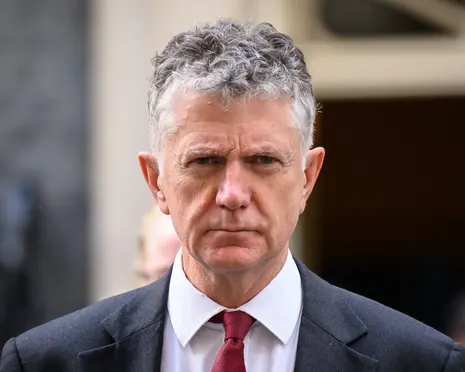
UK Security Adviser Participated in US-Iran Negotiations, Believed Agreement Viable
The Guardian has disclosed that Jonathan Powell, Britain’s national security adviser, participated in the concluding US-Iran discussions in Geneva. He concluded that Tehran’s proposal on its nuclear program could have averted an immediate military escalation. Powell noted progress made during late February talks, describing the Iranian offer as “surprising,” according to multiple sources.
Two days after the Geneva sessions concluded, and following a scheduled technical dialogue in Vienna, the US and Israel launched an attack on Iran. Powell’s involvement in the talks, along with his detailed insight into their development, was confirmed by three separate sources. One source mentioned his presence at the Oman ambassadorial residence in Cologny, Geneva, as a consultant, highlighting concerns over US expertise represented by Jared Kushner and Steve Witkoff.
Kushner and Witkoff invited IAEA director Rafael Grossi to the Geneva talks to offer technical guidance, though Kushner later claimed he and Witkoff had a “pretty deep understanding of the issues that matter in this.” Nuclear specialists pointed out that Witkoff’s statements on Iran’s nuclear program contained fundamental inaccuracies. Powell, with extensive mediation experience, brought an expert from the UK Cabinet Office to the talks, as reported by a western diplomat.
“Jonathan thought there was a deal to be done, but Iran were not quite there yet, especially on the issue of UN inspections of its nuclear sites,” the diplomat stated.
A former official, briefed by Geneva participants, added: “Witkoff and Kushner did not bring a US technical team with them. They used Grossi as their technical expert, but that is not his job. So Jonathan Powell took his own team.” The UK team observed that the Iranians had not yet finalized their offer, though it represented progress and was not expected to be their last proposal. British officials anticipated the Vienna negotiations to proceed based on the Geneva advancements.
The Vienna talks, initially planned for March 2, were aborted when the US and Israel initiated their attack on March 17. Powell’s close involvement in the Geneva discussions, alongside earlier meetings in the Swiss city, partially explains the UK government’s hesitation to endorse the US strike. This reluctance has intensified the UK-US relationship’s strain.
The UK cited a lack of conclusive evidence regarding an Iranian missile threat to Europe or a near-term nuclear weapons capability. This is the first indication that Britain played a significant role in the talks, enabling it to evaluate whether diplomatic avenues had been exhausted before the US attack. The UK viewed the strike as unlawful and premature, as Powell believed a negotiated resolution to Iran’s nuclear assurances was still possible.
Downing Street has not commented on Powell’s participation in the Geneva talks or his evaluation of them. Keir Starmer has faced criticism from Trump for not fully supporting the US attack, including initially blocking the use of British military bases for defensive purposes after Iran began targeting UK Gulf allies. Trump has also warned that NATO’s European members might risk alliance cohesion if they fail to assist in opening the Strait of Hormuz.
The Geneva negotiations were mediated by Oman’s foreign minister, Badr bin Hamad Al Busaidi. Gulf diplomats did not clarify the basis for Powell’s access to the talks, though his long-standing ties with the US—particularly his prior role as Tony Blair’s chief of staff—likely contributed. UK officials later remarked on Iran’s willingness to commit to a permanent agreement, unlike the 2015 nuclear deal, which included sunset clauses limiting restrictions on its program.