
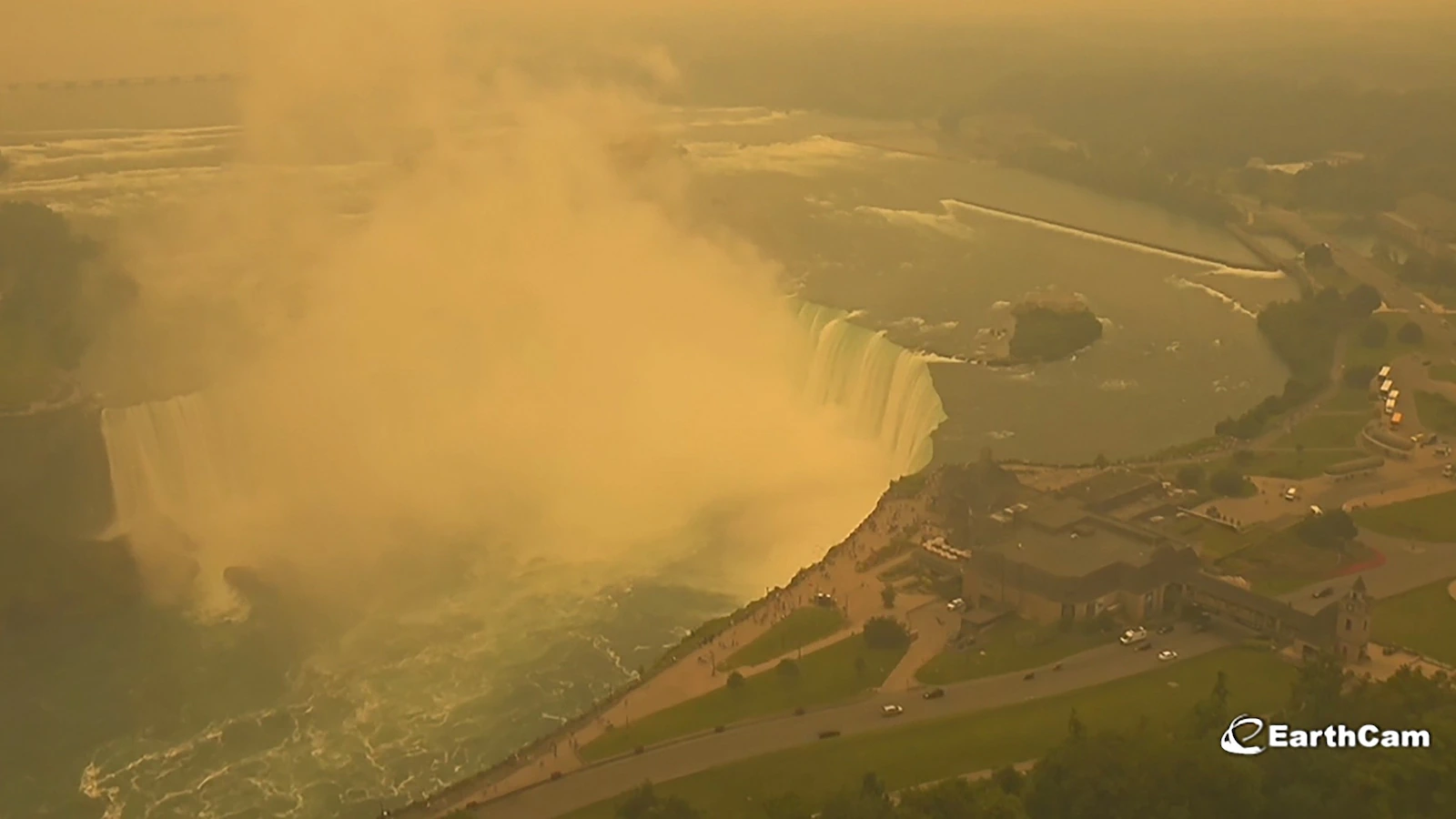
Canadian Wildfire Plume Sweeps Across United States, Affecting Millions
Cyberzenhub.com – As of Wednesday, the Canadian landscape was ablaze with more than 830 active wildfires, while northern Minnesota alone hosted over a dozen burning simultaneously. These conflagrations have triggered mandatory evacuation orders and are pushing unhealthy smoke southward into the contiguous United States. The most substantial fires are currently raging through west-central Ontario, where dense forest canopies are being consumed and vast quantities of particulate matter are being released into the atmosphere.
Wind patterns have shifted to carry this smoke directly into American territory, creating hazardous air conditions for millions of residents across the upper Midwest and northeastern regions. This atmospheric event is expected to persist through the end of the week, with air quality projections indicating continued deterioration in affected areas.
Urban Centers Brace for Poor Air Quality
New York City and surrounding regions experienced unhealthy air quality levels on Wednesday afternoon, according to data collected by the AirNow monitoring network. The Eastern Lake Ontario region, Central New York, and portions of Western New York all registered concerning readings. Mayor Zohran Mamdani addressed the situation publicly through social media, emphasizing the widespread impact of the smoke.
“Air quality has reached unhealthy levels in parts of NYC due to smoke from Canadian wildfires,” Mamdani stated on Wednesday. “Poor air quality affects everyone, but some people are more sensitive to it than others, including people with heart or lung conditions, older adults, pregnant New Yorkers, and infants and children.”
In response to the deteriorating conditions, the mayor encouraged residents to minimize outdoor exertion and remain indoors in air-conditioned environments. The city has also distributed complimentary masks to assist residents in protecting themselves from airborne particles.
Heat and Smoke Create Compound Challenge
The smoke intrusion arrives concurrently with an extreme heat wave stretching across the entire nation. Residents in the northeastern and upper Midwestern states face dual threats, as they must endure both poor air quality and soaring temperatures. Projections indicate that Wednesday and Thursday will bring temperatures ranging from the high nineties to triple digits in many affected communities.
Weather patterns suggest relief may arrive soon. Rain is anticipated to sweep through the upper Midwest on Friday, followed by precipitation across the Northeast on Saturday. These showers should help wash particulate matter from the atmosphere and improve visibility and breathing conditions.
Currently, extremely heavy smoke blankets areas including Duluth, Minnesota, and Marquette, Michigan, while northern Wisconsin experiences extreme smoke conditions. Throughout Wednesday, heavy smoke zones moved across New York state and New England, eventually reaching from New York City to Boston by afternoon.
Extended Forecast and Health Implications
By Wednesday evening, the smoke plume was projected to extend from Buffalo to New York City and Philadelphia, passing through Green Bay, Milwaukee, Grand Rapids, Detroit, and Toronto. While conditions in New York City are anticipated to be less severe than during the dramatic orange skies of June 2023, hazy conditions remain likely with unhealthy air quality expected to persist.
Thursday brings continued challenges, with smoky conditions potentially worsening from Duluth to Green Bay and Marquette, extending through much of northern Michigan. Additionally, Cleveland, Columbus, Baltimore, and Washington, D.C. are forecast to experience heavy smoke on Thursday.
The situation poses serious risks for millions of residents, with air quality potentially reaching dangerous levels for the general population, not merely those with preexisting respiratory conditions. Air quality alerts currently span from Minnesota to New York City, encompassing the entirety of Wisconsin and Michigan.
Meanwhile, extreme heat continues to affect much of the country. The East Coast from Washington, D.C., to New York City could see temperatures approaching 100 degrees on Wednesday. Heat indices, which account for humidity’s effect on perceived temperature, indicate it will feel like 104 degrees in New York City, 105 degrees in the nation’s capital, and up to 107 degrees in Philadelphia.