
Will Ukraine help Gulf states down Iranian drones?
Will Ukraine Help Gulf States Counter Iranian Drones?
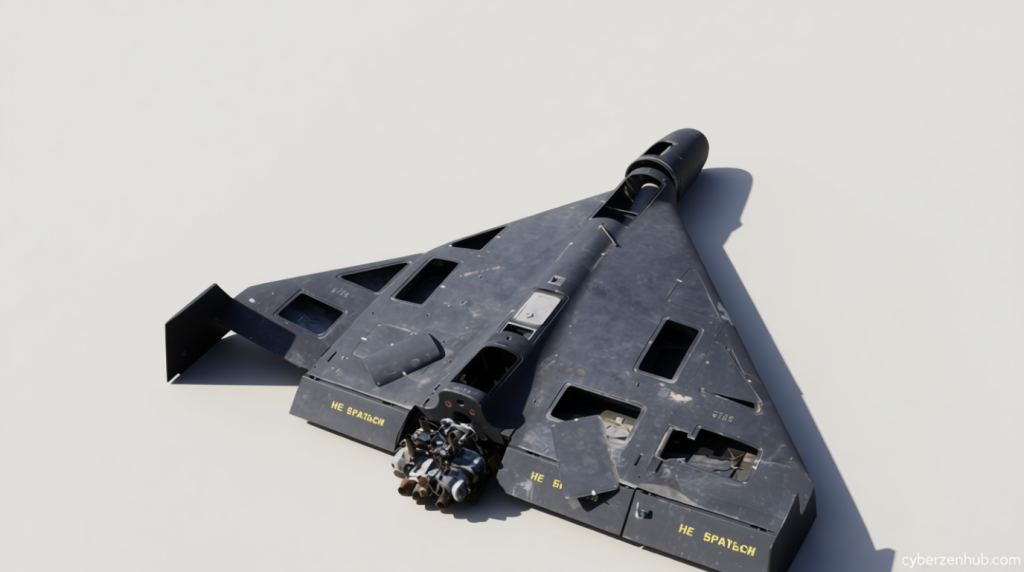
Ukrainian officials have expressed readiness to assist Middle Eastern nations in defending against Iranian drone attacks. The country claims it possesses significant knowledge in countering such threats and is prepared to share it with Gulf states under fire. However, this support may depend on a key condition, as highlighted by President Volodymyr Zelenskyy.
Conditions for Support
Zelenskyy emphasized that Ukraine’s involvement would require a temporary pause in hostilities. On his Telegram channel, he stated that “leaders of the Middle East have strong ties with Russians; they can ask Russia to implement a month-long ceasefire.” Once this agreement is secured, Kyiv plans to deploy its most skilled drone defense operators to the region, mirroring its support for Israel.
“We can help Israel in the same way,”
Zelenskyy added, underscoring Ukraine’s potential role in regional security. The country’s Foreign Minister, Andrii Sybiha, echoed this sentiment in a Reuters interview, noting that Ukrainian forces could neutralize up to 90% of Iranian Shahed drones using locally developed interceptors. He also noted the limitation of sending all personnel, stressing the need for a guaranteed ceasefire to protect Ukraine from Russian strikes.
Strategic Shift in Gulf States
Oleksandr Chara of the Center for Defense Strategies (CDS) observed that Arab nations initially overlooked the strategic importance of Russia’s role in the Ukrainian conflict. This changed when Iranian drones—equipped with Russian parts—began targeting Gulf infrastructure. Chara argued that Ukraine’s expertise could now offer critical value to these countries.
“Their thinking changed when Iranian drones, fitted with some Russian components, began striking targets in the Gulf region,”
he explained, pointing out that Kyiv’s experience in intercepting hundreds of drones nightly provides a unique advantage. He outlined three potential collaboration models: deploying Ukrainian forces with interceptors, training local pilots, or funneling Gulf capital into Ukraine’s defense industry for mass production.
Economic and Technical Considerations
According to military analyst Oleh Katkov, Gulf states have the financial means to acquire advanced equipment but lack actionable data. “The value lies solely in the fact that we can help build a suitable air defense system based on our own experience,”
Katkov told DW. He stressed that Ukraine’s insights on deployment numbers, ammunition requirements, and equipment effectiveness are unmatched globally.
On March 3, Zelenskyy mentioned that Ukraine might transfer drone production to Gulf allies, seeking in return American PAC-3 missiles for its Patriot system. The Financial Times reported on March 5 that the Pentagon and at least one Gulf state were discussing purchases of Ukrainian-made interceptors, as noted by an anonymous industry representative.
Zelenskyy aims to leverage Ukraine’s military experience to encourage Gulf nations to shift from supporting Russia to pressuring it. Oleksandr Chara described this as a “classic win-win situation,” where both sides gain from enhanced cooperation. The potential for shared knowledge and technology could reshape the balance of power in the region.