South Carolinians Head to Polls to Narrow Competitive Landscape
Cyberzenhub.com – In a pivotal Tuesday election, South Carolina voters will determine the future of key state races, including the governor’s contest and the U.S. Senate race. The outcome of these elections could solidify the Republican Party’s dominance in the state, which has seen consistent victories for its candidates over the past several decades. With high stakes and a mix of seasoned politicians and emerging voices, the primary season has drawn intense scrutiny, particularly as the party’s most prominent figures vie for their next chapter in state politics.
Republican Alliances and Trump’s Influence
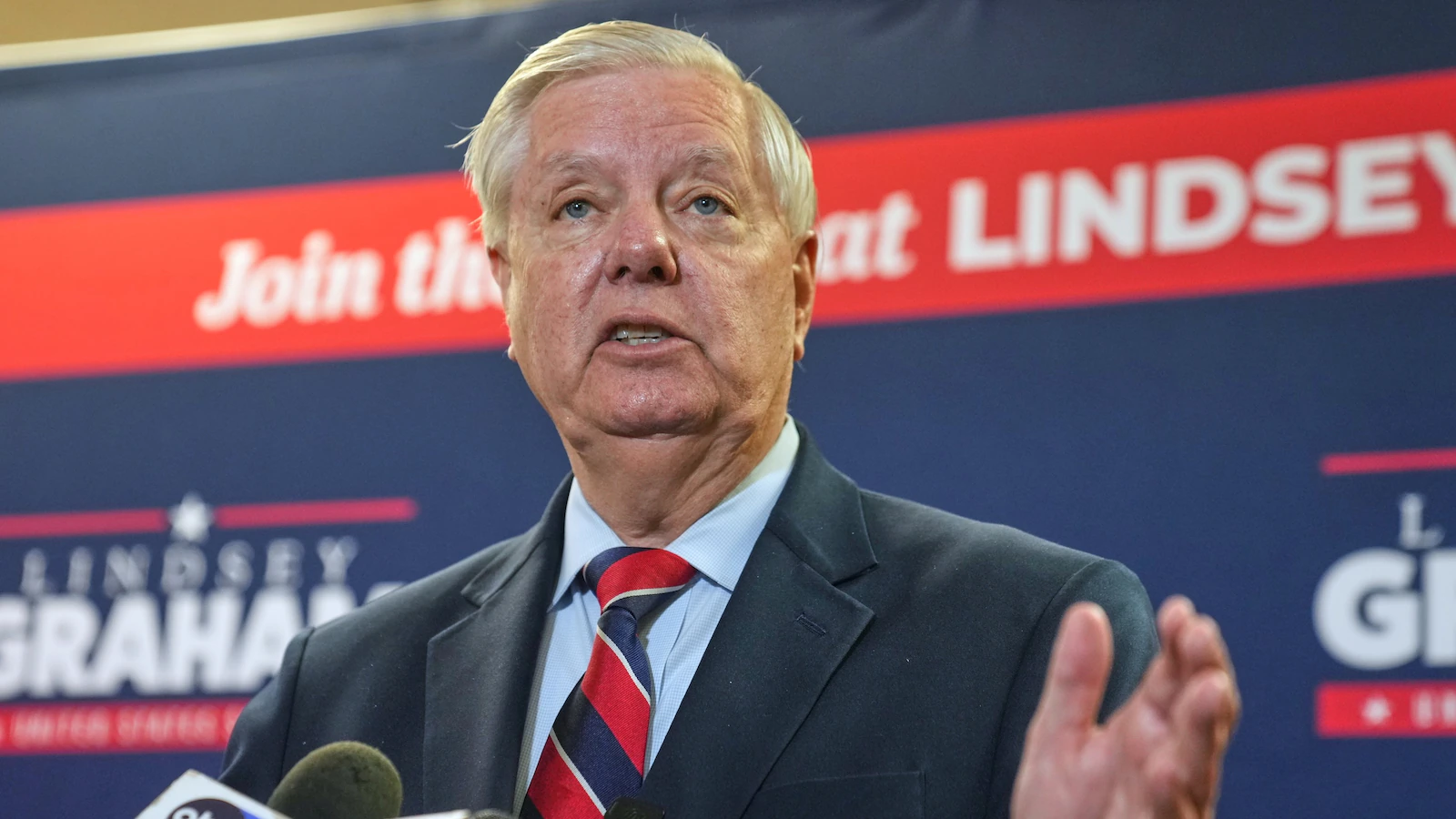
At the heart of the Republican campaigns is Sen. Lindsey Graham, a longstanding ally of President Donald Trump and a central figure in the state’s political landscape. Graham’s bid for a fifth term in the Senate has been bolstered by Trump’s endorsement, which he received even before his campaign officially launched. This support underscores Graham’s role as a key architect of the party’s strategy, especially in his ongoing efforts to align South Carolina with the administration’s foreign policy goals.
Meanwhile, the governor’s race has become a battleground for Trump’s loyalty. Lieutenant Governor Pamela Evette, who received the president’s backing, faces a crowded field of opponents, including U.S. Rep. Nancy Mace. Evette’s campaign has emphasized her ties to Trump, with campaign materials frequently showcasing photos and videos of her with the president. Her alliance with outgoing Governor Henry McMaster, a long-standing Trump supporter, further signals the administration’s influence in the race. However, the endorsement alone may not guarantee victory, as the primary results could determine whether Evette secures the nomination outright or faces a runoff on June 23.
Republican Primaries: A Test of Loyalty
Within the Republican primary, the competition for Trump’s favor has intensified. Candidates have not only campaigned on policy but also sought to prove their alignment with the president’s vision. Lt. Gov. Pamela Evette has positioned herself as the leader in this effort, leveraging Trump’s endorsement to bolster her candidacy. Yet, the president’s public criticism of some contenders has added an extra layer of complexity to the race.
Rom Reddy, a coastal businessman running on a self-funded campaign, has framed his lack of political experience as a strength. His approach echoes Trump’s populist style, drawing comparisons between the two in their unorthodox strategies. Similarly, Ralph Norman, a conservative House member and member of the Freedom Caucus, has shifted his focus from Trump to former Gov. Nikki Haley in this cycle, despite his strong support for the president during his first term. This pivot highlights the evolving dynamics within the party, where candidates must balance loyalty to Trump with broader appeal to South Carolina’s electorate.
Sen. Graham’s Endorsement and Strategic Campaign
Sen. Lindsey Graham’s campaign for the Senate has been marked by his close relationship with Trump, a bond that has persisted despite the president’s shifting priorities. Graham has long advocated for direct confrontation with Iran, a stance that aligns with Trump’s recent military actions. This strategic alignment has helped him fend off primary challengers, a pattern that continued in the 2020 election when he defeated Jaime Harrison by a 10-point margin. However, this year’s primary has presented new challenges, with Graham facing criticism from some of his own supporters who question his conservative credentials.
One of his main rivals, Greenville businessman Mark Lynch, has accused Graham of being insufficiently aligned with the state’s conservative values. Lynch, who identifies as an “America First” candidate, has framed himself as the alternative to Graham’s established influence. Yet, Trump’s public remarks about Lynch have complicated his position, with the president calling him a “lunatic” and a “disaster for the Republican Party.” This contrast between Graham’s steady leadership and Lynch’s grassroots appeal adds tension to the race, which could shape the party’s future direction in the state.
Democratic Opposition: A Long-Awaited Challenge
For Democrats, the Tuesday elections represent a rare opportunity to break the state’s decades-long Republican stronghold. The party has not won a governor’s seat or a Senate race in South Carolina since the early 2000s, making this campaign a critical test of their ability to mobilize voters. Despite the odds, Democrats are mounting a determined effort, focusing on issues that resonate with voters who may be disillusioned with the current administration.
In the governor’s race, State Rep. Jermaine Johnson, a rising figure within the party, has entered the fray against established opponents like Billy Webster, the founder of a payday loan company. Webster’s campaign has drawn significant attention, partly due to his financial backing of $2 million for the race. Meanwhile, attorney Mullins McLeod has also emerged as a notable challenger, despite earlier calls from party leaders to halt his campaign after a 2025 disorderly conduct arrest was captured on dashcam footage. These dynamics reflect the Democrats’ struggle to unify their base and counter the entrenched Republican machinery.
For the Senate race, Charleston physician Annie Andrews is vying for the Democratic nomination against Brandon Brown, a funeral home owner and former House candidate. Andrews’ campaign has highlighted her experience in public service, while Brown’s platform focuses on economic and community issues. Their competition underscores the Democrats’ efforts to attract voters who may feel underrepresented by the Republican establishment. However, their ability to challenge Graham will depend on their capacity to address the state’s priorities and capitalize on growing dissatisfaction with Trump’s policies.
Historical Context and Future Implications
The Republican dominance in South Carolina is rooted in a legacy of consistent victories. For instance, Henry McMaster’s 2022 gubernatorial win came with a nearly 18-point margin, cementing his position as a key figure in the state’s political future. Graham’s 2020 Senate win, which followed one of the most expensive races in state history, further illustrates the party’s ability to fund and sustain successful campaigns. Yet, the 2024 elections may mark a turning point, as both parties grapple with changing voter sentiments and the impact of national events on local politics.
Trump’s continued popularity in South Carolina, despite national challenges, has been a cornerstone of Republican strategy. His support for Graham and Evette signals his confidence in their ability to maintain the party’s control. However, the internal competition among Republicans has revealed fractures, particularly in how they balance Trump’s influence with local issues. As the primary races unfold, these tensions will shape the trajectory of both the state and national Republican Party.
“I often speak with the president about the ongoing conflict, and we remain in lockstep on the need for Washington to confront Tehran directly.”
— Sen. Lindsey Graham, reflecting his long-standing partnership with Trump in foreign policy matters.
The results of Tuesday’s elections will have far-reaching implications, not only for South Carolina but also for the broader political landscape. For Republicans, maintaining their dominance will require navigating both internal rivalries and external pressures. For Democrats, success in these races could signal a shift in power, setting the stage for a potential redefinition of the state’s political identity in the years to come.
Popular Reads: Israel conducts strikes in Iran, IDF says Jun 7, 9:43 PM Body of American Airlines flight attendant found washed up on Florida beach Jun 7, 5:51 PM Missing American student found dead in Japan Jun 7, 8:47 AM