Trump Doubles Down on Data Centers as Midterm Stakes Rise
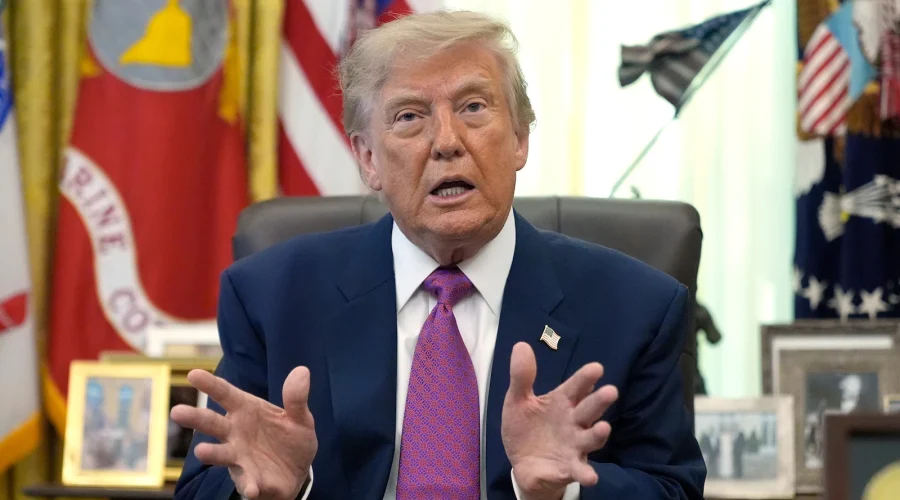
Cyberzenhub.com – With midterm elections approaching and artificial intelligence reshaping the political landscape, President Donald Trump issued an unambiguous endorsement of data-center construction on Monday, telling American communities to embrace what he framed as the economic engine of the coming decade. In a social media post published Monday morning, the president urged localities to “let Data Reign,” framing opposition to these facilities as a choice between prosperity and stagnation.
“The only reason that communities throughout the U.S.A. should not want Data Centers is if they want to end up being backwards and poor. If they want to be successful and rich, with far lower taxes and jobs all over the place, let Data Reign.”
The post landed amid a growing national debate over whether the rapid expansion of hyperscale computing facilities is worth the environmental, infrastructural, and fiscal costs imposed on host communities. Data centers — vast complexes housing thousands of server racks — demand enormous quantities of land, cooling water, and electrical capacity. Their operation can push local power grids to their limits, and while they generate construction-phase employment, their long-term workforce footprint is comparatively small relative to their physical scale.
The China Angle and the “Golden Goose”
Trump, who has repeatedly positioned the United States’ AI trajectory as a zero-sum contest with Beijing, sharpened his rhetoric by invoking the foreign-competition narrative. He warned that halting data-center development would hand a strategic advantage to China’s technology sector.
“If we kill the Golden Goose, you will only have yourselves to blame. China could not be happier with this anti Data Center movement. Actually, they can’t believe it is happening!”
The framing positions data centers not merely as commercial infrastructure but as instruments of national competitiveness — a characterization that aligns with the administration’s broader push to position American firms at the frontier of generative AI and large-scale model training.
Vance Frames the Economic Calculus
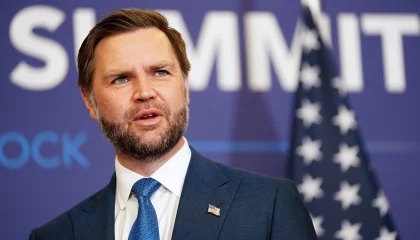
Vice President JD Vance, speaking to reporters before boarding Air Force Two at Joint Base Andrews on August 31, 2026, sought to channel the controversy toward a narrower fiscal question. He acknowledged that public resistance to new facilities is real but argued its root cause is predictable and solvable.
“I think probably 99% of the backlash to data centers has come in areas where building a data center means higher utility and higher electricity for the people on the ground.”
Vance’s prescription: companies should pair each new data center with corresponding generation capacity and feed surplus power back into the regional grid rather than drawing it exclusively. He pointed to federal deregulatory measures already in motion as tools that could make this pairing economically viable.
“So I think what these companies have to do is take advantage of some of the federal deregulatory efforts that we’ve undertaken. If you build a data center, you should be putting power back into the grid, not taking it out. And if that is happening, I don’t think the data centers are that controversial.”
He added that the president’s Monday message was fundamentally about the economics of the AI sector — that data centers constitute a critical node in what he called the “AI economy,” and that their construction must be accompanied by matching power-plant investment.
Midterm Politics and Party-Internal Warnings
The timing of Trump’s post is not incidental. AI firms have poured millions of dollars into congressional races and primary contests, backing candidates who favor lighter regulation of model training and deployment while opposing those who would impose siting restrictions or energy-usage caps. The issue has become a wedge topic in swing districts across multiple states.
Within the Republican Party itself, anxiety is surfacing. Earlier this month, the National Republican Senatorial Committee — the Senate GOP’s campaign arm — circulated a memo to AI companies operating in Ohio, cautioning that local opposition to new facilities could erode incumbent Senator John Husted’s reelection prospects. The memo effectively warned that unchecked expansion without community buy-in carries electoral risk for the party’s own candidates.
Texas offered a concrete example of friction. Governor Greg Abbott recently ordered a pause on new data-center projects in the state pending compliance reviews, a move Trump publicly dismissed as an error. In a Punchbowl interview earlier this month, the president said:
“I saw Texas the other day sort of is against data centers. I think it’s a mistake. And I’m not taking positions, I just think it’s a mistake, because there are other communities that want it. When a community wants it, it means a lot of money is going to come into that community.”
In the same interview, Trump described data centers as “tremendously important for the economics” of the country and suggested their eventual economic weight could surpass that of oil — a comparison that underscores how far the administration has moved from treating computing infrastructure as a niche industry to treating it as a primary sector of national output.
What Communities Actually Face
For residents of towns and counties considering hosting a hyperscale facility, the calculus is concrete. A single campus can consume gigawatts of electricity, draw millions of gallons of water daily for cooling loops, and transform hundreds of acres of rural or industrial land. Property-tax revenue may rise, but so too can utility rates for neighboring households if the grid is not reinforced in parallel. Noise from cooling fans, truck traffic hauling equipment, and visual changes to the landscape compound the disruption during construction phases that can stretch across multiple years.
The administration’s position, as articulated by both Trump and Vance, is that these costs are manageable and that the alternative — ceding AI leadership to China — carries far greater long-term economic risk. Critics in local governments and environmental groups counter that the benefits are concentrated among a handful of technology firms while the burdens are distributed across ratepayers and ecosystems, and that the “deregulatory” path Vance outlined has yet to demonstrate itself in practice.
As the midterm calendar tightens, expect the data-center question to migrate from back-page infrastructure coverage into the center of campaign advertising, town-hall debates, and primary-ballot contests across at least a dozen states. Whether communities ultimately “let Data Reign” or push back will shape not only local utility bills but the trajectory of American AI policy for the next decade.
Related Reading
Frequently Asked Questions
What is Let Data Reign?
Let Data Reign is the main topic of this guide. The article explains the context, practical details, and next steps readers should understand.
Why does Let Data Reign matter?
Let Data Reign matters because readers are looking for a useful answer, not just a short summary. Good content should match search intent and help them decide what to do next.