Tarrant County Faces Vote on Drastic Polling-Place Cuts Ahead of Midterms
Cyberzenhub.com – Fort Worth-area voters will soon face a dramatically reshaped Election Day landscape if county leaders approve a plan to eliminate dozens of polling locations across one of Texas’ most politically contested jurisdictions. The proposal, scheduled for a Tuesday vote by Tarrant County officials, would slash 92 sites compared with what was available during the 2022 midterm cycle, leaving residents with more than 200 remaining locations spread across the sprawling metropolitan area that borders Dallas and encompasses Fort Worth.
The timing makes the decision especially charged. Tarrant County, Texas’ third-largest county by population, is home to more than two million residents and has become a decisive battleground in the U.S. Senate contest pitting Democratic state Representative James Talarico against Republican Attorney General Ken Paxton. With millions of ballots at stake in a race that could reshape the national balance of power, questions about ballot access and convenience carry outsized weight.
What the Plan Actually Changes
County Elections Administrator Clint Ludwig framed the reductions as a resource-allocation measure aimed at phasing out sites that historically drew very few voters. Under the proposed configuration, locations situated near bus stops and in compliance with federal accessibility requirements would be prioritized for retention. Officials indicated that the average distance a voter would travel to reach the nearest remaining site under the new map is roughly 1.5 miles, or about 2.4 kilometers.
Tarrant County Judge Tim O’Hare, a Republican who serves as the county’s chief administrator, pointed to what he described as an inefficient legacy practice of placing two polling sites directly across the street from each other. His stated goal was to eliminate such redundancies while preserving adequate geographic coverage.
Democratic Opposition and Civil-Liberties Alarm
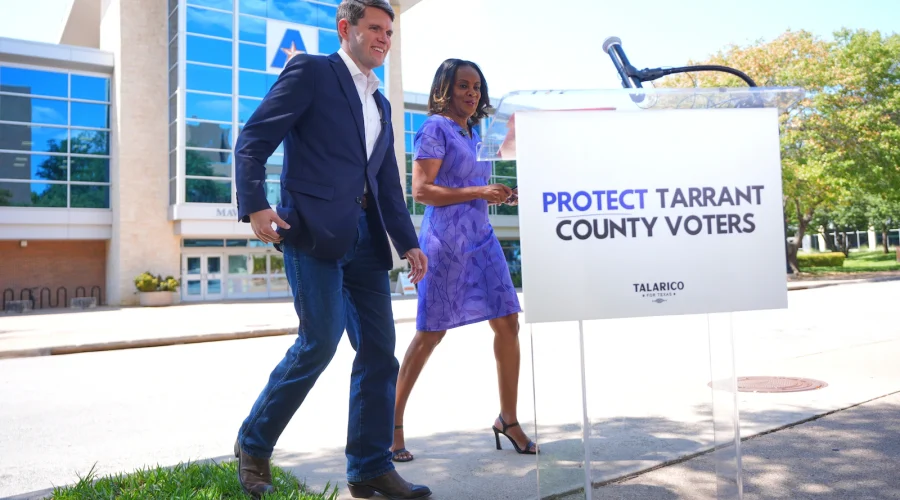
State Representative Talarico made the case against the cuts explicit at a Sunday news conference, arguing that the reductions would make voting harder for ordinary residents.
“The most powerful people in this county, the most powerful people in this country, don’t want us to be able vote easily,” Talarico said.
On Friday, the NAACP and the American Civil Liberties Union joined a coalition of voting-rights organizations in signing a joint letter urging the county to reject the proposal. The signatories warned that closures would be disproportionately felt in neighborhoods with high concentrations of minority voters. Census data show that roughly one-third of Tarrant County residents identify as Hispanic and approximately 19.2 percent as Black, demographics that make access questions particularly salient in a county where margins in statewide races can be razor-thin.
Carol Raburn, who served as an election judge in Tarrant County during the March primaries, characterized the proposal as a form of voter suppression. She argued that when convenient, nearby polling places disappear, many residents simply stop showing up to vote.
“Because what happens when people don’t have a convenient place to go vote that’s not too far away from where they are, where they live? They just don’t go vote because they’ve made it so difficult,” Raburn said.
Officials and Republicans Push Back
County elections officials stressed that closing underused polling locations is not a novel practice in Texas. They pointed to two structural drivers: the statewide shift toward countywide voting, which allows ballots cast at any designated site to count for any race, and persistent difficulty recruiting enough poll workers to staff every location on Election Day. Several other Texas counties have either already trimmed their site counts for November or are weighing similar reductions, though a handful have moved in the opposite direction and added locations.
Representative Matt Shaheen, the Republican chairman of the House Elections Committee, dismissed the characterization of site reductions as suppression.
“We’re clearly not trying to suppress the vote,” Shaheen said. “That’s a silly accusation.”
Spokespeople for Attorney General Paxton did not respond to emailed requests for comment on the Tarrant County proposal.
The Broader Texas Context
Texas law grants each of the state’s 254 counties independent authority to determine how many polling places to operate. Tarrant County adopted the countywide-voting model in 2019 but did not immediately begin trimming its site count after the switch. The current proposal represents the first major reduction under that framework, which is why opponents argue the timing—weeks before a high-stakes federal election—matters.
Kristin Miles, elections administrator for Bastrop County outside Austin, offered a more measured perspective, noting that site reductions can make logistical sense depending on actual turnout patterns. She cited the example of rural locations that might serve only a handful of voters across an entire Election Day, arguing that maintaining such sites strains limited staff without meaningfully expanding access.
The Tuesday vote will determine whether Tarrant County voters cast their November ballots under the existing map or under a substantially compressed one. For a county of its size and demographic complexity, the answer will shape not only local election administration but also the practical experience of millions of residents in one of the most watched Senate races in the country.
Related Reading
Frequently Asked Questions
What is Plan to cut number of polling?
Plan to cut number of polling is the main topic of this guide. The article explains the context, practical details, and next steps readers should understand.
Why does Plan to cut number of polling matter?
Plan to cut number of polling matters because readers are looking for a useful answer, not just a short summary. Good content should match search intent and help them decide what to do next.