NYC Public Schools Ban AI Through Middle School
Cyberzenhub.com – Starting with the 2026-2027 academic year, New York City Public Schools will prohibit the use of generative artificial intelligence tools across every classroom, homework assignment, and schoolwork activity for students in pre-K through eighth grade. The district framed the move as a one-year moratorium rather than a permanent ban, giving educators and policymakers a defined window to study how these tools reshape cognition, classroom dynamics, and academic outcomes before deciding on longer-term policy.
What the Ban Covers
The restriction spans grades 2-K through 8, meaning a four-year-old in a Brooklyn pre-K room and a thirteen-year-old completing eighth grade in Queens will both work without access to chatbots, AI writing assistants, image generators, or any other generative model during the coming year. High school students fall outside this particular order, so the question of secondary-school AI use remains open for separate deliberation.
The scale of the decision is hard to overstate. The city’s unified system enrolls roughly one million students across more than 1,500 schools and programs. A blanket policy of this magnitude touches every lesson plan, every teacher’s daily routine, and every parent’s expectations about what tools their child may use at home. No other district in the country has issued a comparable sweeping prohibition at this level of granularity.
Political Context and Rationale
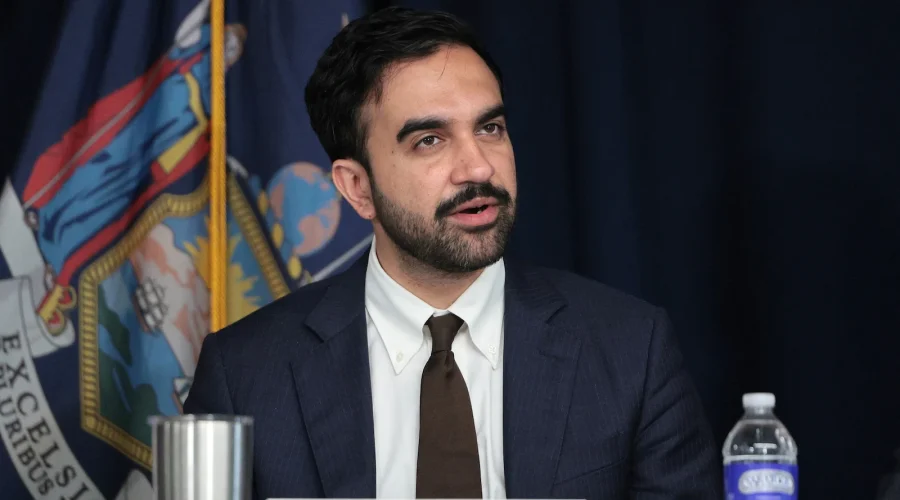
Mayor Zohran Mamdani, who oversees the city’s education budget and policy direction, characterized the move as a deliberate pause rather than a rejection of the technology. In a statement confirming the ban, he described the city as implementing a moratorium on generative AI for the affected age groups and pledged that the district would devote the coming year to examining how the tools alter cognitive development and academic outcomes.
“We are studying the impacts of this technology,” Mamdani said, signaling that the decision is meant to buy time for evidence-based policy rather than to settle the debate permanently.
The mayor made the announcement publicly alongside New York Governor Kathy Hochul, State Comptroller Thomas DiNapoli, and City Comptroller Mark Levine during the annual New York State Financial Control Board meeting held on August 12, 2026. The setting underscored that the ban is being treated as a matter of fiscal and institutional governance, not merely a pedagogical preference.
The timing reflects a widening national conversation. Over the past two years, school boards from Texas to Massachusetts have grappled with whether to embrace, restrict, or ban AI tools in K-12 settings. Some districts have adopted permissive policies allowing students to use chatbots for brainstorming or drafting, while others have issued outright prohibitions citing concerns about over-reliance, data privacy, and the erosion of foundational skills such as handwriting, arithmetic, and independent reasoning. Education advocates have generally called for structured guardrails rather than total bans; the district’s decision goes further than most of those proposals, opting for a clean break during the moratorium period.
Practical Impact and Frequently Asked Questions
For teachers, the coming year will require a reset of lesson plans that may have incorporated AI-assisted activities during pilot programs or informal classroom experiments. Professional development sessions will likely focus on traditional pedagogy, differentiated instruction without algorithmic scaffolding, and assessment methods that do not depend on students interacting with a language model. Parents will receive communications outlining what their children may and may not use at home, and the district’s technology office will need to ensure that school-issued devices and platforms do not default to AI-enabled features. The one-year window also creates a natural research opportunity: the district can collect data on student performance, teacher workload, and skill development to inform whether the moratorium should be extended, modified, or lifted.
Frequently Asked Questions
Does the ban apply to high school students? No. The moratorium covers grades 2-K through 8 only. High school AI-use policy will be addressed separately by the district.
How long will the restriction last? The district has defined it as a one-year moratorium aligned with the 2026-2027 school year. After that period, officials will review collected data before deciding whether to extend, adjust, or end the prohibition.
Can parents use AI tools at home to help their children with homework? The district’s communications will outline permitted home-use guidelines. Until those guidelines are published, parents should assume that schoolwork completed with generative AI assistance may not align with classroom expectations during the moratorium year.
What happens to existing AI-integrated curricula or pilot programs? Teachers are expected to revise lesson plans to remove algorithmic scaffolding. Professional development sessions will provide alternative instructional strategies and assessment approaches that do not rely on language-model interaction.