
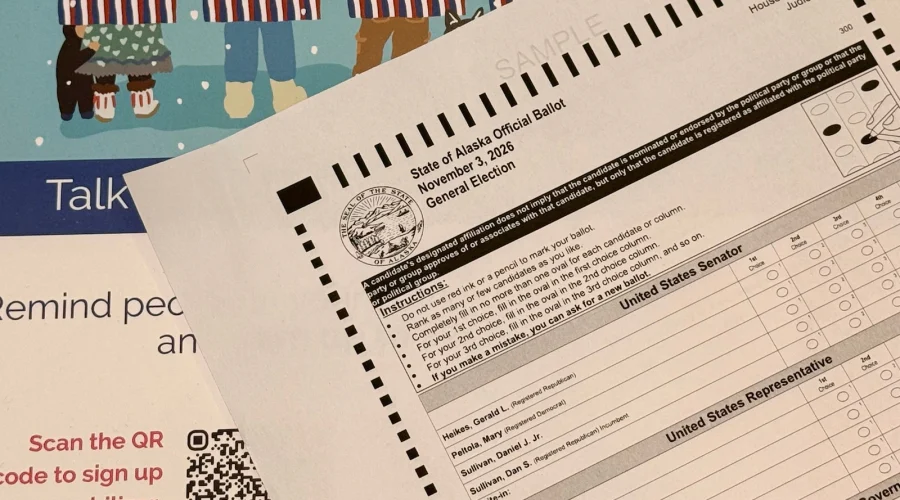
Ranked Choice Voting Takes Center Stage in Maine and Alaska
Cyberzenhub.com – Ranked choice voting explained as voters in Maine and Alaska rank candidates rather than choosing only one. The method could affect congressional and state contests by allowing ballots to continue counting when a voter’s first choice is eliminated.
Maine has used ranked choice voting since 2018, while Alaska has used it for four years. The system remains politically contentious: 19 states have prohibited it, and Alaska voters will consider a ballot question on Nov. 3 that could determine whether the state joins them.
How Ranked Choice Voting Works
Voters can rank candidates first, second, third and beyond. They do not have to fill every available spot; someone may rank only one candidate if that is their preference.
If one candidate wins more than half of first-choice votes, that candidate wins immediately. If no candidate reaches that majority, the candidate with the fewest first-choice votes is eliminated.
Ballots for the eliminated candidate are reviewed and transferred to each voter’s next-ranked candidate who remains in the race. A ballot with no further ranking does not transfer, but the original vote remains part of the election record.
The process repeats in additional rounds, eliminating the lowest remaining candidate and reallocating eligible ballots until a candidate has a majority of active votes. Election jurisdictions generally use computer programs to tabulate these instant-runoff rounds, often completing calculations on election night.
Why Supporters Favor the System
Supporters say ranked choice voting can reduce the “spoiler” effect in races with several candidates. Under a traditional system, a candidate can win without majority support when opponents split the rest of the vote. With rankings, people can support an independent or third-party candidate first while naming another acceptable candidate as a later choice.
Maine’s 2014 gubernatorial race is often cited in this debate. Republican Paul LePage won with less than 50% of the vote in a field that included Democrat Mike Michaud and independent Eliot Cutler. Under a ranked ballot, supporters of an eliminated independent candidate could still influence the final round through their next preference.
“The thinking is that even if my favorite candidate has no chance of winning, I can put my support and vote for someone who I also think is good,” Ismar Volić, director of the Institute for Mathematics and Democracy at Wellesley College, said.
David McCune, a mathematics professor at William Jewell College who has studied the system for a decade, said the available evidence indicates that elections may become more competitive after adopting ranked choice voting.
“The evidence points to the fact that elections become more competitive when you switch to RCV,” McCune said.
How Campaigns Respond to Ranked Ballots
Ranked choice voting explained as voters can matter beyond the first preference. Candidates may seek not only first-choice support but also second- and third-choice rankings from people who favor another candidate initially.
David Kimball, a political science professor at the University of Missouri at St. Louis, said campaigns have adjusted to compete for those additional rankings. Negative attacks can be especially risky because candidates may need support from voters whose top choice is someone else.
FAQ for Maine and Alaska Voters
Do I need to rank every candidate? No. You may rank as many or as few candidates as you wish. Ranking additional candidates gives your ballot another possible preference if your higher-ranked choices are eliminated.
Will my second choice count against my first choice? No. Your lower choices are considered only if the candidates ranked above them have been eliminated.
When do rankings matter most? They matter when no candidate receives more than half of first-choice votes. At that point, the lowest-performing candidate is removed and eligible ballots move to the next available preference.