
White House correspondents’ dinner shooting: Timeline of chaos
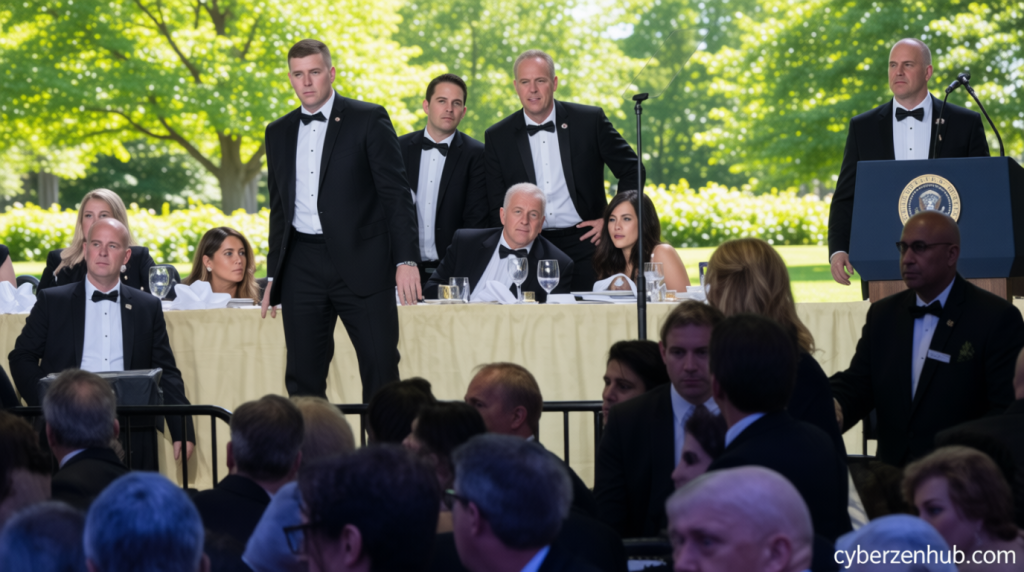
White House Correspondents’ Dinner Shooting: Timeline of Chaos
White House correspondents dinner shooting – The White House Correspondents Association (WHCA) annual dinner, held on April 25, 2026, at the Washington Hilton Hotel, took a violent turn just moments after President Donald Trump and First Lady Melania Trump arrived to mingle with over 2,000 journalists and public figures. The evening, meant to celebrate the media’s role in shaping national discourse, was abruptly interrupted by gunfire that erupted outside the International Ballroom, sending a wave of panic through the attendees.
At the heart of the disruption was an alleged assailant, later confirmed by authorities as 31-year-old Cole Allen from Torrance, California. According to sources, Allen had navigated through a security checkpoint and bypassed Secret Service personnel before reaching the event’s entrance. His objective, as reported to ABC News, was to “maximize the harm he could cause” during the gathering. The attack unfolded as the Trumps were in the middle of their ceremonial welcome, with the event’s atmosphere shifting from celebration to urgency in an instant.
By 7 p.m. ET, the ballroom was abuzz with activity. Guests in formal attire walked the red carpet, engaging in interviews and capturing images for the evening’s coverage. Secretary of State Marco Rubio, addressing the event via C-SPAN, remarked,
“It’s one night in which a lot of people that maybe don’t see each other every day get to see each other.”
His words, though lighthearted, echoed the significance of the occasion as the scene prepared for the evening’s formal proceedings.
As the clock struck 8:13 p.m., key figures from the WHCA board of directors and White House Press Secretary Karoline Leavitt took their places at the head table. The stage was set for the night’s highlights, including the introduction of Vice President JD Vance. By 8:15 p.m., Vance had been welcomed onto the dais, signaling the official start of the program. The atmosphere remained professional and poised as the U.S. Marine Band played “Hail to the Chief,” a traditional salute to the incoming president.
At 8:16 p.m., the ceremony continued with the Joint Armed Forces Color Guard marching to the stage. Marine Master Gunnery Sgt. Kevin Bennear followed, delivering a rendition of “The Star-Spangled Banner” that filled the ballroom with pride and anticipation. Yet, just moments later, the scene was upended by a sudden burst of sound from the rear of the room. A stunned expression crossed First Lady Melania Trump’s face as the gunfire resonated through the space, triggering immediate chaos.
By 8:30 p.m., the first course—salad—was being served to guests. The dinner’s social rhythm was disrupted as Secret Service agents swiftly moved to secure the area. At 8:34 p.m., mentalist Oz Pearlman was on stage, performing a trick for the first couple and press secretary Karoline Leavitt. His act, which included guessing the name of Leavitt’s unborn child, became a pivotal moment in the timeline of the incident. Pearlman later described the scene to ABC News, noting how the audience’s attention was drawn to the couple’s interaction.
At 8:36 p.m., the moment of tension escalated. As Pearlman revealed the name of Leavitt’s expected child, a sharp noise echoed from outside the ballroom. Secret Service agents sprang into action, forming a barrier around the president and first lady. One agent was seen leaping onto the stage to shield Trump, while others in full tactical gear fanned out to secure the perimeter. Attendees scrambled for cover, ducking beneath tables and chairs as the situation grew more intense.
During the commotion, a Secret Service officer was struck by gunfire. However, the officer survived after the bulletproof vest absorbed the impact. The assailant, Cole Allen, had already exchanged fire with agents and was apprehended before entering the ballroom. His actions, though brief, created a ripple effect across the event, with security personnel prioritizing the safety of the Trumps and the other dignitaries.
Chronological Breakdown of the Incident
7:00 p.m. ET – The evening commenced with guests donning formal attire, stepping onto the red carpet, and engaging with the media. The ambiance was lively, with the Washington Hilton Hotel serving as a backdrop for the gathering’s official start. Secretary of State Marco Rubio’s C-SPAN address underscored the importance of the event, highlighting its role as a platform for political and journalistic connections.
8:13 p.m. – WHCA board members and the press secretary gathered at the front of the ballroom, setting the stage for the evening’s keynote speeches. The event’s program was progressing smoothly, with no indication of the impending crisis. This moment marked the culmination of the welcoming process, as the dinner transitioned into its formal programming.
8:15 p.m. – Vice President JD Vance was introduced, his presence adding a layer of presidential formality to the proceedings. The dais, where key speakers would address the audience, was now occupied by Vance, who was poised to deliver his remarks. The Marine Band’s performance of “Hail to the Chief” was a symbolic gesture, emphasizing the honor of the occasion.
8:16 p.m. – The formal welcome ceremony reached its peak as the announcer introduced the 45th and 47th U.S. presidents, Donald J. Trump and Melania Trump. The audience’s applause was a testament to the couple’s prominence, though it would soon be overshadowed by the sounds of gunfire.
8:17 p.m. – The color guard ceremony unfolded, with the Joint Armed Forces Color Guard presenting the U.S. flag. Their precision was interrupted when the noise from outside the ballroom shattered the moment of ceremony. The tension in the room grew palpable, as attendees exchanged worried glances and the Secret Service prepared for an immediate response.
8:20 p.m. – The dinner’s keynote speaker, Weijia Jiang, the association’s president and CBS’s senior White House correspondent, took the stage to deliver opening remarks. Her address, which thanked the Trumps for their attendance, was a brief but meaningful acknowledgment of the evening’s purpose. “It is meaningful that you are with us tonight,” Jiang stated, her words highlighting the significance of the gathering.
8:30 p.m. – The first course was served, marking a return to the event’s normal flow. Waiters moved efficiently through the crowd, offering salads to attendees. This routine moment of dining contrasted sharply with the sudden intrusion of violence, as the room’s atmosphere shifted from camaraderie to alarm.
8:34 p.m. – Mentalist Oz Pearlman performed on stage, his act drawing attention from the audience. The trick involved guessing the name of Karoline Leavitt’s unborn child, a playful yet poignant moment in the evening’s programming. Pearlman’s performance, while light-hearted, became a dramatic prelude to the chaos that followed.
8:36 p.m. – As Pearlman revealed the baby’s name, a loud noise erupted from the rear of the ballroom. The shock of the sound was immediate, with Melania Trump’s expression freezing in disbelief. Secret Service agents rushed onto the stage, positioning themselves between the president and the audience. The incident’s aftermath saw the couple being escorted offstage, with agents ensuring their safety through swift and coordinated efforts.
The Secret Service’s response was decisive, with agents in tactical gear swiftly securing the area. The suspect, Cole Allen, was identified as the source of the gunfire, and his actions were described as calculated. The bullets fired during the incident were a testament to his intent, though his attempt to breach the ballroom was thwarted before he could reach his target. The officer’s survival, thanks to his bulletproof vest, was a critical factor in containing the situation.
As the dust settled, the focus shifted to the investigation into Allen’s motives. Authorities were quick to release details about the suspect’s background, confirming his identity and the weapons he carried. The White House Correspondents’ Dinner, once a celebration of media and politics, now stood as a symbol of the unpredictable nature of public events. The timeline of the shooting, from its initial trigger to its resolution, underscored the resilience of the security team and the rapid response that prevented further harm.