American Teacher Stephen Hubbard Freed as Steve Witkoff Meets Vladimir Putin
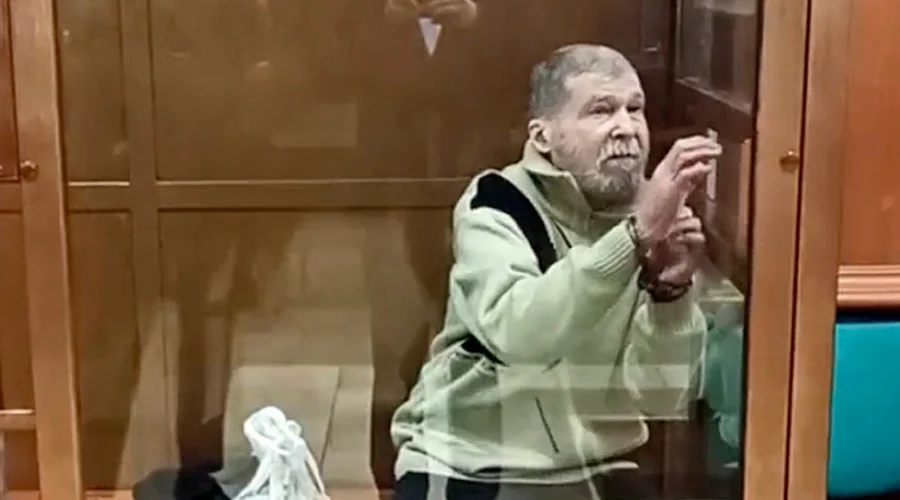
Cyberzenhub.com – Stephen Hubbard, a 74-year-old retired teacher from Michigan who had spent years in Russian detention, is heading back to the United States after his release was secured during a visit by U.S. special envoy Steve Witkoff to St. Petersburg.
Witkoff arrived in Russia on Wednesday for talks with President Vladimir Putin as the Trump administration pursued the release of Hubbard and other Americans held by Moscow. Hubbard had been detained since 2022 after living for years in eastern Ukraine.
The meeting also addressed wider efforts to bring Russia, Ukraine and the United States into renewed discussions over the war that began with Moscow’s full-scale invasion of Ukraine in February 2022.
Hubbard Taken to St. Petersburg Airport
During the St. Petersburg meeting, Putin said Hubbard had been brought to Pulkovo Airport for his departure. Witkoff thanked the Russian president for allowing the American’s release and relayed President Donald Trump’s appreciation.
“I want to thank you very much. The president sends his thanks,” Witkoff said.
“Because of you, he’s going home to his family,” Witkoff added, describing Putin as “a humanitarian.”
Trump later said he had personally asked Putin to free Hubbard during a telephone conversation the previous week. He said Hubbard was already traveling home and would soon reunite with his relatives.
“Stephen is on his way back home and will soon be with his family,” Trump wrote.
Trump also said the United States had not provided anything in exchange for Hubbard’s freedom.
“The U.S. was not required to give anything in return — an unprecedented situation for Russia,” Trump wrote. “There was no ‘swap’ necessary for this release.”
Detained in Eastern Ukraine
Hubbard had lived in eastern Ukraine as a civilian from roughly 2014. His family said he taught English there and was in a relationship with a Ukrainian woman. He was detained in April 2022, shortly after Russia expanded its military assault on Ukraine.
Russian authorities accused Hubbard of serving as a mercenary for Ukraine and sentenced him to nearly seven years in prison. His relatives and U.S. officials rejected those accusations, maintaining that the charges were false. The State Department designated Hubbard as wrongfully detained.
His case became part of the broader and often sensitive effort to obtain the freedom of Americans detained by foreign governments. Such cases can involve criminal allegations disputed by Washington, diplomatic negotiations and difficult decisions about whether concessions or exchanges are appropriate.
In Hubbard’s situation, Trump emphasized that his release was not tied to a prisoner swap. The president also defended his decision to waive numerous sanctions on Russia, arguing that additional penalties could have disrupted the negotiations.
“If sanctions would have been placed, certainly those negotiations would have come to a complete and total halt,” Trump wrote.
Talks Extend Beyond the Detention Case
Witkoff’s trip came as officials worked toward an arrangement that could result in the release of several U.S. citizens held in Russia. Discussions focused on Hubbard and other Americans whom the administration believes were detained on questionable grounds.
But Hubbard’s return was not the only topic on the agenda in St. Petersburg. Witkoff and Putin also discussed possible next steps in diplomacy over the war in Ukraine, which has continued despite repeated international efforts to establish a path toward negotiations.
“One thing that I hope to accomplish today is to have some good conversation between us about resumption potentially of trilateral talks between Ukraine, Russia and the United States,” Witkoff said.
The reference to trilateral talks points to the central challenge facing any effort to end the conflict: Ukraine, Russia and the United States each play distinct roles in shaping the diplomatic environment. Ukraine remains the country under attack, Russia controls the decision to continue or alter its military campaign, and Washington has been a major supporter of Kyiv while also seeking channels for negotiations.
Witkoff also highlighted the prospect of future economic ties between Washington and Moscow.
“Business and economic cooperation” could offer “an example of what the possibilities are in the future,” Witkoff said.
That message linked the immediate humanitarian outcome for Hubbard with a broader argument that diplomacy could create openings beyond the battlefield. Whether talks produce sustained progress remains uncertain, particularly as the war continues and the positions of Moscow and Kyiv remain far apart.
Meetings With European and Ukrainian Leaders
Before traveling to Russia, Witkoff met Ukrainian President Volodymyr Zelenskyy in Oslo, Norway, on Tuesday. Norwegian Prime Minister Jonas Gahr Store and Finnish President Alexander Stubb also attended the gathering.
The sequence of meetings underscored the administration’s effort to engage both Ukrainian and Russian leaders while maintaining discussions with European partners. For Hubbard’s family, however, the immediate significance is more personal: a teacher who had been held since 2022 is now leaving Russia and preparing to return home.
Related Reading
Frequently Asked Questions
What is Detained American Stephen Hubbard released by Russia?
Detained American Stephen Hubbard released by Russia is the main topic of this guide. The article explains the context, practical details, and next steps readers should understand.
Why does Detained American Stephen Hubbard released by Russia matter?
Detained American Stephen Hubbard released by Russia matters because readers are looking for a useful answer, not just a short summary. Good content should match search intent and help them decide what to do next.