
Southern Poverty Law Center wants Todd Blanche to correct ‘false’ statements about organization
Southern Poverty Law Center Seeks Correction from Todd Blanche on Alleged Misstatements
Southern Poverty Law Center wants Todd – Legal representatives of the Southern Poverty Law Center (SPLC) have petitioned a federal judge to compel Acting Attorney General Todd Blanche to retract claims he made regarding the organization’s use of informants, according to a recent court filing. The motion, submitted to the Middle District of Alabama, challenges statements Blanche issued during an interview with Fox News last Tuesday, which asserted that the government lacked evidence demonstrating the SPLC had shared information obtained from informants with law enforcement agencies.
Context of the Legal Dispute
The SPLC attorneys argue that Blanche’s remarks are misleading and inconsistent with the facts. They contend that the government had already received detailed documentation weeks prior to the indictment, showcasing how the organization’s informants were used to gather intelligence on hate groups. This evidence, they claim, directly contradicts Blanche’s assertion that such information was not disclosed to authorities. The legal team emphasized that the SPLC’s cooperation with the government has long been a central element of its investigative work, particularly in targeting extremist organizations.
“Those statements are false,” SPLC attorneys wrote in the filing. “Weeks before the indictment, undersigned counsel provided information to the government demonstrating unequivocally that the SPLC had shared information from its informants with law enforcement.”
Blanche, who assumed the role of acting attorney general earlier this month after replacing Pam Bondi, announced the indictment against the SPLC last week. The charges, brought by a federal grand jury, include wire fraud, bank fraud, and money laundering, all tied to the organization’s payments to informants who infiltrated white supremacist groups. This marks a significant development in the ongoing legal battle, as the SPLC faces allegations that its investigative tactics have been misused to support, rather than dismantle, extremist networks.
History of SPLC’s Informant Use
The SPLC’s attorneys highlighted a key meeting held on April 6 with Alabama prosecutors, during which they detailed how their past cooperation with law enforcement led to the indictment of a prominent member of a well-known extremist group. This instance, they argue, serves as evidence of the organization’s transparency and willingness to assist in combating hate groups. However, Blanche’s subsequent claims appear to downplay this cooperation, suggesting a disconnect between the SPLC’s actions and the government’s portrayal of its methods.
Following the interview, the SPLC’s legal team sent a letter to the Department of Justice (DOJ), requesting that it be shared with the grand jury. The letter outlines six categories of activities the SPLC claims illustrate its systematic use of informants to dismantle white supremacist organizations. These categories, they assert, challenge the core of the government’s case, which argues that the SPLC leveraged informants to bolster extremist groups rather than weaken them. The attorneys contend that the government’s reliance on these claims could undermine the credibility of the case against the SPLC.
Requests for Judicial Intervention
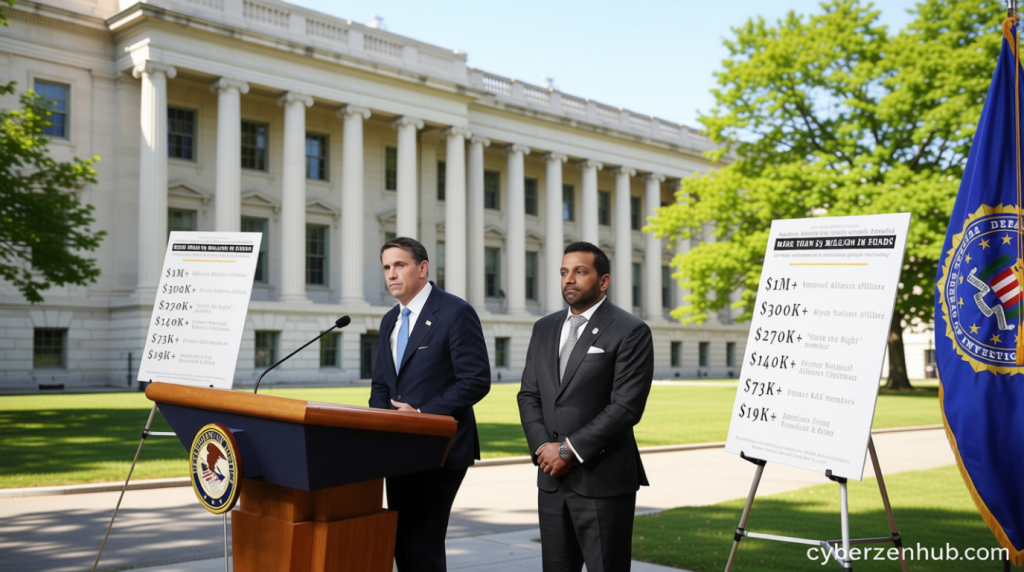
In addition to demanding a correction, the SPLC has asked the court to order the release of grand jury transcripts and issue a separate directive to limit the government’s ability to make “prejudicial” statements that might influence potential jurors. The attorneys believe that such statements, particularly those from Blanche, could skew public opinion and jeopardize the fairness of the trial. They also point to the recent news conference held by Blanche and FBI Director Kash Patel on April 21, 2026, at the Robert F. Kennedy Department of Justice building, as a moment when the government’s narrative was reinforced.
Blanche’s role as acting attorney general has been pivotal in shaping the government’s case against the SPLC. His claims during the Fox News interview suggest that the SPLC’s use of informants was not a coordinated effort to gather evidence, but rather an isolated practice. However, the SPLC’s legal team maintains that the indictment is based on a broader pattern of behavior, which includes both the collection of intelligence and the dissemination of information to law enforcement. They argue that this pattern is essential to understanding the organization’s mission and its effectiveness in countering hate groups.
Implications of the Dispute
The SPLC’s motion underscores the importance of factual accuracy in legal proceedings, particularly when high-profile figures are involved. By challenging Blanche’s statements, the organization seeks to highlight potential inconsistencies in the government’s case and ensure that the public receives a balanced view of its operations. The attorneys also emphasize that the SPLC’s informants were critical in uncovering the activities of extremist groups, which has been a cornerstone of its work for years.
Blanche’s response to the SPLC’s earlier request for correction remains unclear, as the government’s counsel reportedly refused to issue a retraction. This refusal, according to the SPLC, signals a broader reluctance to acknowledge the organization’s transparency. The SPLC’s legal team has now turned to the court, hoping to leverage judicial authority to force the correction and preserve the integrity of the case. Their argument hinges on the idea that the government’s portrayal of the SPLC is not only inaccurate but also prejudicial, potentially affecting the trial’s outcome.
The SPLC’s motion also touches on the broader implications of the indictment. If the government’s case relies on the claim that informants were used to support rather than expose extremist groups, then the organization’s long-standing efforts to combat hate might be called into question. However, the SPLC asserts that its use of informants was always designed to dismantle such groups, with the ultimate goal of reducing their influence. The attorneys’ detailed documentation, they claim, provides a clear record of this intent.
Background on the Indictment
The indictment against the SPLC follows months of scrutiny over its use of paid informants to infiltrate various extremist groups. These informants, the government alleges, were used to gather intelligence that could be exploited for financial gain or to mislead law enforcement. The SPLC has defended this practice, stating that it is a standard investigative tool necessary to identify and dismantle networks of hate. The charges, however, have sparked debate over the balance between effective intelligence gathering and potential misuse of informants.
Blanche’s assertion that the government did not have evidence of the SPLC sharing informant information with law enforcement has been a focal point of the dispute. The SPLC’s attorneys argue that this claim is at odds with the detailed documentation they provided weeks before the indictment. This discrepancy has led to calls for the government to clarify its position and address the accuracy of its statements. The SPLC’s legal team is also seeking to highlight the importance of transparency in the courtroom, emphasizing that the public has a right to understand the full context of the organization’s actions.
The ongoing legal battle between the SPLC and the DOJ reflects a larger tension between investigative tactics and the perception of those tactics. While the SPLC maintains that its use of informants was both ethical and effective, the government contends that it was a deliberate effort to manipulate the legal system. The outcome of this dispute could have far-reaching consequences for the SPLC’s reputation and the credibility of the indictment. As the court considers the motion, the focus remains on whether Blanche’s statements were truthful or if they represent a strategic move to shape the narrative of the case.
With the demand for correction and the request for disclosure of grand jury transcripts, the SPLC is positioning itself to counter the government’s claims head-on. The attorneys argue that the public’s understanding of the case depends on the accuracy of the statements made by government officials, including Blanche. Their motion is not only a legal strategy but also a way to ensure that the SPLC’s efforts to combat hate groups are viewed in their proper context. The case continues to unfold, with the potential to reshape perceptions of both the organization and the DOJ’s approach to investigative reporting.