
What to know about budget airlines’ $2.5 billion relief request amid rising jet fuel costs
What to Know About Budget Airlines’ $2.5 Billion Relief Request Amid Rising Jet Fuel Costs
Industry Group Seeks Federal Support to Mitigate Fuel Price Pressures
What to know about budget airlines 2 – A coalition of budget-conscious airlines has formally requested $2.5 billion in financial assistance from the Trump administration to counteract escalating jet fuel expenses and maintain affordable airfare for consumers. The Association of Value Airlines (AVA), which represents carriers such as Allegiant, Avelo, Frontier, Spirit, and Sun Country, aims to secure a liquidity fund that would allow these airlines to access emergency capital during a period of intense financial strain. This request follows a surge in fuel costs, which have climbed steadily since February due to the ongoing conflict in Iran, threatening the stability of the low-cost aviation sector.
“AVA and its members are dedicated to collaborating with federal authorities to devise strategies that safeguard both the industry and the traveling public,” the group stated in a recent release. “Temporary government aid to sustain vital competition within the airline industry is not an unprecedented move.”
The AVA highlighted the necessity of this intervention, noting that the current fuel price increases have placed smaller airlines at a disadvantage compared to their larger counterparts. “The market concentration of the country’s leading carriers has reached its peak, and value airlines are bearing the brunt of higher fuel expenses,” the statement emphasized. The group argued that these airlines are essential to ensuring affordable and accessible air travel, as they keep fares competitive across the industry.
Request Follows Discussions with Transportation Officials
The call for relief comes after a meeting with Transportation Secretary Sean Duffy last week, during which the group outlined the growing challenges posed by soaring fuel prices. According to the AVA, fuel costs have surged by nearly 100% in recent weeks, significantly impacting the operational budgets of budget carriers. This sharp rise has forced airlines to reconsider pricing strategies, potentially leading to higher costs for travelers.
In addition to the liquidity pool, the AVA proposed a temporary suspension of two key federal charges: the 7.5% excise tax on airline tickets and the $5.30 domestic per passenger per segment fee. These measures, the group explained, are not intended as permanent solutions but as targeted actions to address the extraordinary financial pressures created by the current fuel crisis. “This is a limited measure to stabilize the industry during a period of extreme cost inflation,” the AVA noted in its letter to House and Senate leaders.
Historical Context and Taxation Concerns
The request draws parallels to past federal interventions during the pandemic, when airlines received emergency funding to navigate travel disruptions. The AVA cited this precedent to justify its current appeal, stating that “any carrier participating in the relief program may be required to provide warrants to the government to ensure taxpayer benefits.” This approach would tie financial support to conditions, ensuring public funds are used effectively.
While the group emphasized the importance of preserving competition, it also acknowledged the risk of airlines relying on ancillary charges to offset rising costs. “Base fares are often the most visible part of a ticket price, but airlines may increasingly need to raise fees for additional services to compensate for fuel expenses,” the carriers warned. This could lead to a shift in pricing models, with passengers facing higher total costs for flights, including extras like baggage and seat selection.
White House Response and Industry Monitoring
When approached by ABC News, a White House spokesperson confirmed awareness of the airlines’ outreach to the Department of Transportation. “The administration remains attentive to the needs of the aviation sector and continues to assess its condition for both passengers and airline staff,” the representative said. However, the spokesperson cautioned that “any discussion about federal policy changes should be viewed as speculative until an official announcement is made.”
The Department of Transportation did not immediately provide a comment on the request, leaving the outcome of the situation uncertain. Industry analysts, however, have expressed concern that without intervention, the financial strain on budget airlines could lead to a decline in service options or even force some carriers into bankruptcy. “This crisis is not just about fuel prices—it’s about the long-term survival of a segment of the aviation industry that has kept air travel affordable for millions,” said one expert.
Impact of Fuel Costs on Traveler Costs
According to the AVA, the continued rise in fuel costs could result in a ripple effect across the entire airline industry. “If no relief is granted, sustained fuel price hikes will inevitably lead to higher overall travel expenses,” the group warned. This includes not only base fares but also ancillary charges, which are becoming more prominent as airlines seek to recoup losses.
Smaller airlines, which operate on thinner margins, are particularly vulnerable to these pressures. Unlike major carriers with extensive resources, budget airlines often pass on fuel cost increases directly to passengers. “These carriers are the backbone of accessible air travel, and their struggles could limit options for travelers in both urban and rural areas,” added another industry observer. The AVA’s proposal is seen as a way to prevent this scenario, ensuring that competition remains a driving force in the market.
Historical Fuel Price Trends and Industry Challenges
The fuel price surge is part of a broader trend that has affected the aviation sector for months. Since February, the cost of jet fuel has skyrocketed, driven by geopolitical tensions and supply chain disruptions. This has forced airlines to rethink their financial strategies, with some adjusting routes or reducing schedules to manage expenses. “The current situation is unprecedented, but it’s not the first time the industry has faced such challenges,” said a spokesperson for one of the affected carriers.
Historically, the aviation industry has been resilient, but the combination of high fuel costs and the lingering effects of the pandemic has created a perfect storm. “We’ve seen a significant increase in operational costs, and without additional support, many of these airlines will struggle to remain viable,” another industry analyst noted. The AVA’s request, therefore, is not just a financial plea but a strategic move to ensure the sector continues to serve diverse markets.
The proposed liquidity pool would allow airlines to access funds without immediately selling assets or cutting services. This could provide short-term stability while the industry explores long-term solutions. “The goal is to keep flights running and prices low, even as the cost of fuel continues to climb,” the AVA clarified. The group also stressed that this support would not eliminate the need for airlines to innovate and adapt, but it would provide a critical buffer during a difficult period.
Broader Implications for the Aviation Sector
Industry leaders have expressed optimism that the Trump administration will act swiftly on the request, given the political climate favoring deregulation and cost-saving measures. “This is an opportunity to demonstrate how government support can help both airlines and consumers,” said one official. However, there are concerns about the potential for increased federal oversight, which could lead to debates over the balance between affordability and profitability in the aviation sector.
As the situation unfolds, the AVA is hopeful that its proposal will gain traction. “We believe this is a necessary step to protect the integrity of the airline industry and the interests of travelers,” the group reiterated. With the U.S. aviation market facing unprecedented challenges, the outcome of this request could have far-reaching consequences for the future of air travel in the country.

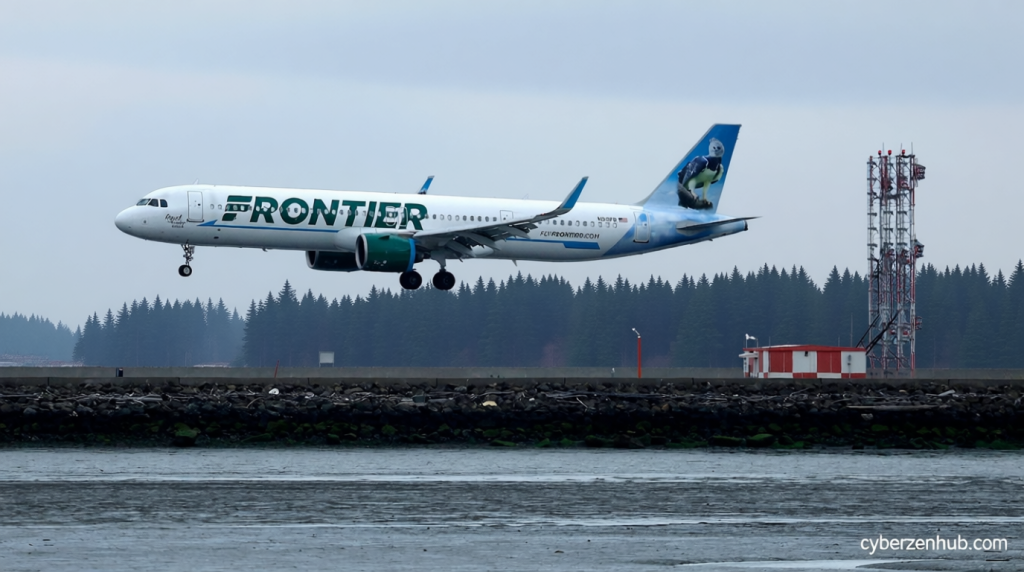
Caption: A Frontier Airlines plane lands at San Francisco International Airport in April 2025, highlighting the carrier’s ongoing operations amid rising fuel costs.

Caption: A Spirit Airlines aircraft prepares for departure at Austin-Bergstrom International Airport in February 2024, showcasing the company’s role in the low-cost aviation landscape.
As the administration weighs the request, the focus remains on how to best support airlines without compromising consumer choice. The AVA’s call for action underscores the delicate balance between maintaining affordable air travel and ensuring the sustainability of the industry in the face of rising operational costs.