US Military Strike Eliminates Tren de Aragua Leader, Trump Announces
Cyberzenhub.com – President Donald Trump announced on Friday that the leader of the Venezuelan criminal group Tren de Aragua has been eliminated through a U.S. military operation. The strike, conducted by the Southern Command, targeted Niño Guerrero, the gang’s notorious head, according to a social media post shared on his Truth Social platform. The action, described as “swift and lethal,” was framed by Trump as a direct response to alleged threats against American lives.
Targeted Operation Against Transnational Threat
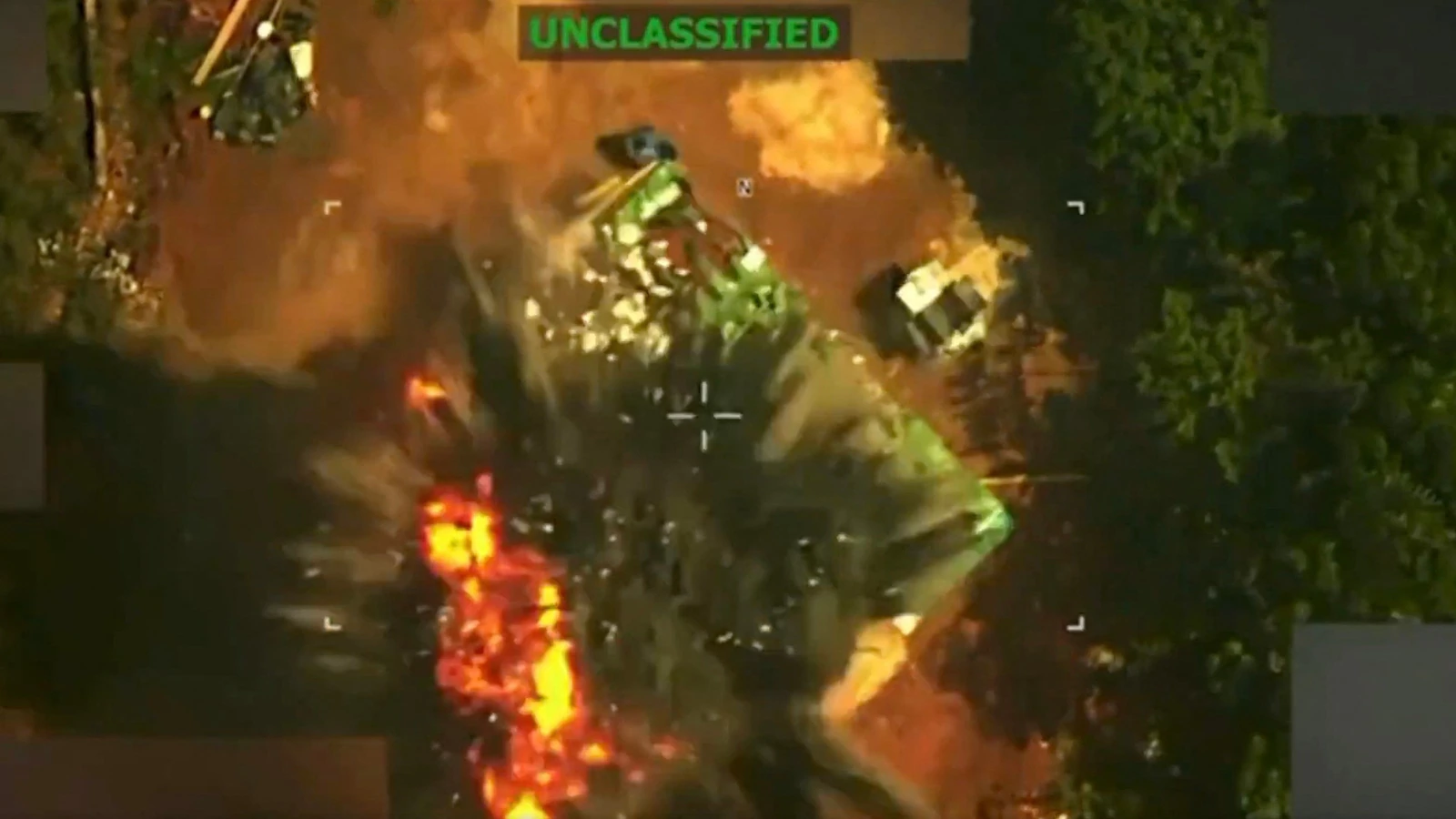
Trump emphasized that the strike was carried out under his explicit direction. “The United States Southern Command executed a decisive military operation to neutralize Niño Guerrero, the infamous leader of Tren de Aragua,” he stated in the post. The president characterized the attack as retribution for the deaths of U.S. citizens, which he attributed to members of the gang who have been involved in smuggling and other illegal activities. The post included a 10-second video clip purportedly showing the strike on a structure, accompanied by a caption asserting that the operation disrupted the gang’s operations globally.
“Under my leadership, we will find these vicious murderers and drug lords anytime, anyplace, and send them to the depths of hell where they belong,” Trump added, highlighting the administration’s commitment to combating transnational criminal networks. He also claimed that the operation was closely coordinated with Venezuelan authorities, stating, “This action was coordinated closely with our friends in Venezuela, with whom we are working very well.”
Guerrero, whose full name is Hector Rusthenford Guerrero and who is also known as “El Innombrable,” was indicted in December by a grand jury in New York for orchestrating acts of terrorism, violence, and drug trafficking. The charges included ordering attacks that extended beyond Venezuela’s borders, impacting North and South America as well as Europe. The U.S. Department of Justice had previously offered a $5 million reward for information leading to his arrest or conviction, underscoring the significance of his role in the gang’s operations.
Strategic Shift in US Counter-Narcotics Efforts
The Trump administration has been intensifying its use of military force to target drug cartels. This includes a sustained campaign of airstrikes against vessels suspected of transporting narcotics through the Caribbean Sea and eastern Pacific Ocean. Since the initiative began, the operation has reportedly resulted in the deaths of over 200 individuals, all classified as “engaged in narco-trafficking operations.” The elimination of Guerrero is seen as a pivotal success in this broader strategy.
Trump’s decision to involve Venezuela in the operation reflects a broader diplomatic approach. The president has long criticized the Venezuelan government for harboring criminal elements, and this strike was positioned as a joint effort to remove a key threat. However, the coordination with local leaders has sparked debate about the balance between military action and diplomatic relations. Some analysts argue that the strike could strengthen ties with Venezuela’s leaders, while others worry it might alienate the population.
Legal and Ethical Concerns Emerge
Despite the administration’s claims of success, the operation has drawn criticism from various groups. Lawmakers, legal experts, and human rights organizations have questioned the legality of using military force against suspected criminals without prior judicial review. They argue that the strikes could constitute extrajudicial killings, particularly if the targets are not formally charged before the attack.
The U.S. Attorney for the Southern District of New York, Jay Clayton, had previously described Guerrero as “the mastermind of Tren de Aragua’s evolution from a Venezuelan prison gang into a transnational terrorist organization.” Clayton highlighted the gang’s expansion into drug trafficking, extortion, and violent acts across multiple continents. The indictment underscores the growing international concern about Tren de Aragua’s reach and the U.S. government’s determination to address it.
While the military strike is presented as a triumph, some critics have raised questions about its impact on civilian populations. Reports indicate that the operation targeted a structure, but details about the casualties remain unclear. The video shared by Trump, which appears to show the strike, has been used to justify the action, though independent verification is needed to confirm the extent of the operation’s effectiveness.
Context of the Tren de Aragua’s Activities
Tren de Aragua, originally a prison gang in Venezuela, has grown into a powerful transnational criminal network. The group is known for its involvement in drug trafficking, human smuggling, and violent attacks, often using terror tactics to intimidate rivals and expand its influence. Its leader, Niño Guerrero, was a central figure in these operations, with the U.S. government alleging that he orchestrated attacks targeting American interests.
The recent strike marks a significant development in the ongoing conflict between the U.S. and Tren de Aragua. It follows a series of military operations aimed at dismantling the gang’s infrastructure and disrupting its supply chains. Critics argue that while such actions can reduce criminal activity, they also risk escalating tensions in the region and drawing Venezuela into a larger geopolitical struggle. The U.S. has positioned itself as a key player in combating drug-related violence, but the effectiveness of these strategies remains a topic of discussion.
Trump’s announcement on social media has been a recurring feature of his communication strategy, often used to highlight achievements in foreign policy and national security. The post about Guerrero’s elimination was accompanied by a call to action, urging continued support for the military’s efforts. However, the tone of the statement has also been scrutinized for its emphasis on retribution, with some observers noting the potential for the operation to be framed as a symbolic victory rather than a strategic necessity.
The incident has also reignited debates about the role of the U.S. Southern Command in counter-narcotics missions. While the command has been credited with executing precise strikes, its operations have sometimes been criticized for their lack of transparency and the potential for collateral damage. The strike on Guerrero’s hideout is part of a larger pattern of using kinetic military power to target high-profile criminals, a tactic that has both supporters and detractors within the U.S. and international communities.
As the U.S. continues to prioritize military solutions over diplomatic negotiations, the impact of these actions on global alliances and regional stability remains uncertain. The elimination of a key figure in Tren de Aragua could weaken the gang’s operations, but it may also prompt retaliatory measures from other criminal groups. Trump’s administration has framed these strikes as essential to securing national interests, but the long-term consequences of such a confrontational approach are yet to be fully realized.
In summary, the U.S. military strike on Tren de Aragua’s leader represents a multifaceted effort to combat transnational crime. While the operation is celebrated as a success by the administration, it also raises important questions about the legal, ethical, and strategic implications of using military force in this context. The response from the international community will likely shape the future of this initiative and its broader impact on the fight against organized crime in the Americas.