
Rudy Giuliani hospitalized in critical condition: Spokesperson
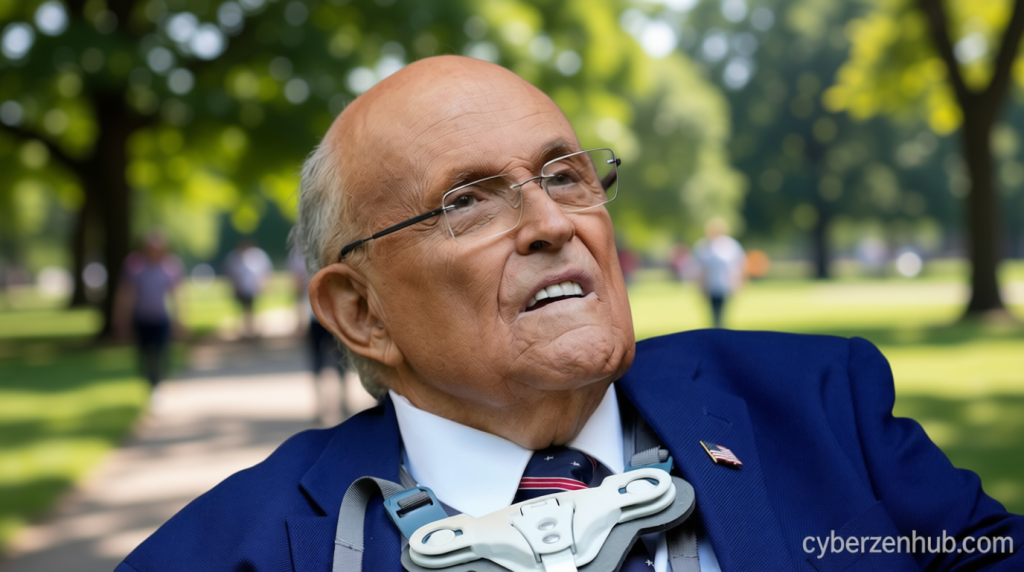
Rudy Giuliani Hospitalized in Critical Condition: Spokesperson Confirms
Rudy Giuliani hospitalized in critical condition – Rudy Giuliani, the former New York City mayor, is currently receiving medical treatment at a hospital, according to his spokesperson, Ted Goodman. The update came on Sunday, as the 81-year-old political figure was admitted under urgent circumstances. While the specifics of his condition remain undisclosed, Goodman emphasized that Giuliani is in a critical yet stable state, a detail that has sparked immediate concern among his supporters and the public.
Spokesperson’s Statement Highlights Giuliani’s Resilience
Goodman’s official announcement, released through a press statement, underscored Giuliani’s determination and strength. “Mayor Giuliani is a fighter who has faced every challenge in his life with unwavering strength, and he’s fighting with that same level of strength as we speak,” the spokesperson said. This remark not only reassures fans of his robust character but also sets the tone for the public’s anticipation of his recovery.
“Mayor Giuliani is currently in the hospital, where he remains in critical but stable condition,” the statement said. “We do ask that you join us in prayer for America’s Mayor — Rudy Giuliani.”
Recent Public Appearances and Health Context
In the days prior to his hospitalization, Giuliani had been active in public affairs, most notably participating in a ceremony to commemorate the 20th anniversary of the September 11 attacks in New York City. The event, held on Sept. 11, 2025, marked a significant moment for the former mayor, who has long been associated with the city’s resilience and leadership during crises. His appearance at the ceremony, which featured tributes and speeches, highlighted his enduring connection to the city’s history and his role as a symbol of steadfastness.
Despite his recent public engagements, Giuliani’s health has been a topic of discussion. Prior to this hospitalization, he had undergone several medical procedures, including a surgery for a herniated disc in 2023. While these issues were managed with relative success, his latest admission suggests a more severe condition. The spokesperson’s statement, however, leaves the cause of his hospitalization unspecified, prompting speculation about potential underlying factors.
Media and Public Reaction
The news of Giuliani’s hospitalization has been met with a mix of concern and optimism. On social media platforms, his followers have expressed hope for his recovery, while news outlets have highlighted his political legacy. The mention of his condition in the context of a major national anniversary—September 11—adds a layer of symbolic weight, as the date is deeply tied to his tenure as mayor. His resilience during the 9/11 attacks, where he took charge of the city’s emergency response, has often been cited as a defining moment in his career.
Meanwhile, the broader media landscape has shifted its focus to Giuliani’s health, with some outlets contrasting his current situation against the global events unfolding around him. For instance, recent headlines have emphasized tensions in the Middle East, including Iran’s actions in the Strait of Hormuz and statements from international leaders like the German chancellor, who described the US as being “humiliated” by Iran. These parallel narratives underscore the interconnected nature of political and global affairs, even as attention remains on Giuliani’s personal journey.
Historical Significance of Giuliani’s Leadership
Giuliani’s tenure as New York City mayor from 1994 to 2001 remains a cornerstone of his political identity. His leadership during the 9/11 attacks, marked by swift decision-making and calm demeanor, earned him national acclaim and a reputation as a leader who thrives under pressure. The events of that day, which transformed the city’s skyline and its sense of security, are often recounted in the context of his career, with many viewing his actions as a testament to his capability in times of crisis.
His time in office also included notable achievements such as reducing crime rates, implementing police reforms, and championing fiscal conservatism. These efforts shaped the city’s policies and left a lasting impact on its governance. As the spokesperson’s statement notes, Giuliani’s ability to overcome challenges is a recurring theme, one that resonates in both his professional and personal life.
Popular Reads and Broader Implications
Alongside Giuliani’s hospitalization, other headlines have dominated the news cycle, reflecting the dynamic nature of current events. Among the most-discussed stories are the ongoing Iran-US tensions, with President Trump asserting that the United States will guide ships out of the Strait of Hormuz. This declaration has raised eyebrows, as it positions the US as a key player in navigating geopolitical waters.
Another prominent story involves the German chancellor’s critique of the US, describing the nation as being “humiliated” by Iran’s actions. This sentiment highlights the growing concerns about international relations and the perceived need for US intervention. Meanwhile, a recent poll reveals that two-thirds of Americans believe the country is heading in the wrong direction, a finding that aligns with the public’s mixed reactions to Giuliani’s current situation.
These stories, while distinct, create a backdrop against which Giuliani’s health is being evaluated. The former mayor’s admission to the hospital has sparked discussions about the impact of aging on political figures, as well as the resilience required to maintain a public presence. His spokesperson’s emphasis on prayer and unwavering strength serves as a reminder of the symbolic role he plays in American politics, even as he faces a personal challenge.
Legacy and Future Prospects
Giuliani’s hospitalization has reignited interest in his legacy, with many reflecting on his contributions to New York City and his influence on national politics. His leadership during the 9/11 attacks remains a defining chapter, and his subsequent political career has continued to draw comparisons to that period. While the cause of his current hospitalization is unknown, it is clear that his health has become a focal point for those who view him as a leader in the tradition of overcoming adversity.
As the public awaits updates, the narrative around Giuliani’s condition intertwines with broader themes of perseverance and public service. His spokesperson’s message, though concise, carries the weight of reassurance, framing the situation as a temporary setback rather than a definitive end. For his supporters, this moment is an opportunity to highlight his enduring spirit, while for the media, it presents a chance to explore the intersection of personal health and political symbolism.
In conclusion, Rudy Giuliani’s hospitalization in critical condition has brought both concern and admiration to the forefront. His spokesperson’s statement, combined with his historical role in New York City, paints a picture of a leader who continues to face challenges with strength. As the situation develops, the public will be watching closely, eager to see how his resilience manifests in the days ahead. This incident not only underscores the fragility of human health but also reinforces the symbolic importance of Giuliani’s journey, both as a political figure and a personal story of perseverance.