
GOP Sen. Susan Collins discloses longtime tremor after scrutiny in Maine Senate race
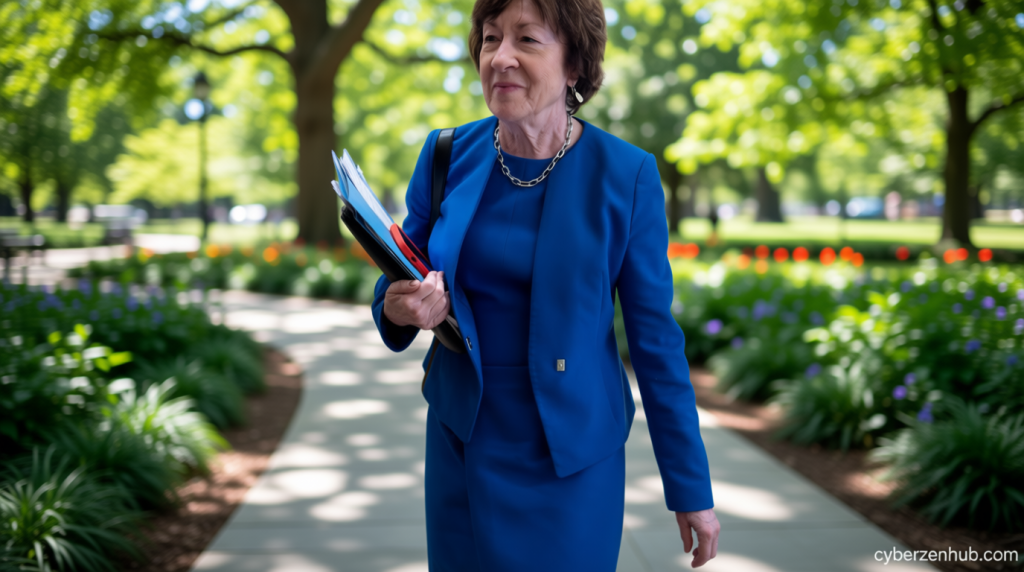
Republican Senator Susan Collins Reveals Long-Standing Tremor Amid Maine Senate Race Scrutiny
GOP Sen Susan Collins discloses longtime – PORTLAND, Maine — U.S. Senator Susan Collins, a prominent Republican figure, has publicly acknowledged her long-standing benign essential tremor, a condition she has kept private for most of her nearly 30-year Senate career. This disclosure comes as she campaigns for reelection in one of the nation’s most closely watched Senate races, where her health has become a focal point of debate. Collins first revealed the tremor to WCSH-TV in Maine on Wednesday, following growing questions about her physical condition raised by recent campaign appearances, including her announcement video.
A Condition That Has Accompanied Her Political Journey
Collins described the tremor as a manageable issue that has accompanied her throughout her career. She stated that the condition causes trembling in her hands, head, and voice, and that she has lived with it since her election to the Senate in 1996. “The tremor is occasionally inconvenient, and sometimes the subject of cruel comments online, but it does not hinder my ability to work,” she emphasized in a statement provided to The Associated Press. Collins also clarified that the disorder is not neurodegenerative, a reassurance aimed at addressing concerns about her long-term capacity in the Senate.
“There are a lot of disabled combat veterans, or just disabled vets, at 100%, who still work,” Platner told WCSH last year.
The revelation has sparked discussions about how age and health issues influence high-profile elections. This trend gained momentum after Democratic President Joe Biden opted not to seek reelection in 2024 at 81, drawing increased attention to the physical challenges older candidates face. Meanwhile, Republican President Donald Trump, 79, has also been scrutinized for visible signs of aging, such as bruising on his hand that has occasionally been covered with makeup. The White House confirmed last year that Trump was diagnosed with chronic venous insufficiency, a condition that affects blood flow in the legs.
Collins’ race has taken on added significance as Democrats aim to flip her Senate seat. Her likely opponent, Democrat Graham Platner, a 41-year-old oyster farmer and combat veteran, has positioned himself as a younger, more energetic alternative. Platner, who has openly discussed his own health challenges, highlighted his experience with chronic pain in his shoulders and knees from combat service. He also revealed that he was diagnosed with post-traumatic stress disorder after military deployment, adding to the narrative of resilience in his campaign.
Age as a Campaign Issue
The age gap between Collins and her opponent has become a defining aspect of the race. Collins, 73, and incumbent Democratic Governor Janet Mills, 78, are both more than three decades older than Platner. This generational contrast has fueled debates about the role of age in political performance, with critics questioning whether Collins’ tremors could impact her effectiveness in Senate debates and legislative work. Mills, who suspended her campaign last week, has also faced questions about her health and stamina, though Collins’ condition has drawn more direct attention.
Collins has maintained a near-perfect voting record, with a streak of 9,966 consecutive Senate votes — a feat that ranks as the second-longest in the chamber’s history. As chair of the Senate Appropriations Committee, she has been a key player in shaping federal spending, often leading debates and presenting arguments for the GOP. Her ability to remain active in the Senate despite her condition underscores her commitment to public service, though some voters may view her health as a potential vulnerability.
Understanding Essential Tremor
Essential tremor, a common movement disorder, affects millions of Americans over 40. According to the National Institutes of Health, the condition is often inherited and can manifest in younger individuals, though its prevalence increases with age. Collins’ tremor is classified as benign, meaning it does not indicate a more severe neurological condition. While it primarily impacts the hands, it can also affect the head and voice, as noted in her statement. The disorder is typically managed through lifestyle adjustments and medication, and Collins has described it as something she has “lived with for decades.”
Despite the physical challenges, Collins has remained a consistent presence in Senate proceedings. Her ability to engage with reporters and participate in high-stakes debates has not wavered, even as her tremors have occasionally been visible during public appearances. This resilience has been a cornerstone of her campaign, with her team framing her condition as a testament to her enduring dedication to the role.
Platner, meanwhile, has framed his candidacy as a counterpoint to the aging demographic of Senate candidates. He has emphasized his disability rating from the U.S. Department of Veterans Affairs, highlighting his status as a 100% disabled combat veteran who continues to work. His personal experiences with health issues have become part of his campaign strategy, with supporters positioning him as a symbol of perseverance in the face of adversity.
The Maine race reflects a broader national conversation about how age and health influence political races. With Collins’ tremor now in the spotlight, the campaign has become a case study in how older candidates navigate the challenges of maintaining public trust. As the election approaches, the focus on her condition may shift the narrative of the race, prompting voters to weigh her experience against the perceived energy of her younger opponent.
Implications for the Senate Majority
Collins’ reelection is critical for the Republican Party’s chances of maintaining control of the Senate. With Democrats needing to secure her seat to regain majority status, her campaign has been closely monitored for any signs of vulnerability. Her decision to disclose the tremor ahead of the election suggests a strategic move to preempt potential criticism, allowing her to frame the issue as a personal challenge rather than a political weakness.
While the tremor has been a point of discussion, Collins’ team has also highlighted her legislative achievements and leadership. They argue that her condition does not detract from her ability to serve effectively, pointing to her role in shaping key policies and her consistent presence in Senate debates. The campaign has also drawn attention to the importance of experience in governing, a theme that aligns with Collins’ long tenure in the Senate.
Platner, on the other hand, has leveraged his own health struggles to build a connection with voters. His candidness about chronic pain and PTSD has helped him portray himself as a relatable candidate, particularly in a state where rural and working-class issues are prominent. The contrast between the two candidates’ health profiles has added a layer of complexity to the race, with each side emphasizing their own strengths and challenges.
As the election nears, the question of whether age and health will play a decisive role remains open. Collins’ disclosure of her tremor has not only addressed concerns about her physical capabilities but has also positioned her as a candidate who is transparent about her challenges. Meanwhile, Platner’s campaign continues to focus on his youthful energy and personal resilience, framing the race as a choice between experience and a new generation of leadership.