
Homeland Security, Secret Service say $1B for White House ballroom would also fund ‘other critical missions’
Homeland Security and Secret Service Affirm $1 Billion for White House Ballroom Also Supports National Security Priorities
Expanded Security Measures in Response to Recent Threats
Homeland Security Secret Service say 1B – Recent developments have intensified debate over a Senate Republican plan to allocate up to $1 billion toward the security infrastructure of the new White House ballroom. In a letter shared with ABC News, senior officials from the Department of Homeland Security and the U.S. Secret Service clarified that the proposed funding would serve multiple purposes beyond the immediate construction of the ballroom. They emphasized that the money would be directed toward “other critical missions,” including the protection of publicly accessible locations and the enhancement of security systems for high-risk events.
“Critical funding to address urgent needs in response to the unprecedented increase in threats against the President and other public officials” is how Homeland Security Secretary Markwayne Mullin and Secret Service Director Sean Curran described the proposal, according to the letter obtained by ABC News.
The officials cited recent incidents—such as the shooting at the White House Correspondents’ Association Dinner and another attack near the National Mall—as evidence of the growing necessity for enhanced security measures. These events, they argued, underscore the importance of creating a secure environment for presidential activities, particularly in spaces that attract large crowds and are central to public engagement.
Funding Allocation and Legislative Context
The Senate’s reconciliation bill, unveiled earlier this week, outlines a specific allocation of $1 billion for the Secret Service, primarily focused on security upgrades and adjustments for the East Wing Modernization Project. While the bill does not explicitly mention “frequently visited venues” outside the White House, the letter from Mullin and Curran highlighted these locations as integral to the funding’s broader scope. The text of the bill states that none of the funds will be used for non-security improvements, ensuring that the entire budget is dedicated to protective measures.
According to the letter, the security enhancements would include strengthening the perimeter fence of the White House Compound and integrating advanced technologies to monitor and respond to potential threats. These upgrades are positioned as essential to safeguarding not only the President and his family but also visitors and staff who frequent these sites. The officials also pointed to the need for proactive strategies against emerging risks, such as biological threats and drone activity, which require specialized attention from the Secret Service’s Special Operations Division.
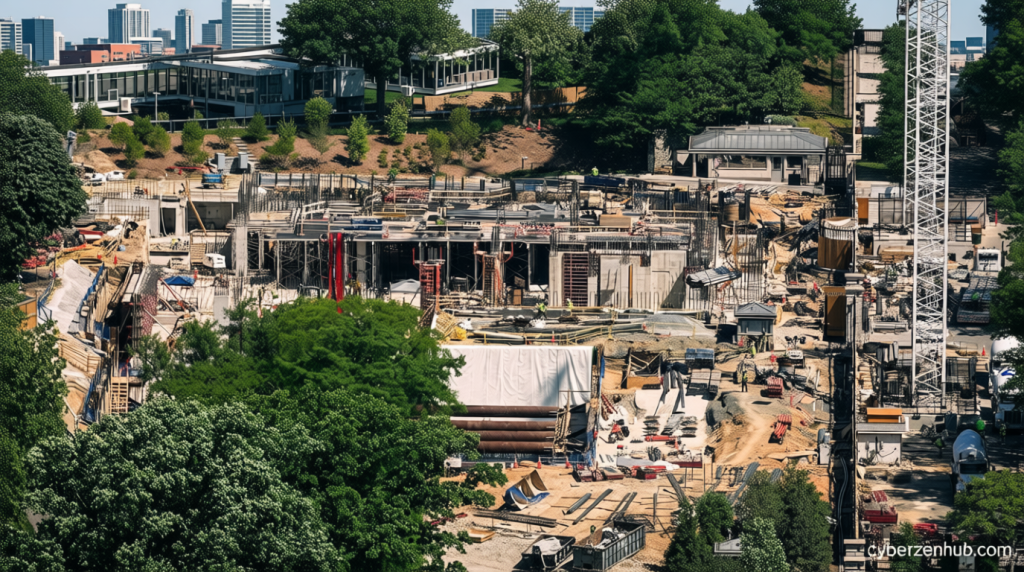
While the exact distribution of the $1 billion within the ballroom project remains unspecified, the officials asserted that the funds would be used to address “heightened risk due to their public visibility and static nature” in other venues. This includes locations like the North Lawn, which has been a focal point for public events and demonstrations. The letter included images of construction at the White House, such as the view from the Washington Monument on May 5, 2026, to visually reinforce the scale of the project.
Public and Political Reactions to the Proposal
Supporters of the plan argue that the investment in the ballroom’s security infrastructure is a necessary step to protect national leaders in an era of escalating threats. They note that the East Wing Modernization Project is part of a larger initiative to modernize the White House’s security capabilities, which have been tested by recent incidents. The officials also mentioned that the funding would support the training of Secret Service agents, including upgrades to training facilities and programs tailored to emerging challenges like drone threats and biological attacks.
However, some lawmakers have raised questions about the cost-effectiveness of the $1 billion allocation. Critics point out that the Secret Service already receives over $3 billion annually through regular congressional appropriations, suggesting that the additional funding could be justified by its specific focus on the ballroom. The letter, however, stresses that the $1 billion is not a standalone budget but a targeted enhancement to existing security frameworks.
Mullin and Curran also highlighted the importance of securing “high profile national events” that demand extensive planning. These events, they explained, are critical to maintaining the stability and visibility of the presidency, and the funding would ensure that the Secret Service is equipped to handle both routine and complex security scenarios. The officials reiterated that the East Wing Modernization Project is a key component of this effort, as it aims to improve the overall infrastructure of the White House complex.
Comparative Analysis and Broader Implications
When comparing the Senate’s proposal to the Secret Service’s annual budget, the officials acknowledged that the $1 billion is a significant but focused investment. They described the funding as a “critical infusion to ensure the safety of the current President and future Presidents,” noting that it complements the agency’s regular operations. The letter also addressed concerns about the use of funds, emphasizing that the Senate reconciliation bill explicitly reserves the money for security-related improvements.
Despite the focus on the ballroom, the officials emphasized that the package is designed to create a more resilient security network across the nation. They cited the need to secure not only the White House but also other locations where the President and public officials are likely to be present. This includes events such as State of the Union addresses, international summits, and public appearances, all of which are vulnerable to potential threats.
The debate over the funding has sparked discussions about the balance between security spending and other national priorities. While some argue that the $1 billion is essential for immediate protection, others question whether the funds could be better allocated to other programs. Nevertheless, the officials from Homeland Security and the Secret Service maintain that the investment is justified by the current threat landscape, which has evolved significantly in recent years.
Historical Context and Future Considerations
Historically, the White House has been a target of various security threats, prompting ongoing upgrades to its infrastructure. The East Wing Modernization Project is part of this continuous effort to enhance protection measures. The officials noted that the recent shootings at the White House Correspondents’ Association Dinner and near the National Mall have heightened the urgency for such improvements, particularly in spaces that are open to the public.
As the proposal moves forward, it will likely face further scrutiny from both the public and congressional committees. The letter from Mullin and Curran serves as a key document in defending the funding, but additional details about how the money will be distributed are expected to emerge in the coming weeks. The officials also mentioned that the security upgrades would not only protect the President but also provide a model for securing other high-profile locations across the country.
In conclusion, the $1 billion allocated for the White House ballroom is presented as a multifaceted investment in national security. It addresses immediate needs while also laying the groundwork for future protections. As the East Wing Modernization Project progresses, the impact of these upgrades on the Secret Service’s operational capacity will be closely monitored. The officials’ assertions that the funds will support a range of critical missions signal a broader strategy to enhance the safety of the presidency in an increasingly complex security environment.