
Cuban foreign minister warns US on ‘dangerous path’ that could lead to ‘bloodbath in Cuba’
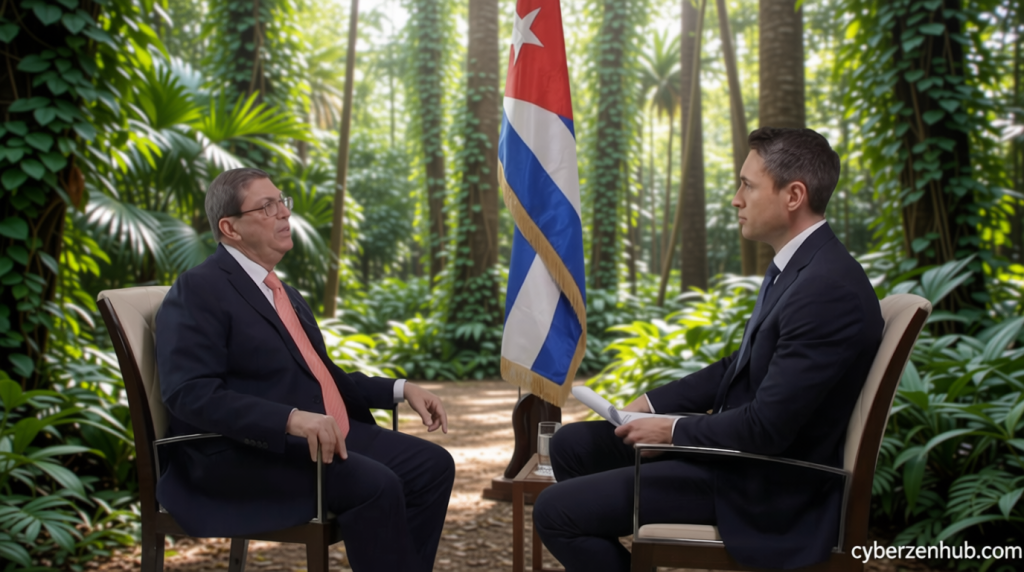
Cuban Foreign Minister Warns U.S. of ‘Dangerous Path’
Cuban foreign minister warns US on dangerous – During a recent interview with ABC News in Havana, Cuban Foreign Minister Bruno Rodriguez issued a pointed warning to the United States, labeling its escalating confrontation with Cuba as a “dangerous path” that could lead to a “bloodbath” on the island. The minister criticized Washington’s aggressive stance, including threats of military intervention, as a potential catalyst for catastrophic outcomes. Rodriguez emphasized that the U.S. is moving toward a “trajectory” that might trigger severe consequences, such as humanitarian crises or loss of life for both Cuban and American citizens.
Escalating Tensions and U.S. Rhetoric
Rodriguez underscored the gravity of Trump’s recent remarks, stating that the U.S. government’s rhetoric is “taken very seriously” by Havana. He warned that Cuba is prepared to defend itself against any military action, citing the nation’s right to “legitimate defense.” The minister noted that despite ongoing diplomatic talks, there has been “no progress” in addressing core Cuban concerns, particularly the U.S. focus on ideological dominance over mutual cooperation.
“The U.S. has chosen a dangerous path, which could result in humanitarian catastrophe, genocide, or even a bloodbath in Cuba,” Rodriguez declared, speaking in Spanish. He further warned that the administration’s insistence on toppling Cuba’s government could escalate into a full-scale conflict, with irreversible consequences for both nations.
Economic Measures and Diplomatic Stalemate
The Trump administration has intensified economic pressure on Cuba, with recent sanctions targeting individuals and entities linked to the Cuban regime. These measures, described as efforts to enforce policy changes, have disrupted Havana’s access to foreign oil, particularly from Venezuela. Rodriguez dismissed these tactics as insufficient, arguing that they fail to address Cuba’s internal challenges or acknowledge its sovereignty.
According to U.S. White House statements, the sanctions aim to pressure Cuba economically and politically, framing them as necessary to achieve regime reforms. However, the Cuban minister contended that the U.S. has not made concessions on key issues, such as trade restrictions or political autonomy, leaving Havana with no choice but to respond with firmness. “I see no progress” in negotiations, he reiterated, highlighting the deepening divide between the two nations.
Rodriguez also criticized the U.S. for using dramatic language, such as “take over Cuba almost immediately,” to justify military escalation. He drew a parallel to the Iran operation, suggesting that Trump’s rhetoric could lead to similar interventions in the Caribbean. Such statements have heightened concerns in Havana, as officials fear the U.S. may shift from diplomatic talks to force.
Cuban Resolve and People’s Solidarity
Despite the U.S. military posturing, Rodriguez reaffirmed Cuba’s commitment to its independence and political system. He asserted that the Cuban people would provide “massive support” in the event of an attack, underscoring the nation’s resilience. The minister rejected allegations of human rights abuses, calling them “forbidden by international law” as a pretext for war.
Rodriguez pointed out that Cuba’s leaders have consistently defended their governance model, emphasizing the importance of self-determination. When questioned about Trump’s claims of impending change, he emphasized that Havana remains steadfast in its policies. “The U.S. is not addressing our internal affairs,” he said, stressing that Cuba’s sovereignty is non-negotiable.
Earlier this year, Cuban President Miguel Díaz-Canel acknowledged behind-the-scenes dialogue with U.S. officials, signaling openness to dialogue. However, Rodriguez argued that these efforts are overshadowed by Washington’s relentless ideological campaign. “We are not moving forward,” he said, as the U.S. continues to prioritize confrontation over collaboration.