Russia bombards Kyiv with drones and missiles, sets fire to historic cathedral
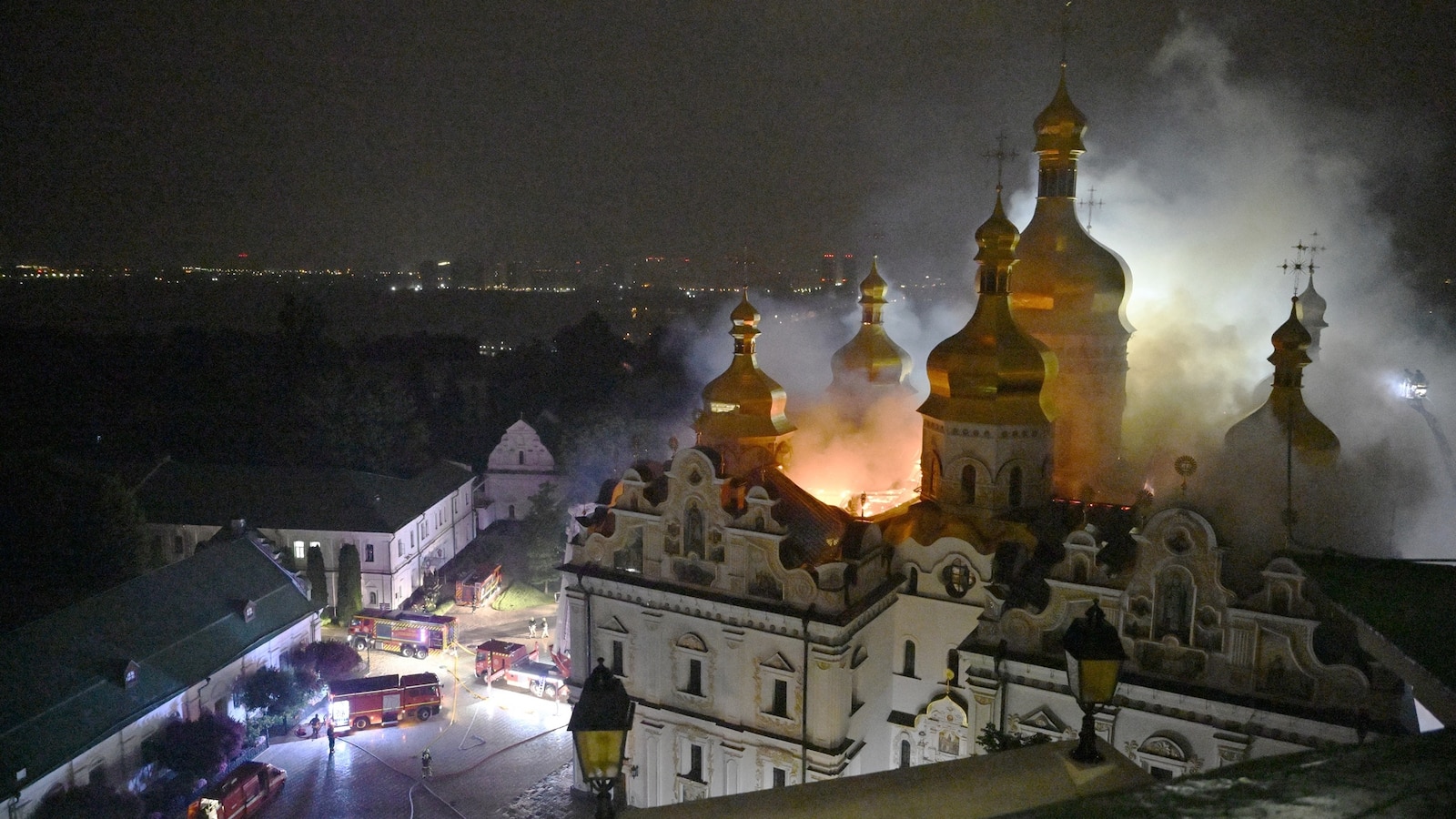
Cyberzenhub.com – LONDON — A major Russian attack on Kyiv unfolded on Sunday night, targeting the city with a combination of drones and missiles, according to reports from Ukrainian officials. The assault, which resulted in multiple casualties and significant damage, drew sharp condemnation from Ukrainian leaders, who highlighted the destruction of a UNESCO-listed historical site. The Kyiv Pechersk Lavra, a 11th-century Orthodox cathedral and cultural landmark, was among the areas struck, with smoke rising from its roof and emergency crews working to contain the blaze.
Russian Strikes on Kyiv: A Devastating Night of Attack
Ukrainian officials confirmed the attack in a statement released on Monday morning, noting that at least five individuals lost their lives and 28 others were injured. President Volodymyr Zelenskyy, who posted updates on social media, emphasized the scale of the strike, revealing that over 60 Russian missiles were launched toward the capital. The Kyiv Pechersk Lavra, a revered religious and architectural complex, bore the brunt of the assault, with the Dormition Cathedral suffering extensive damage. Despite the destruction, firefighters managed to extinguish the flames, though the site remains a symbol of the war’s toll on Ukraine’s heritage.
“This is one of the biggest Russian crimes against Christian culture to date,” Zelenskyy declared in a post, underscoring the symbolic weight of the attack. The cathedral, which has stood for over a millennium, represents a deep connection to Ukraine’s history and faith, making its destruction a poignant moment in the conflict.
The Ukrainian air force reported that Russia launched a total of 70 missiles and 611 drones into the country overnight. Of these, 50 missiles and 582 drones were intercepted or neutralized, with 20 ballistic missiles and 27 drones striking Kyiv, Kharkiv, Dnipro, Donetsk, Zaporizhzhia, Sumy, and Mykolaiv regions. The attack marked the largest combined Russian strike recorded since June 1, according to data analyzed by ABC News, highlighting the intensifying air campaign against Ukrainian cities.
Casualties and Damage: Human Toll and Cultural Impact
Ukrainian officials detailed the human cost of the assault, with Zelenskyy noting that five additional casualties were reported in Kharkiv, the northeastern city. The attack also left nine others injured, underscoring the escalating violence in the war-torn region. The Kyiv Pechersk Lavra, an 11th-century religious institution, is not only a place of worship but also a UNESCO World Heritage Site, blending historical significance with spiritual importance. Its damage has sparked global concern over the preservation of cultural landmarks in the conflict.
“The attack was barbaric,” Ukrainian Foreign Minister Andrii Sybiha tweeted, adding that Putin “has forever put his name on the list of history’s worst barbarians.” The minister’s remarks reflected the broader outrage over the assault, which many view as a calculated effort to destabilize Kyiv’s cultural and political landscape.
While the Russian Defense Ministry framed the strikes as a “massive attack with high-precision weapons,” they claimed responsibility for targeting Kyiv’s defense-industrial infrastructure and military facilities. However, the ministry denied involvement in the attack on the Kyiv Pechersk Lavra, asserting that the cathedral was struck by an interceptor missile from a U.S.-supplied Patriot system operated by Ukrainian forces. This claim, though uncorroborated, suggests a strategic narrative aimed at shifting blame and justifying the assault as a necessary military action.
International Context: G7 Summit and Escalating Tensions
The attack occurred as leaders of the G7 nations prepared to convene for their annual summit in France, a critical moment for global coordination on the war. Zelenskyy, expected to attend as a guest, called for a decisive response from the bloc, urging the G7 to intensify pressure on Russia. “It is very important that there be a response from the G7 countries,” he wrote, stressing the need for more support in air defense, particularly anti-ballistic missile systems.
Meanwhile, the Ukrainian air force shared details of the overnight strikes, revealing that 20 ballistic missiles and 27 drones impacted 42 locations across the country. The data, which included the 611 drones launched, paints a picture of a coordinated aerial assault, with Kyiv at the center of the chaos. The scale of the attack has raised questions about Russia’s long-term strategy, with Zelenskyy suggesting that the assault signals an intent to prolong the conflict and assert dominance over Ukrainian territory.
As the attack unfolded, Zelenskyy invited Putin to discuss the war at the upcoming G7 summit, a gesture that could signal diplomatic efforts amid the violence. However, Moscow has yet to comment on the invitation, leaving the possibility of dialogue uncertain. The destruction of the Kyiv Pechersk Lavra, a site of immense historical value, has also drawn attention to the broader implications of the war, as cultural heritage becomes a casualty of military operations.
Related Developments: Drone Warfare and Global Reactions
The attack followed a surge in Ukrainian drone strikes against Russian targets, with data showing record highs in cross-border attacks. This escalation reflects Ukraine’s growing capability to challenge Russian forces from the air, as well as the shifting dynamics of the conflict. Reports of the damage in Kyiv have prompted international media to focus on the assault’s symbolism, with images of smoke and fire from the cathedral serving as a powerful visual reminder of the war’s human and cultural toll.
Amid the chaos, the Russian federal air transport agency, Rosaviatsiya, released data on the number of drones shot down, further fueling debates about the effectiveness of Ukraine’s air defense systems. The agency’s claims, however, have not been independently verified, leaving room for speculation about the true extent of the Russian offensive. The incident also highlights the increasing role of air power in the war, as both sides leverage advanced weaponry to strike strategic and symbolic targets.
Implications for the War: A Turning Point?
As the attack reverberates across the globe, it has intensified discussions about the war’s trajectory. The destruction of the Kyiv Pechersk Lavra has drawn comparisons to past incidents, such as the bombing of the Mariupol hospital, emphasizing the growing threat to Ukraine’s historical sites. Analysts suggest that the assault may be part of a broader campaign to weaken Kyiv’s morale and infrastructure, with the cathedral’s damage serving as a stark reminder of the stakes in the conflict.
Zelenskyy’s statements during the attack underscored the urgency of international support, as the G7 summit looms. His call for decisive action from the alliance reflects the pressure mounting on global leaders to address the humanitarian crisis and bolster Ukraine’s defenses. The event also presents an opportunity for diplomatic engagement, with the possibility of Zelenskyy and Putin meeting to discuss peace terms or strategic shifts in the war.
In the days following the attack, the focus will likely remain on the extent of the damage and the political fallout. The Kyiv Pechersk Lavra, though partially saved from total destruction, will require extensive repairs and restoration. For now, the assault stands as a grim chapter in the war, illustrating the lengths to which Russia is willing to go to assert its dominance in Ukraine. As the G7 summit approaches, the international community will be watching closely to see how this event influences the next phase of the conflict.