
Iran war looms over Trump’s visit to Beijing: ANALYSIS
Iran War Looms Over Trump’s Visit to Beijing: ANALYSIS
Iran war looms over Trump s visit – As President Donald Trump prepares for a critical meeting in Beijing, the looming threat of renewed conflict with Iran has cast a shadow over the summit. The U.S. administration has indicated it may rely on China’s diplomatic influence to ease tensions in the Middle East. Senior American officials, including Secretary of State Marco Rubio and Treasury Secretary Scott Bessent, who are part of the presidential delegation, have urged Beijing to play a key role in advancing negotiations aimed at resolving the Iran crisis. This shift in focus highlights the growing importance of China’s position in regional geopolitics, even as the U.S. and its global rival confront other pressing issues.
China’s Influence on Iran
China, Iran’s largest oil importer, has long held considerable leverage over Tehran due to its economic ties. Analysts have noted that this relationship could become a focal point during Trump’s visit. With Iran’s military capabilities already strained, Beijing might act as a mediator to push for a peaceful resolution. However, the extent of China’s willingness to intervene remains uncertain, as its strategic interests in the region are complex.
“China has real leverage over Iran, but it’s not unlimited,” said Craig Singleton, who leads the China program at the Foundation for Defense of Democracies. “I think they’re just going to keep calling for calm and broader deescalation, and the reason is I don’t think Beijing is going to stick its neck out to solve a war it didn’t start and it doesn’t control.”
The U.S. is likely to seek Beijing’s cooperation in applying pressure to Iran, especially as the ceasefire between the two nations remains fragile. Trump’s own statements during the summit suggest a strategic gamble: he may position China as a partner in stabilizing the region while maintaining the appearance of U.S. autonomy. This balancing act could shape the dynamics of their discussions.
Regional Tensions and Strategic Priorities
Despite the summit’s focus on diplomacy, underlying tensions between the U.S. and Iran remain. The conflict, which has been temporarily halted since Trump announced a ceasefire over a month ago, underscores the fragility of current agreements. A former senior U.S. government official told ABC News that Trump would need China’s help to secure a lasting deal. “He’s going to need Chinese help pressuring the Iranians to get to the deal that he envisions,” the official said. “And so he’s going to be basically … going hat-in-hand into the summit as a result of what we’re dealing with here.”
Yet, Trump’s remarks during his departure from the White House hinted at a more confident stance. At Joint Base Andrews, he appeared to downplay China’s role, stating, “I don’t think we need any help with Iran.” However, minutes later, when asked if Chinese President Xi could revive the ceasefire, he softened his position. “He could. I mean, it might be. I don’t think we need any help with Iran, to be honest with you, they’re defeated militarily, and they’ll either do the right thing or we’ll finish the job.” This contradiction reflects the administration’s internal calculations about how to leverage China’s position without appearing dependent.
Economic Leverage and the Strait of Hormuz
The strategic importance of the Strait of Hormuz has become a central theme in the talks. China, which relies heavily on oil imports through this vital waterway, is expected to prioritize its economic interests. Analysts suggest that Xi’s focus may remain on ensuring the strait remains open, even as the U.S. seeks broader agreements with Iran. This could create a divide between the two nations’ priorities, with China hesitant to commit to a more comprehensive deal.
The U.S. Treasury Department’s recent sanctions on Iranian currency houses have further complicated the situation. By targeting entities that facilitate Iran’s financial activities, the administration has tested China’s compliance. While the U.S. emphasized its efforts to curb Iran’s military spending, China responded by instructing companies to disregard the sanctions, marking a first-time defiance. This move has raised questions about how much influence Washington can exert over Beijing in the face of mutual economic stakes.
Historical Context and Mediation Efforts
The path to the current negotiations has been shaped by years of U.S.-China-Iran interactions. Since the conflict with Iran began, Chinese officials have consistently advocated for restored navigation in the Strait of Hormuz and a durable ceasefire. This stance has aligned with the U.S. goal of de-escalation, though China’s emphasis on economic considerations reveals its cautious approach. The recent dispatch of Iran’s foreign minister to Beijing for high-stakes talks has intensified these efforts, with the country seeking to align with Chinese interests amid regional instability.
Additionally, Pakistan, a key mediator in U.S.-Iran relations, has also engaged in similar discussions in Beijing. This collaboration underscores the complexity of the situation, where multiple actors seek to navigate the delicate balance between military and diplomatic strategies. The presence of these mediators at the summit highlights the international nature of the Iran crisis and the interconnectedness of global alliances.
Trump’s Ambiguous Stance and Regional Implications
Trump’s conflicting statements during the summit have left analysts puzzled. While he initially dismissed China’s involvement, he later acknowledged its potential utility in reviving the ceasefire. This ambiguity may reflect his desire to present a united front while allowing China to play a supporting role. The U.S. is likely to frame the discussions as a strategic opportunity to secure a deal without overcommitting to China’s agenda.
However, the broader implications of the Iran conflict extend beyond the summit. The war’s potential resumption could impact global energy markets and regional security. With China’s economic leverage over Iran, any breakthrough in negotiations might influence the stability of the Strait of Hormuz, a critical chokepoint for oil shipments. This makes the summit not only a diplomatic event but also a strategic crossroads for international relations.
Looking Ahead: A Fragile Path to Resolution
As the talks unfold, the U.S. and China will need to navigate their differing priorities. While the U.S. seeks to secure a comprehensive agreement with Iran, China’s focus on maintaining its economic foothold in the region may temper its willingness to take bold steps. The outcome of these discussions will depend on how effectively both sides can align their interests, balancing military pressure with diplomatic reassurance.
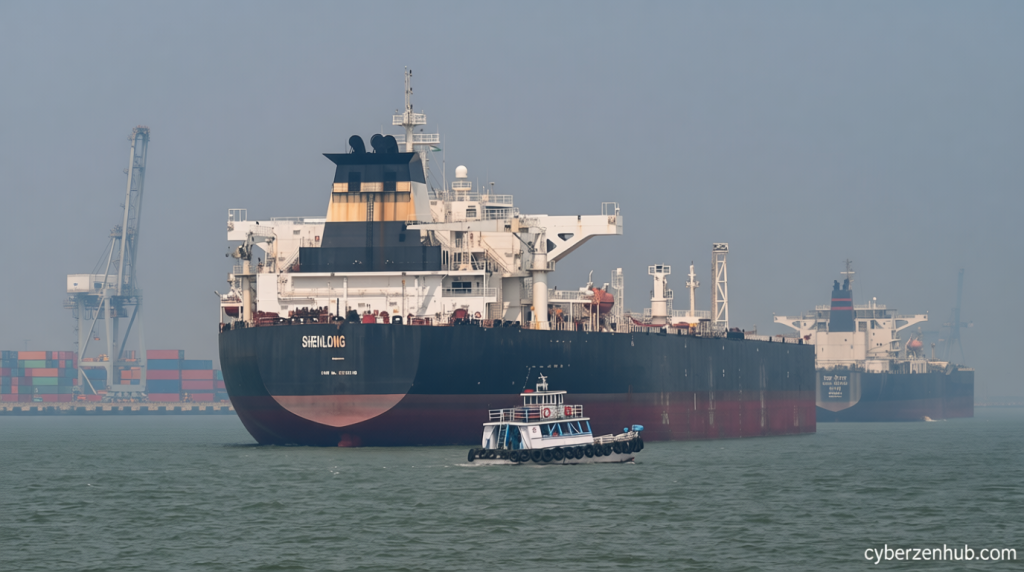
The Liberian-flagged tanker *Shenlong Suezmax* recently docked at Mumbai Port after passing through the Strait of Hormuz, a symbolic reminder of the region’s strategic significance. Such events underscore the interconnectedness of global trade and military tensions, with the U.S. and China both aware of their roles in shaping the outcome. As the summit progresses, the question remains: will Beijing’s cautious approach allow Trump to achieve his goals, or will it reveal the limits of China’s influence in the Iran crisis?
With the war paused but not resolved, the stakes for the U.S. and China have never been higher. Trump’s visit to Beijing represents a pivotal moment in the ongoing negotiations, where the interplay of diplomacy and economic leverage will determine the future of the Iran conflict. Whether the summit succeeds in bridging the gap between the two nations or deepens existing divisions, the result will have lasting consequences for global stability.