
ICE agent charged in nonfatal shooting of Venezuelan immigrant in Minneapolis
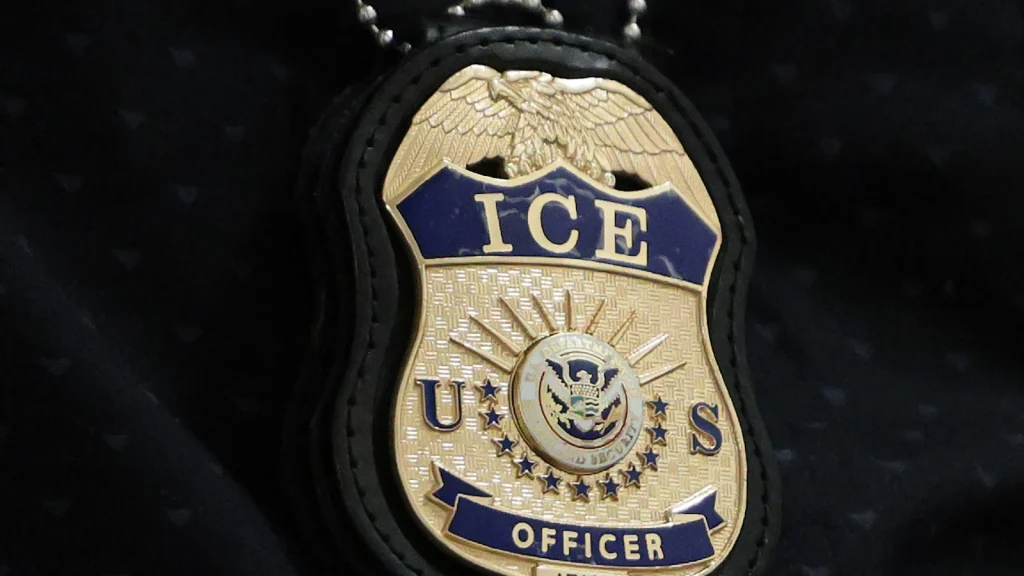
ICE Agent Charged in Nonfatal Shooting of Venezuelan Immigrant in Minneapolis
ICE agent charged in nonfatal shooting – On Monday, Minnesota authorities revealed that a U.S. Immigration and Customs Enforcement (ICE) agent, Christian Castro, has been formally accused in the incident where a Venezuelan man was shot in Minneapolis earlier this year. The charges come after an investigation into the Jan. 14 event, which left Julio Sosa-Celis with a serious but nonfatal injury. Hennepin County Attorney Mary Moriarty announced the federal agent’s legal accountability during a press briefing, detailing the circumstances that led to the confrontation. The case has sparked renewed debate about the actions of immigration officers and the potential for misuse of force in domestic settings.
Details of the Shooting and Charges
The criminal complaint outlines that Castro, while conducting a routine operation, fired his service weapon at the front door of a home, striking Sosa-Celis in the leg. The bullet traveled through a nearby closet and embedded itself in the wall of a child’s bedroom. Moriarty emphasized that Castro was not under any immediate physical danger when he discharged his firearm, contradicting earlier claims by government officials that he had been struck with a shovel or broom. The complaint further clarifies that the shooting occurred without warning, as the agent was aware that individuals had recently entered the dwelling and posed no immediate threat.
“Mr. Castro fired his service weapon at the front door of the home, knowing there were people who had just run inside that presented absolutely no threat to him or anyone else,” said Moriarty during the news conference. This statement underscores the alleged intent behind the act, suggesting that the shooting was deliberate rather than accidental. The attorney added that the incident marked a “violent crime” committed by Castro, highlighting the gravity of the charges against him.
Castro faces four counts of second-degree assault, which typically involve the use of force causing serious injury, and one count of falsely reporting a crime. These charges indicate that the agent may have exaggerated or fabricated the situation to justify his actions. The legal proceedings against Castro now rest on the evidence presented, including security footage and witness accounts, which will be crucial in establishing the sequence of events.
Confrontation and Context of the Incident
The incident began when Castro and other ICE agents pursued a man who was returning from a DoorDash delivery to his residence. According to the complaint, the man was accompanied by Sosa-Celis, who lived in the same house. Security footage captured Castro tackling the driver after he exited his vehicle and started running toward his home. A second resident intervened, separating the two men and allowing the driver to re-enter the house. At this point, Castro was positioned outside the front door, where he fired a single shot through the closed door, striking Sosa-Celis in the right leg.
“A violent crime did occur that night, but it was Mr. Castro who committed it,” Moriarty stated, reinforcing the narrative that the shooting was a result of the agent’s actions rather than a self-defense scenario. The attorney’s comments challenge the initial perception of the event, suggesting that Castro’s use of force was excessive and unnecessary.
The complaint also notes that the home was occupied by four adults and two children at the time of the gunfire. This detail adds context to the situation, as the agent’s decision to shoot through the door may have been influenced by the presence of multiple people inside. After the shooting, ICE agents deployed tear gas and forced their way into the residence, apprehending all the occupants. Castro’s bail was set at $200,000, which has drawn attention to the financial implications of the case for the accused.
Legal Implications and Public Reaction
The charges against Castro represent a significant development in the legal landscape for federal officers. Moriarty clarified that federal agents do not enjoy absolute immunity when committing crimes within a state, emphasizing that their actions are subject to local jurisdiction. This assertion has reignited discussions about the accountability of immigration personnel and the need for oversight in their operations.
“There is no such thing as absolute immunity for federal officers who commit crimes in this state or any other,” Moriarty stated, highlighting the legal principle that governs the case. Her remarks underscore the importance of holding individuals accountable for their actions, regardless of their status as federal employees.
While the details of the shooting are now established, the broader implications of the incident remain under scrutiny. Critics argue that the use of force by ICE agents has become a growing concern, particularly in cases involving immigrants. The complaint also mentions that two other ICE officers may have lied under oath about the events of the shooting, further complicating the case and raising questions about the agency’s conduct.
The Department of Homeland Security has not yet responded to a request for comment from ABC News, leaving the public to rely on the information provided by Hennepin County. The case has become a focal point for discussions about the balance between law enforcement authority and the rights of individuals, especially those who are not U.S. citizens. As the legal process unfolds, the outcome could set a precedent for how similar incidents are handled in the future.
Background and Context of the Confrontation
Security footage plays a central role in the investigation, as it captures the sequence of events leading to the shooting. The video shows Castro and his colleagues chasing the man who had delivered food, creating a scenario where the agent’s actions were perceived as aggressive. The man’s decision to return to his home, which he shared with Sosa-Celis, may have triggered the confrontation. According to the complaint, Castro’s use of force was not justified, as he was not under threat when he fired the weapon.
The incident also brings to light the challenges faced by immigrants in the U.S. and the potential for encounters with law enforcement to escalate quickly. Sosa-Celis, a Venezuelan immigrant, is now part of a growing narrative about the treatment of noncitizens by federal agencies. His injury, though not life-threatening, has drawn attention to the circumstances surrounding his arrest and the force applied during the operation.
As the legal proceedings continue, the case will likely be closely watched by both supporters and detractors of ICE’s practices. The agent’s charges not only affect his personal future but also reflect on the agency’s broader operations and the public trust it maintains. With the bail amount set at $200,000, the financial burden on Castro and his family is significant, adding another layer to the case’s complexity.
The incident has also sparked renewed interest in the role of immigration officers during domestic encounters. While the agency emphasizes its mission to enforce immigration laws, the shooting of Sosa-Celis has raised questions about the balance between discretion and accountability. As the trial approaches, the details of the confrontation and the legal arguments surrounding Castro’s actions will be pivotal in determining the outcome of the case.