
Rep. Clyburn says GOP redistricting push is part of larger Black disenfranchisement effort
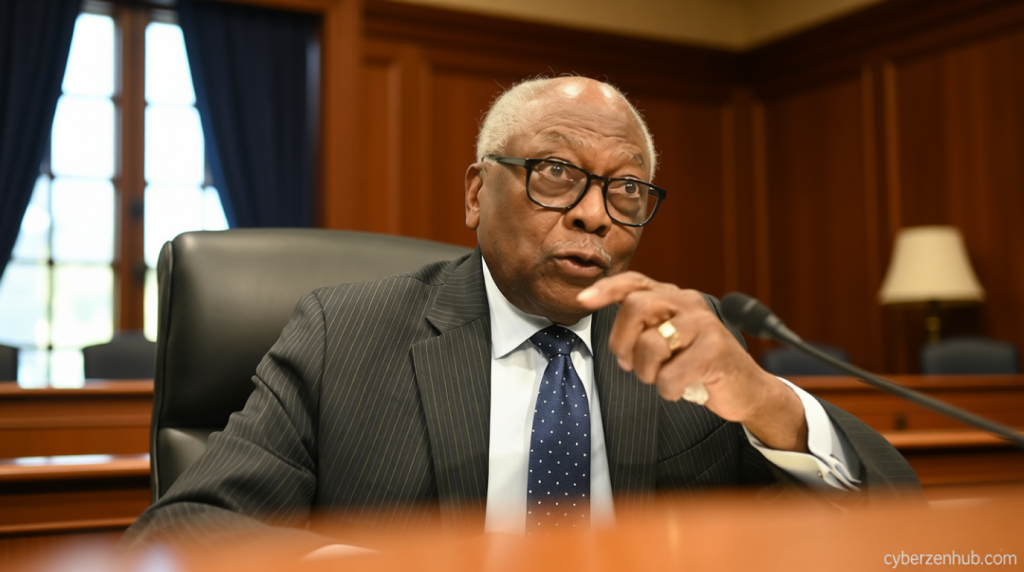
Rep. Clyburn Says GOP Redistricting Push Is Part of Larger Black Disenfranchisement Effort
Rep Clyburn says GOP redistricting push – South Carolina’s Democratic representative, James Clyburn, has voiced concerns about the Republican Party’s efforts to reshape congressional districts, which he views as a continuation of historical efforts to undermine Black political representation. In an interview with ABC News, Clyburn highlighted how the redrawing of boundaries could threaten the seats held by Black lawmakers, tying it to a broader pattern of systemic discrimination. His remarks come as states across the country gear up for mid-decade redistricting, a process that has sparked debates over fairness and equity in voting systems.
Redistricting as a Tool for Disenfranchisement
Clyburn, who has represented South Carolina’s 6th Congressional District since 1992, emphasized that the current redistricting strategy is not merely about geographic adjustments but about eroding the political influence of Black Americans. “I don’t know why it’s so hard for people to understand this. The country is attempting what I call ‘Jim Crow 2.0,’ and it’s just that simple,” he stated. This sentiment reflects his belief that the process is deliberately designed to dilute Black voter power, particularly in the Southern states where such efforts have been most pronounced.
“The country is attempting what I call ‘Jim Crow 2.0.’ It’s just that simple.” — Rep. James Clyburn, D-S.C.
Experts have informed ABC News that the redistricting plans in the South could lead to the loss of up to a third of the seats currently held by African American legislators. This projection underscores the potential impact of the current map-drawing initiatives, which have already begun to reshape the political landscape. Black lawmakers have consistently raised alarms about these changes, arguing that they disproportionately affect communities of color and threaten the progress made in recent decades.
Historical Context and Legal Challenges
Clyburn’s concerns are rooted in a historical analysis of Supreme Court rulings that he believes have facilitated voter suppression. He pointed to landmark decisions such as Dred Scott v. Sandford, which in 1857 declared Black Americans as not citizens, and Citizens United v. FEC, which allowed corporations and unions to spend unlimited funds in elections. These rulings, he argued, have created a legal framework that enables efforts to marginalize Black voters. “This isn’t just about congressional districts. It’s about affirmative action, closing schools to Black students, and removing opportunities for Black Americans to hold federal and state positions,” Clyburn explained.
“It’s not just about congressional districts. It’s affirmative action, closing colleges and universities to ordinary Blacks, it’s about we’re not able to get a job in the federal government, state government.” — Rep. James Clyburn, D-S.C.
The issue of redistricting has taken center stage in South Carolina as the state prepares to address the matter in an extra legislative session. Governor Henry McMaster’s recent announcement to convene lawmakers for this session follows a previous Senate rejection of a bill requiring a two-thirds majority to approve mid-decade redistricting. By contrast, the new session would allow a simple majority to pass the necessary legislation, making it easier for Republicans to implement their plans. This development comes amid a national trend of states redrawing maps after the Supreme Court’s decision against Louisiana’s congressional map, which critics argue weakened protections for minority voters.
Personal Background and Political Legacy
Before entering Congress, Clyburn was a high school history teacher and active in political movements that advocated for civil rights. His career has been marked by a commitment to addressing systemic inequities, a theme that he has expanded in his recent writings. In a discussion with ABC News, Clyburn referenced his book The First Eight, which delves into the historical struggles of Black Americans in politics. He argued that his work aims to illuminate how redistricting has been used as a tool to disenfranchise communities, a practice he calls “Jim Crow 2.0.”
Clyburn’s perspective is further supported by the broader context of the redistricting debate. The Congressional Black Caucus (CBC), which has been a vital force in advancing legislative priorities for Black Americans, faces the prospect of losing a significant number of seats. This could weaken the caucus’s ability to influence policy, particularly in areas like voting rights and social equity. The CBC’s potential decline has been highlighted by recent discussions on how the redistricting process may dilute the voting power of Black constituents.
Republican Rationale and Constitutional Defense
Republican lawmakers have defended their redistricting efforts as necessary adjustments to ensure fair representation and address outdated district boundaries. They argue that the process aligns with constitutional principles and is aimed at fixing disparities that have persisted since the 2010 census. South Carolina Republican Party Chair Drew McKissick expressed optimism about the state’s upcoming session, stating in a statement, “Thanks to the Supreme Court ruling, Republicans have an opportunity to get this done, and we should maximize it. Now is the time for lawmakers to stand with President Trump, defend the Constitution, and finish the job.”
McKissick’s comments reflect a broader Republican narrative that frames redistricting as a constitutional mandate rather than a racial strategy. However, Clyburn and other critics contend that the Supreme Court’s decision in Louisiana v. Abbott (also referenced as Louisiana v. Callais) has provided Republicans with the legal cover to push for changes that could have long-term consequences for Black political participation. The ruling, which invalidated Louisiana’s congressional map, is seen by some as a pivotal moment in the ongoing battle over voting rights and representation.
Broader Implications for Voting Rights
Clyburn’s argument is part of a larger conversation about how redistricting has been used historically to suppress Black voters. The Dred Scott decision, which denied citizenship to Black Americans, set a precedent for policies that marginalized Black communities. The Fourteenth Amendment, ratified 11 years after that ruling, was designed to correct such injustices by guaranteeing equal protection under the law. Yet, Clyburn suggests that recent Supreme Court decisions have undermined these protections, enabling a return to practices reminiscent of the Jim Crow era.
“This is a very comprehensive thing,” Clyburn said, emphasizing that the redistricting push is not an isolated action but a coordinated effort to reduce diversity in government. His remarks highlight the interconnected nature of voting rights, education, employment, and representation, all of which he believes are under threat from current redistricting strategies. The process, he argues, is part of a systemic campaign to limit the influence of Black Americans in the political arena, regardless of their individual merits or achievements.
As the redistricting debate intensifies, Clyburn’s concerns serve as a reminder of the historical forces at play. The political climate in South Carolina and other Southern states has become a battleground for interpretations of the Constitution, with Republicans advocating for more flexible district boundaries and Democrats pushing for protections that ensure equitable representation. The outcome of this process could determine the future of Black political power in the United States, with Clyburn warning that the fight is far from over.
Related Stories and National Trends
In addition to South Carolina’s redistricting push, other states have also taken steps to reshape their maps. For instance, in Virginia, the Supreme Court recently overturned a Democratic redistricting measure, further illustrating the national divide over how to allocate representation. Meanwhile, Tennessee’s Democratic representative Steve Cohen has announced his intention to retire, a decision that may be linked to the redistricting changes affecting his district. These developments underscore the far-reaching impact of the redistricting process on both individual politicians and the broader electorate.
Clyburn’s analysis adds a critical perspective to the ongoing discourse, linking contemporary redistricting efforts to historical precedents of racial exclusion. His call for awareness and action highlights the need to recognize the intersection of legal decisions and political strategy in shaping the future of Black representation. As the process unfolds, the balance between reform and suppression will be key to understanding its long-term implications for the United States’ democratic system.