
Supreme Court sends Native American voting rights decision back to lower court
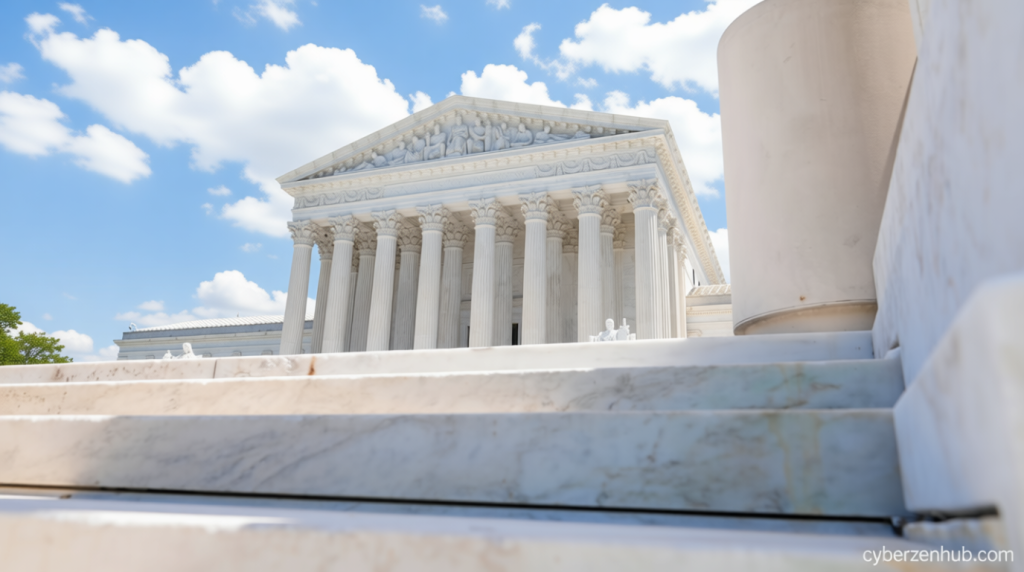
Supreme Court sends Native American voting rights decision back to lower court
Supreme Court sends Native American voting – On Monday, the U.S. Supreme Court intervened in a pivotal case concerning voting rights, directing lower courts to reassess a ruling that had previously disadvantaged Native American tribes. The decision, which hinges on the weakening of the Civil Rights-era Voting Rights Act, has sparked significant debate about the law’s effectiveness in protecting minority voters. By ordering a retrial of the case, the justices have signaled their intent to revisit the interpretation of Section 2, a provision central to enabling lawsuits by advocacy groups and voters to challenge discriminatory electoral practices.
Revisiting Section 2 Enforcement
The case in question, originating from North Dakota, centers on the authority of Native American tribes to assert their voting rights under the Voting Rights Act. Initially, the 8th U.S. Circuit Court of Appeals ruled against the tribes, asserting that only the federal government could initiate legal action to enforce the law. This stance contrasts with decades of established precedent that allowed state and local advocacy groups to sue under Section 2, which has been a cornerstone of protecting marginalized communities from voting discrimination.
Justice Ketanji Brown Jackson, in her dissent, argued that the Supreme Court should have overturned both the 8th Circuit’s ruling and the broader decision that weakened the law. She emphasized that the current interpretation of Section 2 has created a double standard, limiting the ability of tribes and other groups to challenge maps that may inadvertently suppress their votes. “By narrowing the scope of Section 2, the court has effectively curtailed the ability of voters and advocates to hold elected officials accountable,” Jackson wrote.
Impact on Redistricting and Voting Rights
The Supreme Court’s action comes as the nation grapples with redistricting battles and the ongoing fight over electoral fairness. The justices’ April ruling, which struck down a majority-Black congressional district in Louisiana, set a precedent that made it more difficult to prove discriminatory intent in voting map challenges. This decision, coupled with Monday’s reversal of the 8th Circuit’s stance, has raised concerns about the long-term viability of the Voting Rights Act in safeguarding minority representation.
Section 2 of the Voting Rights Act, which permits lawsuits to demonstrate voting discrimination, is now seen as a critical tool that has been increasingly eroded. Advocacy groups, who have historically relied on this provision to file cases, now face an uphill battle in proving that electoral maps were designed with discriminatory intent. The 8th Circuit’s ruling, which restricted this power to federal entities, has been cited by other states, such as Mississippi, in similar legal arguments. The Supreme Court’s decision to send Mississippi’s case back for review underscores the growing influence of this new interpretation across the country.
North Dakota’s Case and Legal Precedent
In the North Dakota case, two Native American tribes challenged a redistricting plan that they claimed diluted their voting power. The 8th Circuit’s initial ruling, which limited the ability of tribes to sue under Section 2, was a departure from established legal principles. Prior to this decision, courts had consistently upheld the right of advocacy groups to bring lawsuits that demonstrated the impact of voting practices on minority communities. By restricting this authority, the 8th Circuit effectively reduced the number of viable cases that could be pursued under the act.
However, the Supreme Court’s July intervention provided a temporary reprieve for the tribes. The justices blocked the 8th Circuit’s ruling, allowing the original maps to remain in place while the case was reevaluated. This move highlighted the court’s willingness to address the issue of voting rights in the context of redistricting, even as it continued to chip away at the law’s broader protections. The recent reversal of the 8th Circuit’s decision suggests that the Supreme Court is taking a more active role in shaping the legal landscape for voting rights enforcement.
Broader Implications for the Voting Rights Act
The weakening of Section 2 has broader implications for the Voting Rights Act’s role in combating discrimination. Advocacy groups, such as the NAACP Legal Defense Fund and the American Civil Liberties Union, have long used this provision to challenge practices that disproportionately affect minority voters. With the current legal framework, proving intentional discrimination has become more complex, requiring plaintiffs to show that maps were created specifically to limit the votes of protected groups.
This high bar for proving discrimination has already been felt in other cases. For instance, the Louisiana district ruling, which the Supreme Court upheld in April, demonstrated how the law’s enforcement mechanisms are being redefined. The decision emphasized that racial considerations must be intentional to qualify as a violation of Section 2, which has made it harder to justify claims of voter suppression in districts with historical racial disparities. The North Dakota case, therefore, represents a critical juncture in the ongoing struggle to maintain the law’s original intent.
Mississippi and the National Debate
Mississippi’s similar argument in its redistricting case has drawn attention to the nationwide impact of the 8th Circuit’s ruling. The state is leveraging the same legal reasoning to challenge its legislative map, arguing that only federal entities can assert voting rights violations under Section 2. The Supreme Court’s decision to send Mississippi’s case back for reconsideration has reignited discussions about the act’s ability to address disparities in state-level elections.
Legal experts warn that this shift could lead to a patchwork of interpretations, where states with differing political ideologies apply the law inconsistently. The weakening of Section 2 may also embolden lawmakers to create maps that appear neutral on the surface but systematically disadvantage minority voters. This dynamic has been observed in recent redistricting efforts, where the emphasis on “race-neutral” designs has sometimes masked discriminatory outcomes.
Conservative Majority and the Path Forward
The Supreme Court’s conservative majority has consistently signaled its intent to reshape the Voting Rights Act. By diluting the enforcement power of Section 2, the justices have made it more challenging for plaintiffs to succeed in court. This trend is expected to continue as the court considers future cases, potentially reducing the number of successful challenges to voting practices. The recent North Dakota and Mississippi rulings exemplify this shift, as they both reflect a narrowing of the law’s scope and an emphasis on intent as the primary criterion for discrimination.
While the immediate impact of the decision is still unfolding, its implications are clear. The Voting Rights Act, once a powerful tool for ensuring equitable representation, now requires plaintiffs to demonstrate a higher level of intent in their cases. This change may weaken the act’s ability to address subtle forms of discrimination, such as gerrymandering that disproportionately affects minority communities. The Native American tribes’ case, therefore, is not just about their own voting rights but also about the future of the law as a whole.
As the lower courts prepare to reexamine the rulings, the legal battle over voting rights is far from over. The outcome of these cases will shape how the Voting Rights Act is applied in the coming years, influencing the balance between state autonomy and federal oversight in electoral matters. The debate over Section 2’s enforcement mechanism remains a focal point in the broader conversation about voting equity, with advocates urging the court to preserve the law’s ability to protect all voters from discrimination.
Popular Reads
Former assistant principal set for trial 3 years after 6-year-old shot teacher
Redistricting debate shifts as Republicans seek clean sweep of US House seats
Supreme Court rejects appeals from drugmakers over Medicare price negotiations