
Iran war: Trump’s series of unenforced deadlines
Iran War: Trump’s Series of Unenforced Deadlines
Iran war – As the conflict with Iran enters its third month, President Donald Trump has issued repeated warnings about resuming military action but has yet to act decisively. His strategy has revolved around a series of deadlines, each aimed at pressuring Tehran into diplomatic concessions. However, these deadlines have consistently been extended or paused, leaving the war’s trajectory in question. The administration’s approach reflects a blend of military readiness and diplomatic maneuvering, with key developments shaping the ongoing standoff.
The Economic Toll at Home
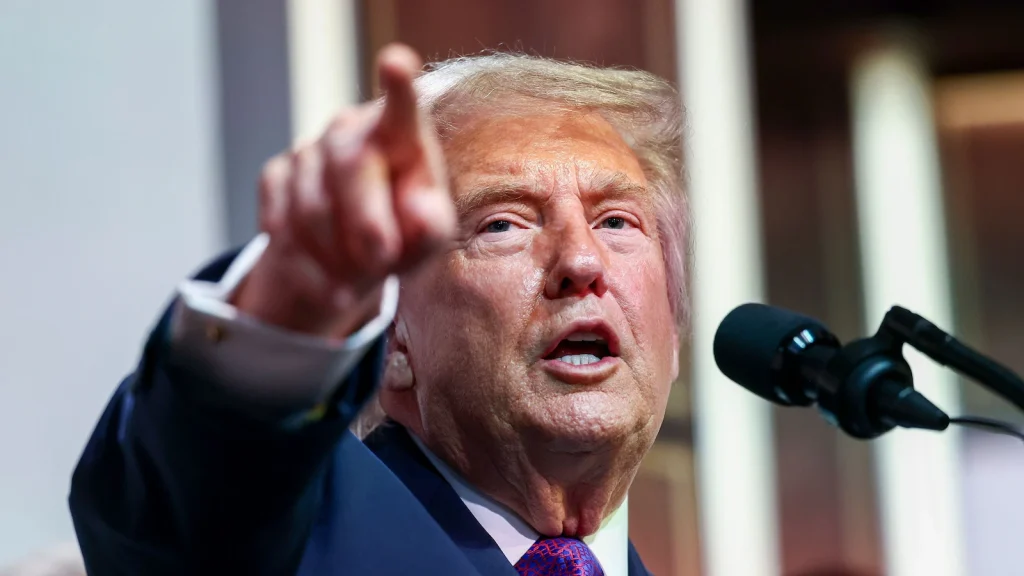
The war’s repercussions have extended beyond the battlefield, affecting domestic policy and economic stability. In May 2026, Trump addressed concerns about rising prescription drug costs during a speech in the Eisenhower Executive Office Building. This moment highlighted the growing pressure on the U.S. economy, as inflation reached its highest level in three years. The spike in fuel prices, attributed to the closure of the Strait of Hormuz—a critical chokepoint for global oil trade—has intensified public scrutiny of the administration’s foreign policy decisions.
“Based on the fact that the war has created significant economic strain, we are now seeing the most dramatic increase in fuel costs in recent history,” Trump remarked during his remarks.
The Strait of Hormuz, through which roughly 20% of the world’s oil flows, has become a focal point of the conflict. Its disruption has not only raised concerns about energy security but also underscored the interconnectedness of global markets and U.S. military actions. As the administration grapples with domestic priorities, the prolonged engagement in the region has added to the complexity of economic management.
The Evolution of Trump’s Deadlines
Trump’s initial threat to launch attacks on Iran’s power plants came within days of the war’s outbreak. On March 21, he declared that if Tehran did not fully open the Strait of Hormuz to shipping, the U.S. would strike its energy infrastructure. The statement, posted on his social media platform, emphasized urgency, stating, “If Iran doesn’t FULLY OPEN, WITHOUT THREAT, the Strait of Hormuz, within 48 HOURS from this exact point in time, the United States of America will hit and obliterate their various POWER PLANTS, STARTING WITH THE BIGGEST ONE FIRST!”
Two days later, on March 23, Trump adjusted his stance, citing progress in talks with Iran. He instructed the Department of War to delay strikes for five days, noting that “these IN DEPTH, DETAILED, AND CONSTRUCTIVE CONVERSATIONS” had made the situation more promising. The delay allowed for further negotiations, though the threat of military action remained a looming possibility.
“BASED ON THE TENOR AND TONE OF THESE IN DEPTH, DETAILED, AND CONSTRUCTIVE CONVERSATIONS, WHICH WILL CONTINUE THROUGHOUT THE WEEK, I HAVE INSTRUCTED THE DEPARTMENT OF WAR TO POSTPONE ANY AND ALL MILITARY STRIKES AGAINST IRANIAN POWER PLANTS AND ENERGY INFRASTRUCTURE FOR A FIVE DAY PERIOD,” the president wrote.
By March 26, the deadline was extended once again, this time by an additional 10 days. Trump claimed that discussions with Iranian officials were “going very well,” and that the country had “met and exceeded all Military objectives.” He announced, “As per Iranian Government request, please let this statement serve to represent that I am pausing the period of Energy Plant destruction by 10 Days to Monday, April 6, 2026, at 8 P.M., Eastern Time.” The extension was framed as a goodwill gesture, with the hope that a long-term agreement could be reached.
Just two days before the April 6 deadline, Trump pushed the pause further, extending it to April 7. The delay was announced with characteristic flair: “Tuesday, 8:00 P.M. Eastern Time!” he posted, signaling his willingness to wait for a breakthrough. The decision was influenced by conversations with Pakistani mediators, who played a key role in facilitating the ceasefire.
“After consulting with Pakistani mediators, we have decided to implement a two-week ceasefire,” Trump stated. “This will be a double-sided CEASEFIRE! The reason for doing so is that we have already met and exceeded all Military objectives, and are very far along with a definitive Agreement concerning Longterm PEACE with Iran, and PEACE in the Middle East.”
The two-week pause, announced on April 7, was contingent on Iran opening the Strait of Hormuz and agreeing to certain terms. Trump highlighted the progress made, noting that the Iranian delegation had submitted a 10-point proposal. He claimed that “almost all of the various points of past contention have been agreed to between the United States and Iran,” suggesting that a deal was within reach. However, the indefinite nature of the ceasefire introduced uncertainty, as it depended on continued cooperation from both sides.
The Role of Middle Eastern Allies
Throughout the crisis, Trump’s interactions with regional allies have played a pivotal role in shaping the timeline. On April 6, he cited the support of Saudi Arabia, Qatar, and the UAE as a reason for the extended pause. “I was asked by Saudi Arabia, Qatar, UAE and some others if we could put it off for 2 or 3 days, a short period of time, because they think that they are getting very close to making a deal,” he explained during a White House event. This cooperation underscored the diplomatic significance of the pause, as the U.S. sought to align with key partners in the region.
The involvement of Pakistan as a mediator added another layer to the negotiations. Trump’s decision to grant a two-week ceasefire was partly influenced by the country’s diplomatic efforts, which he credited with advancing the peace talks. The administration’s reliance on these allies highlights the broader strategic interests at play, with regional stability and economic cooperation being central to the outcome.
The Unfinished Equation
Despite the extension, the agreement remains incomplete. The ceasefire is not a permanent solution but rather a temporary pause, with the hope that a more comprehensive deal can be finalized. The administration’s cautious approach has been met with mixed reactions, as some view it as a diplomatic success while others see it as a sign of hesitation. The delay in attacks has also allowed Iran to regroup, potentially altering the course of the conflict.
As of April 21, the two-week ceasefire had expired, yet no strikes had resumed. Instead, Trump announced an indefinite pause, attributing it to the “request of the Pakistanis.” This move has raised questions about the sustainability of the ceasefire and the likelihood of a formal agreement. The unenforced deadlines, while showcasing Trump’s rhetorical prowess, have also exposed the challenges of maintaining pressure without immediate military action.
The Iran war has become a test of patience and negotiation, with Trump’s deadlines serving as both a tool and a symbol of the administration’s approach. While the initial threats were designed to compel Iran into submission, the repeated pauses and extensions reflect a more nuanced strategy. The combination of economic pressures, diplomatic efforts, and military readiness continues to define the conflict’s trajectory, leaving the outcome uncertain as the U.S. and Iran navigate the delicate balance between war and peace.