
Acting AG Todd Blanche faces questions on $1.7 billion ‘Anti-Weaponization Fund’ tied to Trump lawsuit
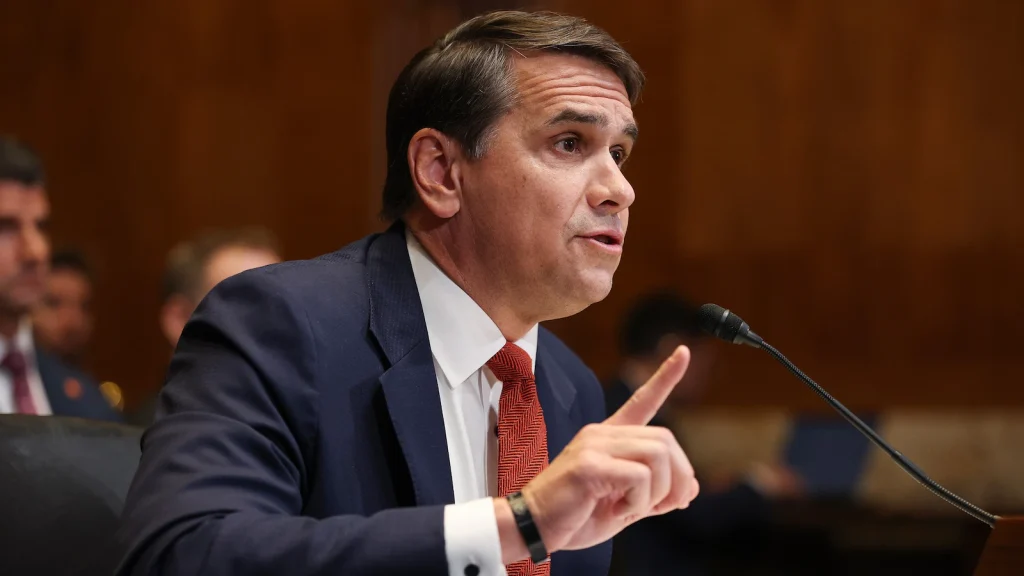
Acting AG Todd Blanche Under Scrutiny Over $1.7 Billion ‘Anti-Weaponization Fund’ Linked to Trump Lawsuit
Acting AG Todd Blanche faces questions – During a Senate hearing on May 19, 2026, Acting U.S. Attorney General Todd Blanche faced intense questioning about a newly announced $1.776 billion fund aimed at compensating individuals who claim they were unjustly targeted by the Biden administration. The initiative, referred to as the “Anti-Weaponization Fund,” was unveiled as part of a settlement agreement in Trump’s $10 billion lawsuit against the Internal Revenue Service. While the proposal is intended to address allegations of government overreach, it has sparked bipartisan concerns about transparency, fairness, and potential political bias in its distribution.
Testimony Highlights Controversial Fund
Blanche’s appearance before the Senate Appropriations Subcommittee on Commerce, Justice, Science, and Related Agencies marked his first engagement with lawmakers since taking over as acting attorney general following President Donald Trump’s April 2026 appointment. The fund, first reported by ABC News the previous week, is designed to provide financial relief to those who believe they were subjected to discriminatory practices by federal agencies. However, critics argue that its implementation raises questions about the criteria for eligibility and the potential for it to benefit political allies of the administration.
“I’m not a big fan of the fund. And I’m not sure exactly how they intend to use it,” said Senate Majority Leader John Thune, expressing skepticism about the initiative. “My understanding is that was just announced. I don’t see a purpose for that.”
Thune’s remarks underscored the growing unease among lawmakers about the fund’s purpose and scope. While Blanche emphasized that the initiative would be open to all citizens, he did not clarify how the claims would be evaluated or whether specific political groups would be prioritized. The debate intensified as questions emerged regarding the possibility of awarding funds to individuals involved in the January 6, 2021, Capitol riot, as well as those who assaulted law enforcement officers during the event.
Political Backlash and Historical Comparisons
Democratic Senator Chris Van Hollen challenged Blanche’s defense of the fund, highlighting its lack of judicial oversight. He contrasted it with an Obama-era program that settled claims by Native Americans alleging systemic mistreatment by the government, which had received formal approval from a federal judge. “This fund was announced without any judicial input or validation,” Van Hollen pointed out, suggesting that the current proposal might lack the same level of accountability.
Blanche defended the initiative, drawing parallels to the Obama-era program. “It’s not limited to Republicans, nor is it restricted to Biden’s weaponization of the law,” he stated. “It’s a broad mechanism for addressing grievances, and there are no restrictions on the types of claims it can cover.” This argument, however, drew sharp criticism from Democrats, who viewed it as an attempt to justify the fund’s use for politically motivated purposes.
Eligibility Debates and Law Enforcement Assaults
During the hearing, Blanche was pressed on whether individuals who attacked Capitol Police officers would qualify for compensation. He responded by stating that anyone in the U.S. could apply if they believed they were victims of government weaponization. “There’s no limitation on the claims,” Blanche asserted, leaving room for interpretations that could include those who had committed violent acts.
“Do you feel they should get compensation after being convicted of violent acts?” Democratic Senator Jeff Merkley questioned, challenging Blanche’s stance. “My feelings don’t, don’t matter, senator,” Blanche replied, emphasizing that eligibility decisions would rest with the fund’s commissioners rather than his personal judgment.
The acting attorney general also addressed concerns about specific groups, such as the Oath Keepers and Proud Boys, who might seek benefits under the fund. He reiterated that the selection process would be determined by the commissioners, who would establish guidelines for determining who qualifies. “That’s not for me to set, that’s for the commissioners,” Blanche said, though he did not name the individuals or entities overseeing the fund.
Uncertainty Over Fund Commissioners
Lawmakers pressed Blanche on the identity of the commissioners managing the fund, noting that their selection could influence the outcome of the compensation process. He acknowledged the lack of clarity, stating he would “commit” to ensuring the process was fair but stopped short of naming the appointees. “The commissioners will set the rules, I’m sure,” he said, adding that their decisions would govern who receives payments.
Despite his assurances, the absence of defined guidelines has fueled speculation about the fund’s potential to reward political supporters. Critics argue that without clear parameters, the initiative could be used to address grievances that align with the administration’s agenda, rather than being a neutral mechanism for redress. This has led to calls for more transparency, with some lawmakers suggesting that the fund’s structure could undermine public trust in the justice system.
Broader Implications for Government Accountability
The controversy surrounding the fund has reignited discussions about the role of the Justice Department in shaping legal settlements that may have political implications. While Blanche framed the initiative as a means to address systemic issues, opponents view it as a tool for deflecting blame and compensating those who support the administration. The debate also highlights the tension between legal redress and the potential for partisan influence in the distribution of public funds.
As the hearing progressed, the focus shifted to the broader implications of the fund. Lawmakers questioned whether it could set a precedent for future settlements, particularly in cases involving high-profile political figures. The $1.776 billion allocation, though significant, represents a fraction of the $10 billion lawsuit against the IRS, which has been a central point of contention in recent months. The administration’s position that the fund would cover a wide range of claims has been met with mixed reactions, with some praising its inclusivity and others warning of its potential for misuse.
Blanche’s testimony underscores the challenges of balancing legal accountability with political strategy. While he defended the initiative as a necessary step to address grievances, the lack of concrete details about its operation has left many questions unanswered. As the fund moves forward, its success will depend on the transparency and fairness of the commission overseeing its distribution, as well as its ability to withstand scrutiny from both parties. The ongoing debate reflects the broader political tensions that continue to shape the administration’s approach to legal and fiscal matters.