
Idaho 2026 live primary election results
Idaho 2026 Live Primary Election Results
Idaho 2026 live primary election results – Voters across Idaho cast their ballots in pivotal contests, shaping the state’s political landscape through critical races. Among the key battlegrounds was the gubernatorial contest, along with three congressional races, each carrying significant implications for the state’s future. With a mix of experienced incumbents and emerging challengers, the primary results reflect a dynamic electoral environment where party loyalty and public sentiment are in constant flux.
Significance of the State
This year’s primary elections feature three of Idaho’s four congressional districts, all of which are up for grabs. Notably, the Senate race and both House seats are on the ballot, putting all current representatives and senators in the spotlight. The stakes are particularly high for the Senate race, as it involves a high-profile incumbent seeking re-election. For the House, two of the four representatives are vying for their fifth and 15th terms, respectively, while the third district’s race remains competitive. Meanwhile, the gubernatorial race pits the current governor against a field of rivals, adding another layer of complexity to the state’s political narrative.
Senate Race: Jim Risch vs. Challengers
Republican Senator Jim Risch, the current chairman of the Senate Foreign Relations Committee, is campaigning for a fourth term. His bid for re-election has drawn attention, especially with the support of former President Donald Trump, who endorsed his candidacy in April 2025. Risch’s re-election could bolster his influence in national policy discussions, particularly on foreign affairs. However, he faces three Republican challengers: Denny LaVe, a local political figure; Joe Evans, a grassroots organizer; and Josh Roy, a community leader. The race has become a test of Risch’s ability to maintain his party’s trust and secure his position in the Senate.
House Races: Fulcher, Simpson, and Others
Two House races in Idaho have captured the interest of political analysts. In the 1st Congressional District, Republican Russ Fulcher seeks a fifth term, representing the district since 2019. His opponents include Marine veteran Joseph P. Morrison, who brings a military background to the campaign, and Andy Briner, a farmer with a strong local presence. Meanwhile, in the 2nd Congressional District, Mike Simpson, a veteran of the House of Representatives, aims to extend his 15-year tenure. Simpson, who chairs the House Interior and Environment Subcommittee on Appropriations, faces Republican challengers Brian Keene, a former educator, and Perry Shumway, a marketing professional. Democratic contender Ellie Gilbreath is also vying for a spot in the district, highlighting the competition within the Republican primary.
Democratic Candidates and Incumbents
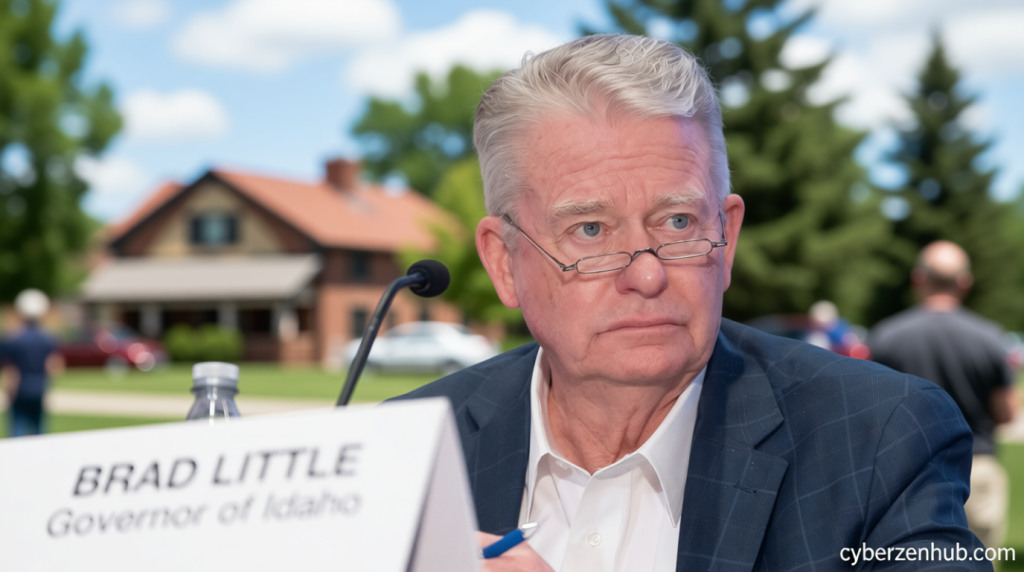
Across all races, Democratic candidates are positioning themselves to challenge their Republican counterparts. In the House, retired painting contractor Kenneth Brungardt and former Idaho Young Democrats President Kaylee Peterson have filed bids. Peterson, who previously lost to Fulcher in 2022 and 2024, is hoping for a different outcome this time. For the Senate, Risch’s challengers are all Republicans, but the broader picture of the state’s political shift is evident in the gubernatorial race. Republican Brad Little, the incumbent governor, is running for a third term in a state where his party’s candidate narrowly won in 2024 by nearly 40 percentage points. His Republican rivals include a diverse group of candidates, each aiming to unseat him. On the Democratic side, Chanelle Torrez, Maxine Durand, Terri Pickens, and Jill Kirkham are competing for the governor’s seat, representing a spectrum of ideological and regional perspectives.
Political Dynamics and Context
Idaho’s primary elections are not just about individual races but also about broader trends in the state’s political climate. With a historically conservative electorate, the races for congressional seats and the governor’s office are seen as indicators of shifting public priorities. The presence of multiple Republican challengers in the Senate and House races suggests a fragmented party base, while the Democratic field for governor highlights a growing interest in alternative leadership. Additionally, the absence of certain key figures in the Senate race—such as Mike Crapo, who is not up for reelection—has allowed other candidates to step forward, adding depth to the competition.
Key Candidates and Campaign Highlights
Jim Risch’s campaign has emphasized his experience in national politics and his alignment with Trump’s agenda, which resonates with Idaho’s Republican base. However, his challengers are leveraging local issues to gain traction, arguing that Risch’s focus on foreign policy comes at the expense of domestic priorities. In the House, Russ Fulcher’s re-election bid has centered on his record of conservative governance and his ability to represent the 1st District’s interests. His Democratic opponents, meanwhile, are highlighting his past voting patterns and advocating for change. Similarly, Mike Simpson’s campaign has underscored his long-standing service in Congress, particularly his work on infrastructure and environmental policy. His challengers, though less prominent, are emphasizing his ties to corporate interests and his perceived lack of innovation.
Implications for the November General Election
The primary results will have lasting effects on the November general election. For instance, the outcome in the Senate race could determine the balance of power in the U.S. Senate, given the narrow margins of victory in recent years. In the House, the races for the 1st and 2nd districts will set the stage for the fall campaign, with the victors likely to face Democratic challengers in November. The gubernatorial race, meanwhile, is expected to be a high-stakes contest, as Little’s re-election will solidify his position as a key figure in Idaho’s state politics. Analysts are closely watching the primary results to predict which candidates will have the strongest paths to the general election.
Idaho’s primary elections also reflect the state’s role in national politics. As a key battleground for the Republican Party, the state’s vote count has historically influenced the broader congressional race. The upcoming results could signal whether the party’s base is consolidating or splintering, particularly in the Senate race. For the House races, the competition underscores the importance of local representation in a state that has seen increased political engagement. With the general election just months away, the primary results are likely to shape the tone of the campaigns and the momentum of the candidates heading into the final stretch.
Idaho State Capitol in Boise, ID. Nick Fox/Adobe Stock
Conclusion and Final Notes
As the primary elections conclude, the focus shifts to the broader implications of the results. The gubernatorial race, congressional contests, and Senate bid all highlight the evolving political landscape of Idaho. While the Republican Party appears to have a strong presence, the Democratic candidates are making their case for a more progressive direction. The outcomes of these races will not only determine the state’s leadership but also influence the national conversation on key issues. With the November general election approaching, the primary results serve as a crucial benchmark for the future of Idaho’s governance.