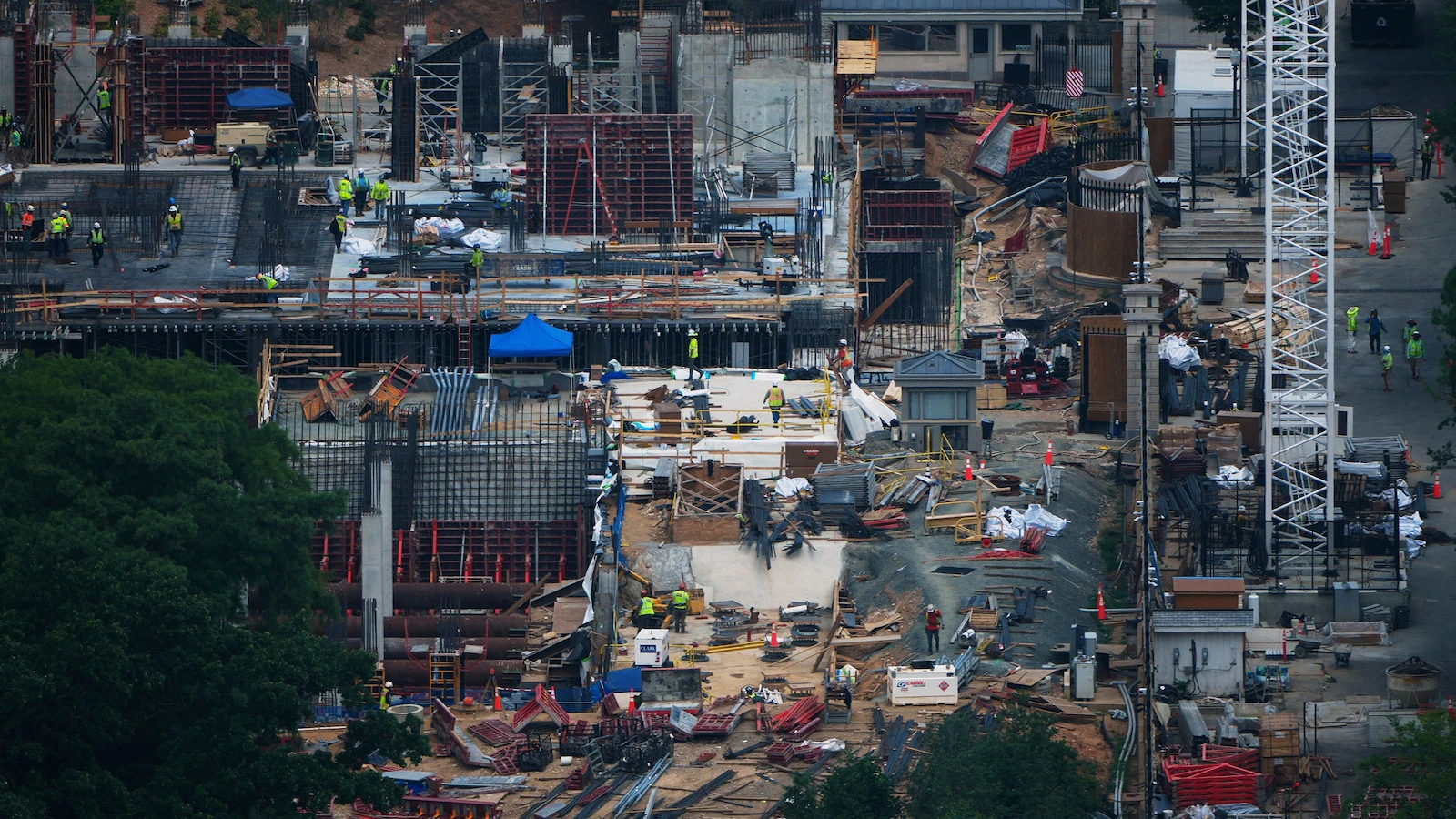
Senators Eye $397M Transfer to Secret Service Amid Ballroom Construction
Cyberzenhub.com – Lawmakers are scrutinizing the administration’s decision to allocate $397 million to the Secret Service, with concerns growing over its potential use for the White House ballroom. The transfer, confirmed by ABC News through documents from the Office of Management and Budget (OMB), has ignited debate about whether the funds are being directed toward critical security needs or a presidential luxury project. While the White House argues the move is necessary to enhance protection, some senators remain cautious, questioning the transparency of the spending.
Funding Allocation and Legislative Oversight
The $397 million transfer was part of a $1.2 billion budget approved by Congress last year under the “One Big Beautiful Bill Act.” Originally intended to strengthen Secret Service operations, the funds covered personnel, training, and technology upgrades. However, the allocation also included $386 million for “Procurement, Construction, and Improvements,” sparking speculation that a significant portion could be used for the ongoing ballroom project. The lack of clear details in the legislative text has left room for interpretation, with senators demanding more clarity on the budget’s final destinations.
Documents reveal the funds were dispersed in two installments—June 12 and June 15. Of the total, $11 million was allocated to the Secret Service’s Operations and Support account, while the remaining $397 million was earmarked for construction-related expenses. This split has led to questions about the project’s funding structure. Critics argue that the administration’s silence on how the money will be used raises doubts about its prioritization of infrastructure projects over immediate security needs.
Senators’ Skepticism and Presidential Justifications
Several senators from both parties have voiced concerns over the $397 million transfer, suggesting it may be funding the ballroom rather than essential security upgrades. When questioned by Bloomberg Government, Sen. Susan Collins, R-Maine, noted that the president had claimed the ballroom would be fully funded by private donors. “This raises the question of whether federal funds are also being used,” she stated, highlighting the need for accountability in how public money is spent.
While the Secret Service maintains its role as a key security provider, the administration’s rationale for the transfer remains vague. A senior official emphasized that the $397 million would support “necessary upgrades to the White House complex,” including visitors screening centers and other hardening measures. However, the official did not confirm the ballroom’s inclusion, leaving the funding’s purpose in question. This ambiguity has fueled bipartisan criticism, with some lawmakers arguing that the money should be reserved for personnel and technology rather than construction projects.
ABC News reports that the White House has not provided a detailed breakdown of the $397 million’s allocation. This lack of transparency has drawn comparisons to past controversies, where similar transfers were criticized for diverting funds from other priorities. Critics, including members of the opposition, argue that the administration’s narrative about the ballroom’s funding needs further verification. They question whether the project’s cost, which some estimates suggest could exceed $600 million, justifies such a large financial commitment.
Discrepancies and Financial Scrutiny
The Washington Post revealed that the ballroom’s estimated cost could surpass $600 million, with more than half of the funds coming from government sources. This contradicts the administration’s claim that the $397 million transfer would be entirely private. The discrepancy has intensified scrutiny, with lawmakers calling for a detailed report on how the funds are being used. They argue that the president’s assertion about private donations may be misleading, especially given the significant public funds involved.
Despite the conflicting reports, the White House has maintained that the $397 million is essential for modernizing the presidential residence. The administration highlights the ballroom as a strategic investment to improve security, particularly in light of evolving threats. However, the absence of a clear explanation about the funding split has led to calls for more oversight. Senators stress that the use of taxpayer money for such a project should be justified with detailed evidence, ensuring that the funds are allocated responsibly and transparently.