Iran live updates: US and Iran agree to roadmap for ‘final deal’ within 60 days
Cyberzenhub.com – On February 28, President Donald Trump declared the commencement of major combat operations against Iran, citing the need to disrupt the country’s military capabilities and economic stability. The decision came as a coordinated response to escalating tensions, with U.S. and Israeli forces launching strikes across multiple fronts. These attacks targeted key installations, including military bases, government facilities, and strategic infrastructure, marking a significant escalation in the conflict. The objective, as stated by Trump, was to weaken Iran’s ability to project power in the region and force a diplomatic resolution. Analysts noted that the strikes were timed to pressure Iran into negotiations, which had been ongoing for weeks amid rising fears of a broader war in the Middle East.
Broader Context of the Conflict
The U.S. military’s involvement in the strikes highlighted the deepening alliance between Washington and Tel Aviv, as both nations sought to counter Iran’s influence. Israeli defense officials confirmed that the operation, codenamed “Operation Iron Resolve,” had been meticulously planned to strike at Iran’s most vulnerable points. The timing of the attacks also coincided with a critical phase in the negotiations between U.S. and Iranian delegations, who had convened in the Swiss Alps to discuss a potential peace accord. Despite the violence, the leaders emphasized their commitment to resolving the dispute through dialogue, with the goal of reaching a final agreement within 60 days.
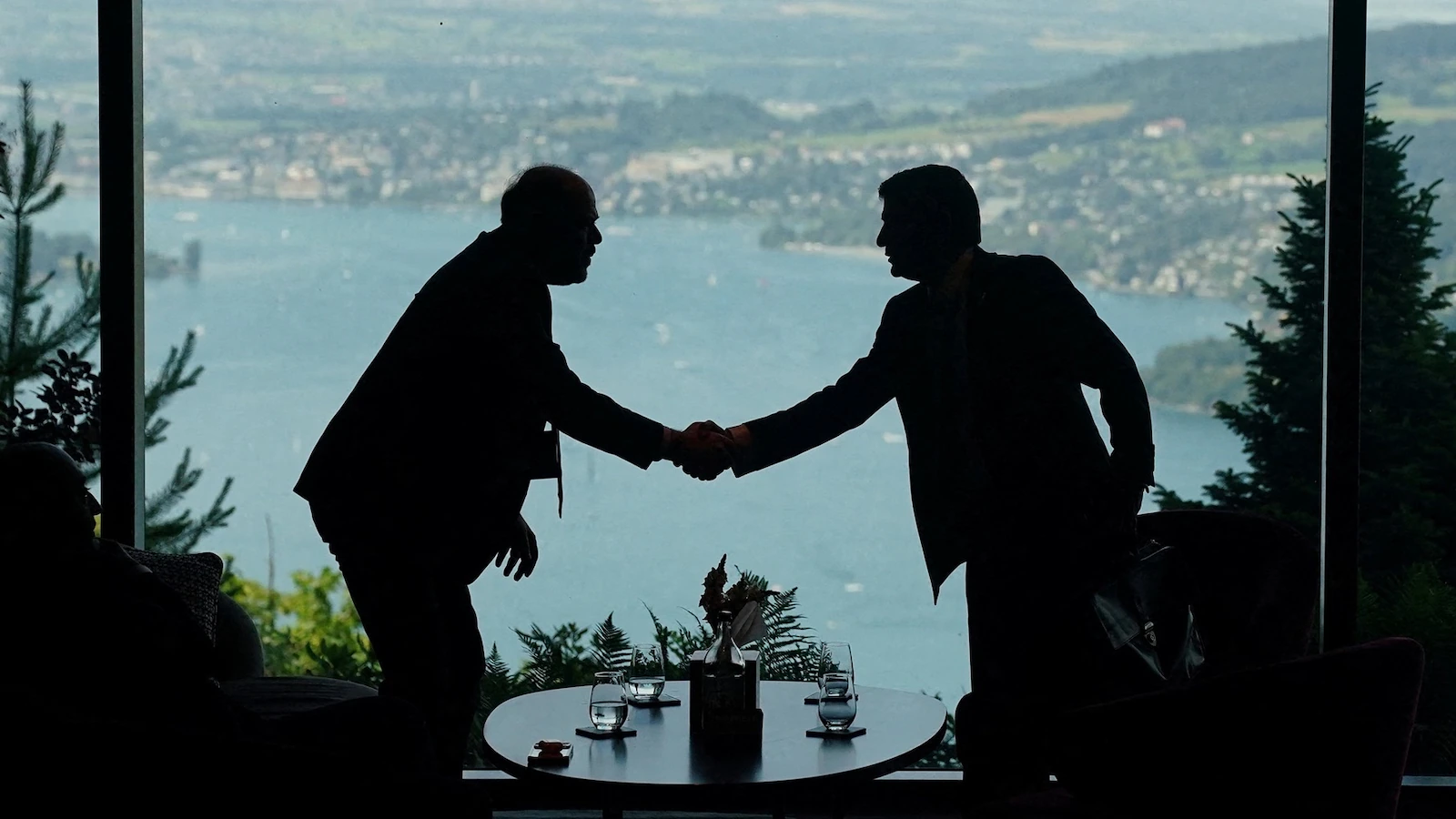
Following the strikes, officials from both countries arrived at the Bürgenstock resort in Switzerland, a picturesque venue often used for high-level diplomatic talks. The meeting, described as “a pivotal moment” by senior State Department representatives, aimed to bridge the gap between the two nations and establish a framework for a lasting settlement. While the United States sought to address Iran’s nuclear ambitions and regional aggression, Tehran insisted on securing economic concessions and guarantees against future military action. The negotiators, working under tight deadlines, focused on translating the memorandum of understanding—signed earlier that week—into actionable terms. This document outlined the core principles of the proposed deal, including sanctions relief and reciprocal security commitments.
“The road to peace is not easy, but it is necessary. We are ready to move forward with a plan that ensures Iran’s compliance with its nuclear commitments and protects our interests in the region,” said a U.S. official at the outset of the talks.
Historically, the memorandum of understanding served as a foundational agreement, setting the stage for more detailed discussions. It addressed key issues such as Iran’s nuclear program, its support for militant groups in the Middle East, and the conditions for lifting economic sanctions. The U.S. delegation, led by Secretary of State Mike Pompeo, presented a list of demands centered on Iran’s adherence to international agreements and its reduction of military activity in neighboring countries. In contrast, Iranian representatives, including Foreign Minister Javad Zarif, argued that the deal should include compensation for past actions and assurances against future attacks.
The talks in Switzerland were not the first attempt to reach a resolution. Previous negotiations in Vienna had stalled over disagreements on the scope of the agreement and the timeline for implementation. This time, however, the urgency of the situation—coupled with the recent strikes—created a new dynamic. Both sides recognized the need for a swift compromise, with the 60-day window serving as a deadline to prevent further escalation. The summit brought together diplomats, military advisors, and economic experts, ensuring that all aspects of the conflict were under scrutiny. The focus was on creating a balance between Iran’s strategic interests and the U.S.’s security concerns.
One of the primary challenges in the negotiations was the disagreement over the definition of a “final deal.” The United States sought a comprehensive agreement that would bind Iran to strict limits on its nuclear program and prevent it from developing ballistic missiles. Iran, on the other hand, pushed for a more flexible arrangement, emphasizing the importance of economic recovery and regional partnerships. The Swiss setting, with its neutral reputation, was chosen to foster an environment of trust and cooperation. The hope was that the physical distance from the conflict zones would allow the parties to focus on the negotiations without the immediate pressure of military threats.
“We are not here to start a war, but to end it. This deal will ensure Iran’s nuclear program is under control while protecting our allies,” stated a senior U.S. negotiator during a press briefing.
The agreement also included provisions for monitoring and verification, a critical element for both sides. The United States proposed a system of regular inspections, while Iran demanded transparency in the U.S.’s own military actions. These points became central to the discussions, as they were seen as indicators of each nation’s willingness to compromise. The Swiss team played a key role in mediating the talks, ensuring that the language of the agreement was clear and binding. By the end of the first week, the delegations had outlined several points of consensus, though significant differences remained on the final terms.
Meanwhile, the strikes had sent shockwaves through the region, prompting reactions from neighboring countries and global allies. European nations, including France and Germany, expressed concern over the potential for unintended consequences, while Russia and China called for restraint and urged a return to diplomacy. The U.S. justified the actions as a necessary step to demonstrate resolve, but the scale of the attacks raised questions about their impact on civilian populations. Reports indicated that the strikes had damaged power plants and communication hubs, temporarily disrupting Iran’s ability to coordinate its regional activities.
As the negotiations progressed, the focus shifted to the practical implications of the deal. The 60-day timeline was seen as a test of the parties’ commitment, with both sides acknowledging the need to act quickly. U.S. officials highlighted the importance of aligning the agreement with the broader international community, while Iranian representatives emphasized the domestic political context. The success of the talks would depend on finding common ground between these priorities, a task that required careful balancing of interests and a willingness to adapt to changing circumstances.
Amid the discussions, the role of the International Atomic Energy Agency (IAEA) was also debated. The U.S. insisted on the agency’s involvement in verifying Iran’s nuclear compliance, while Iran sought to maintain control over the inspection process. This point, along with others, was revisited multiple times as the delegations worked to refine the terms. The Swiss venue provided a conducive environment for such high-stakes diplomacy, where the stakes of failure were high and the pressure to succeed was immense.
As the deadline approached, the two sides remained optimistic about reaching a deal. Trump’s administration framed the agreement as a victory for American foreign policy, while Iranian officials viewed it as a step toward regional stability. The negotiations in Bürgenstock, with their mix of political maneuvering and technical detail, represented a critical juncture in the ongoing conflict. Whether the final deal would be signed or not, the discussions underscored the complex interplay of military and diplomatic strategies in the Middle East.
Looking ahead, the success of the talks would have far-reaching consequences. A deal could pave the way for renewed economic ties between the U.S. and Iran, as well as a reduction in regional hostilities. However, failure to reach an agreement within the 60-day window could lead to further military action, complicating the already volatile situation. The stakes were clear: both nations were determined to find a resolution, but the path forward remained uncertain. As the negotiations continued, the world watched closely, hoping for a breakthrough that would bring peace to a region on the brink of war.