Treasury Department Expands Plans for $250 Bill Featuring Trump’s Portrait and Signature
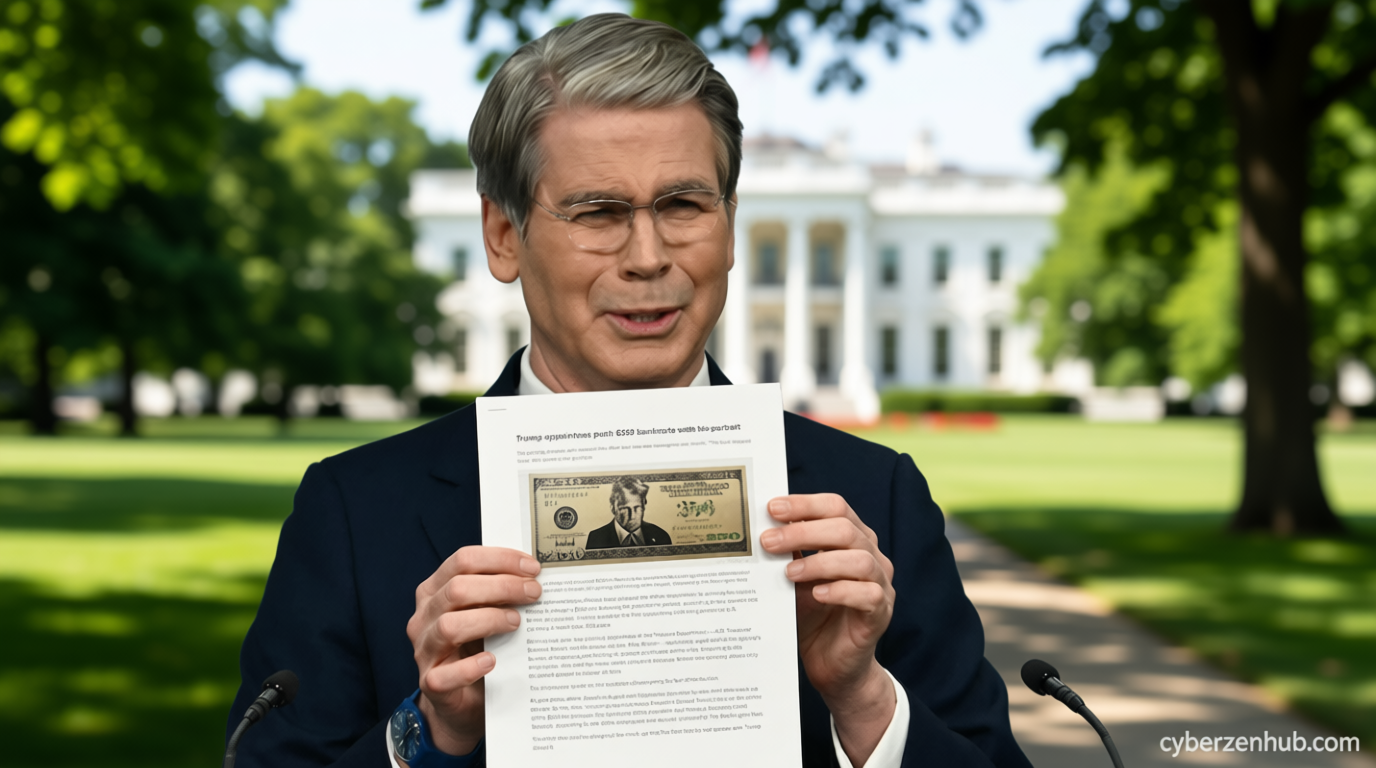
Cyberzenhub.com – Officials from the Trump administration have reportedly urged the Treasury Department to expedite the creation of a special $250 bill bearing the likeness of former President Donald Trump and his handwritten signature. According to two individuals who are well-informed about the internal discussions, this initiative hinges on the passage of proposed legislation that would alter the longstanding rule requiring deceased individuals to be featured on U.S. currency. The measure would mark a historic shift, as it would be the first instance of a living leader appearing on federal banknotes in over 150 years.
A Change in Tradition: The 250th Anniversary Bill
The current legal framework mandates that only individuals who have passed away can be depicted on U.S. currency. However, several Republican lawmakers are seeking to revise this policy. Among them is South Carolina Representative Joe Wilson, who has introduced a bill aiming to authorize the production of $250 Federal Reserve notes with Trump’s image. The legislation has garnered 15 Republican co-sponsors, though this number is relatively modest for a bill that was first proposed over a year ago.
At present, the bill remains in the House Financial Services Committee, where it has been pending for more than a year. Despite its delay, the Treasury Department has acknowledged the Bureau of Engraving and Printing is preparing for the possibility of its enactment. In a statement to ABC News, Treasury Secretary Scott Bessent described the initiative as a forward-looking effort, emphasizing that the department is ensuring readiness should the legislation receive final approval.
Political Dynamics and Legislative Challenges
For the bill to become law, it must navigate both chambers of Congress. After passing the House, it would require Senate approval, which typically needs a bipartisan majority of 60 votes. This threshold could pose a challenge, as Democrats are anticipated to oppose the measure. If the bill does not secure passage, it will expire at the end of the 119th Congress, potentially allowing for a re-introduction during the 120th session by Wilson or another member of Congress.
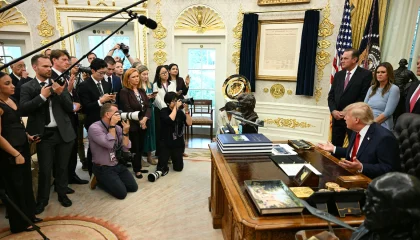
Bessent, during a press briefing in the White House’s Brady Briefing Room on May 28, 2026, highlighted the significance of the proposal. He stated that the Treasury’s dual mandate currently includes the restriction on living figures on currency and the inclusion of the phrase “In God We Trust.” The bill, he explained, would address the first requirement, enabling the depiction of Trump on the $250 bill. “It’s all up to Capitol Hill,” Bessent noted, “but we are prepared to act if the law is signed.”
When questioned about the timing of Trump’s portrait appearing on currency amid the ongoing financial struggles of many Americans, Bessent dismissed concerns as unwarranted. “There’s nothing untoward about having the president of the United States on the 250th anniversary bill,” he asserted. “The person who holds the office of the presidency is a symbol of national leadership, and this commemorative currency would honor that role.”
Support from Treasury Leadership
According to sources, U.S. Treasurer Brandon Beach and Secretary Scott Bessent have actively advocated for Trump’s signature to be included on the $250 bill. A Treasury spokesperson confirmed this, stating, “Based on the recommendation of U.S. Treasurer Brandon Beach, Secretary Bessent will recognize the historic achievements of our great country and President Trump by adding his signature to the currency.” The department emphasized that the proposal would not involve taxpayer funds, as the Bureau of Engraving and Printing operates through product sales and revenue generated by bill production rather than annual appropriations.
The Treasury’s stance underscores its commitment to adhering to the law while remaining agile in case of legislative changes. Bessent reiterated that the department’s role is to implement policy once it is enacted, not to drive it forward. “We have prepared in advance,” he said, “so that if the legislation is passed, we can swiftly bring it to life without hesitation.”
Commemorative Efforts Extend Beyond Currency
In addition to the proposed $250 bill, the State Department has announced plans to issue special edition passports featuring Trump’s portrait and signature to commemorate the anniversary. This move aligns with broader efforts to honor the former president’s tenure, as highlighted by the Washington Post, which was the first to report the news. The Treasury Department has not disputed the claims about its involvement in the currency initiative, further solidifying its role in the process.
While the legislation has not yet advanced beyond the House committee, the Treasury’s proactive approach reflects its anticipation of potential support from Republican leaders. Although no prominent party leaders have formally endorsed the bill, the administration’s push signals a strategic effort to position itself for future approval. The bill’s fate now rests on the political will of Congress, with the Treasury ready to act once the legal framework is established.
Republicans in Congress have long debated the merits of including living figures on currency, with Wilson’s bill representing a significant step toward that goal. The proposal has sparked discussion about the symbolism of such an honor, particularly in a year marked by economic challenges and shifting political landscapes. Critics argue that featuring a living leader on currency could be seen as a form of political propaganda, while supporters view it as a tribute to Trump’s legacy and leadership.
As the debate continues, the Treasury Department remains focused on its operational responsibilities, ensuring that the Bureau of Engraving and Printing is equipped to handle the production of the new bill. Bessent’s comments during the press briefing suggest that the administration is prepared to defend the measure, emphasizing its historical significance and the meticulous planning involved. “We are not pushing for the bill itself,” he clarified, “but we are ensuring that the process is in place should it be authorized.”
With the bill still in the House, the next steps depend on whether it gains enough support to move forward. The Treasury’s acknowledgment of the proposal indicates a level of coordination between the executive and legislative branches, even as the final outcome remains uncertain. The document’s inclusion of Trump’s signature and portrait would not only be a financial milestone but also a cultural statement, blending economic policy with national identity.
As lawmakers weigh the implications of the proposal, the Treasury Department continues to serve as a key player in the process. Its readiness to implement the bill underscores the potential impact of such a change, should it pass. The $250 bill, once approved, would represent a new chapter in the history of U.S. currency, reflecting the evolving relationship between the federal government and its leaders. Whether this initiative will succeed or face further delays remains to be seen, but the groundwork has been laid for a potential transformation in the way the nation honors its presidents.
Legacy and Impact of the 250th Anniversary Bill
The proposed $250 bill is part of a broader effort to commemorate the 250th anniversary of the nation’s founding. While the exact timing of the bill’s passage is unclear, the Treasury’s preparation highlights its commitment to supporting such initiatives. Bessent’s comments during the briefing suggest that the administration views the bill as a way to celebrate Trump’s contributions to the country, even as it navigates the political complexities of its introduction.
Ultimately, the success of the bill will depend on its ability to gain traction in both the House and Senate. With a bipartisan majority required for passage, the challenge lies in uniting lawmakers around the idea of honoring a living leader on currency. Democrats, who have historically opposed such measures, may continue to resist, arguing that the change could prioritize political symbolism over economic neutrality. However, the Treasury’s stance remains firm, emphasizing its adherence to the law and its preparedness to execute the plan if authorized.
As the debate unfolds, the $250 bill serves as a reminder of the dynamic nature of U.S. policy and the ongoing influence of the executive branch. Whether it becomes a reality or remains a footnote in legislative history, the proposal has already sparked significant discussion about the role of commemorative currency in American society. The Treasury’s proactive steps ensure that the nation is ready to embrace this change, should it be approved by Congress.