The Floor Under Me Was Shaking: American Tourist Describes Escape from Venezuela Quakes
Cyberzenhub.com – On a seemingly ordinary evening in Caracas, an American tourist named Jason Wang found himself in a situation that would forever alter his perspective. Just after 6 p.m. local time on Wednesday, a 7.2 magnitude earthquake shook the coastal region of Venezuela, followed by a more powerful 7.5 magnitude tremor 39 seconds later, according to the U.S. Geological Survey (USGS). Wang, a 39-year-old from Las Vegas, was on El Ávila Mountain, approximately 7 miles outside the capital, when the disaster struck. As he prepared to take a cable car down, the ground beneath him began to tremble, plunging him into a moment of disorientation and fear.
Immediate Chaos and Panic
Wang recounted the chaos in a detailed interview with ABC News on Thursday morning. “I was about to board the cable car. I started recording myself going in, and the whole building just started shaking. The floor under me was shaking, and then all of a sudden everyone started panicking,” he said. His words captured the abruptness of the event, as the tremors caused a sudden shift in the environment. He and other tourists, caught off guard, sprinted toward the exit of the cable car facility, unaware of the magnitude of the disaster unfolding around them.
“We were just rushing for the door to exit the building, and none of us knew what was going on until a few minutes afterwards,” Wang explained. “We realized we got hit with a massive earthquake.”
The earthquake’s effects were immediate and far-reaching. In Caracas, the city of over 2 million people, the tremors sent buildings swaying and terrified residents scrambling to safety. Videos shared on social media showed Wang and others walking down the mountain, navigating a path obstructed by fallen trees. As the sun set, he managed to secure a ride back to his hotel in the capital, where he regained access to a WiFi signal and learned of the devastation.
Devastation and the Human Toll
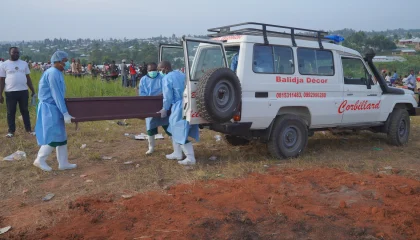
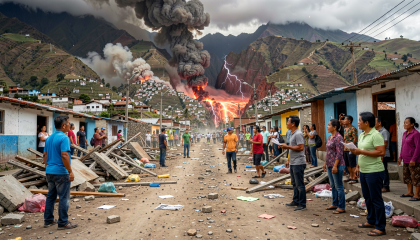
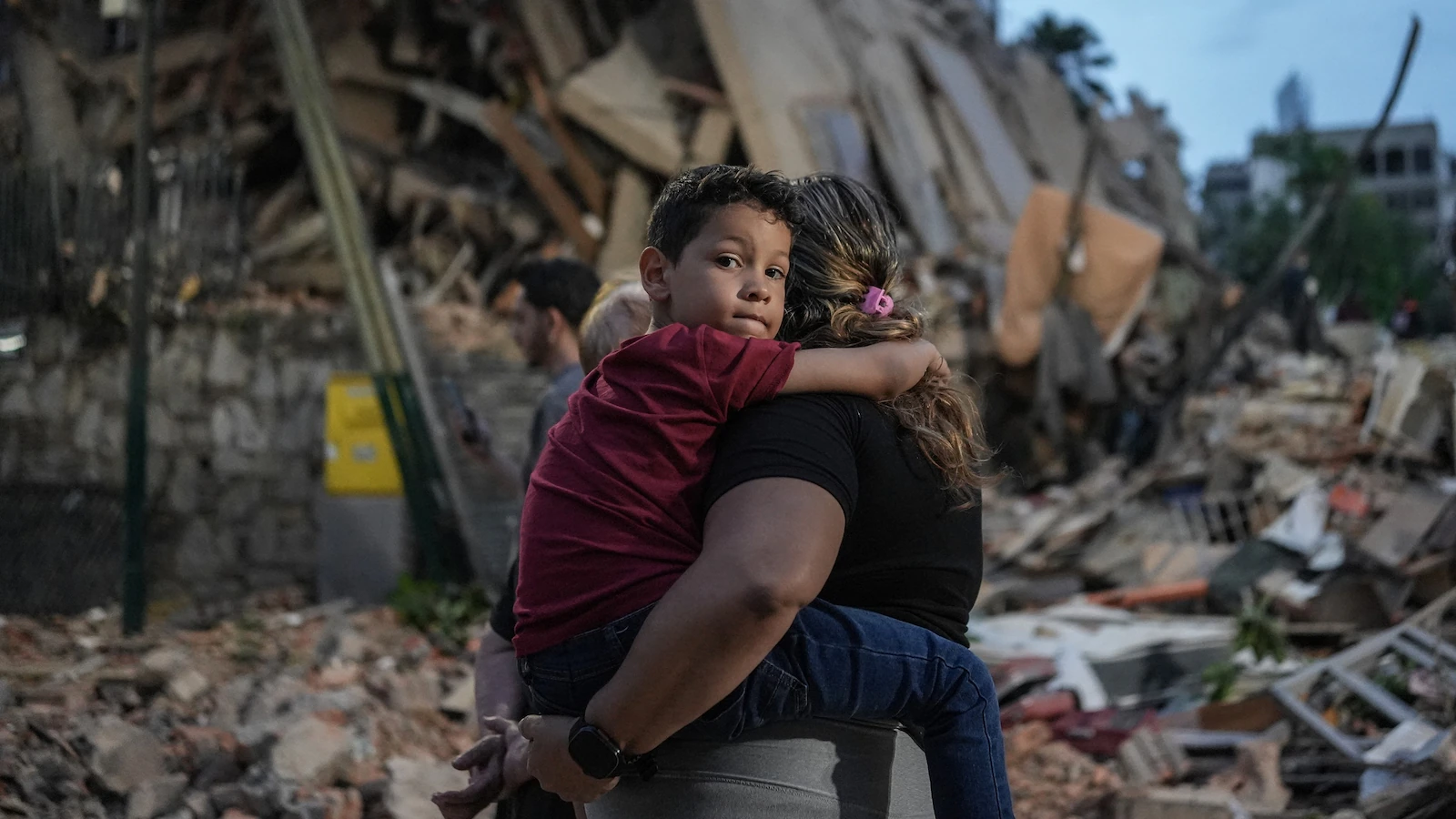
According to officials, the twin quakes left a trail of destruction, with apartment complexes and commercial buildings collapsing into rubble. In Catia La Mar, a district in La Guaira state, 30 kilometers northwest of Caracas, residents searched through the debris of collapsed structures for survivors. “I saw some people like cutting down trees that fell on the road to create a tunnel for us to get past,” Wang said, describing the makeshift efforts to clear the path. The scale of the disaster was immense, with thousands of people stranded in the streets, watching as emergency crews worked tirelessly to locate victims.
The USGS estimated that the two quakes were among the most severe to hit Venezuela in over a century. Wang’s return to the hotel was met with a stark reality: the earthquakes had caused widespread casualties and damage. The National Assembly’s president, Jorge Rodriguez, reported that at least 188 people had died, with nearly 1,520 injured. However, the death toll was anticipated to rise, as the USGS warned of a potential risk exceeding 10,000 fatalities.
Global Response and Continued Threat
President Donald Trump emphasized the gravity of the situation, calling it a “devastating number of deaths,” while Secretary of State Marco Rubio announced that the U.S. was sending rescue teams to assist in the search efforts. The quakes also extended their impact beyond Venezuela, being felt in neighboring Colombia. “The tremor, which was followed by several aftershocks, was also felt in Colombia,” noted AFP journalists, highlighting the regional reach of the disaster.
Wang, who was traveling out of the city to the jungle on Thursday morning, described the lingering danger posed by the aftershocks. “The danger was still present, and we were trying to avoid further risks,” he said. His account underscores the uncertainty that followed the initial tremors, as the region grappled with the aftermath. Despite the chaos, he managed to stay calm and navigate the situation, eventually reuniting with his loved ones via WiFi.
Rebuilding and Resilience
In the days following the quakes, the focus shifted to recovery. Emergency crews worked around the clock to rescue those trapped in the rubble, while locals and tourists alike contributed to the effort. Videos from the scene depicted the scale of destruction, with buildings reduced to heaps of concrete and thousands of people displaced. The USGS’ assessment of the quakes as the most severe in Venezuela’s history reinforced the urgency of the situation.
Wang’s experience, though personal, mirrored the broader narrative of the disaster. His initial disbelief and subsequent relief upon learning the full extent of the quakes illustrate the emotional journey of those affected. “Once I got back on WiFi, I was able to contact my family and friends and tell them I was OK,” he said, his voice steady despite the turmoil. His words serve as a reminder of the resilience required in the face of such catastrophe.
Context and Future Concerns
Experts have long warned of Venezuela’s vulnerability to seismic activity due to its geological position. The country sits near the boundary of the Caribbean and South American tectonic plates, making it prone to earthquakes. The 7.2 and 7.5 quakes,