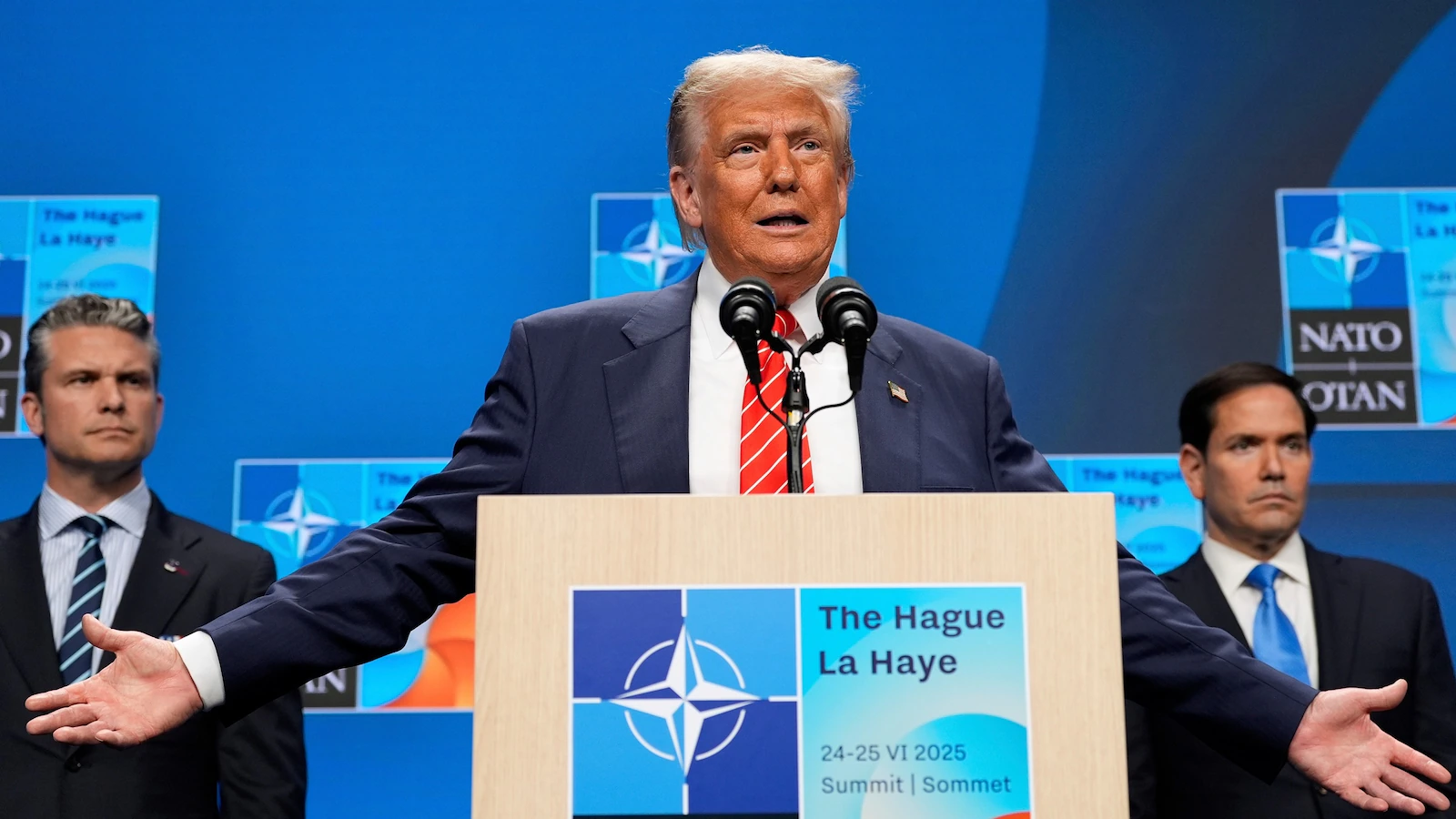
Trump Meets NATO Allies Amid Tensions and Strategic Shifts
Summit in Ankara Marks a Year of Turbulence for the Alliance
Cyberzenhub.com – On Tuesday, NATO leaders from Europe and North America convened in Ankara, Turkey, for a pivotal gathering aimed at assessing the alliance’s cohesion after a year of significant internal and external challenges. The meeting follows a period of heightened scrutiny for U.S. President Donald Trump, who has repeatedly questioned the financial commitments of NATO members and pushed for a more assertive American role in global defense. With the backdrop of shifting priorities and geopolitical strains, the summit seeks to reconcile the alliance’s evolving strategies while addressing longstanding disputes over defense spending and troop deployments.
NATO Secretary General Mark Rutte, a Dutch statesman, has worked to ease frictions, emphasizing that European allies have responded to U.S. appeals for greater financial responsibility. During a recent visit to Washington, Rutte highlighted a notable 20% increase in defense budgets across Europe and Canada over the past year, a development he framed as progress toward shared goals. Despite these efforts, Trump’s recent remarks have underscored a persistent divide, as he continues to assert that the United States shoulders the bulk of NATO’s financial burden without receiving proportional benefits.
“The U.S. spends more money on NATO than any other country, by far, to protect them, without getting any benefit,” Trump stated last week, a claim that has drawn criticism from European officials. While the secretary-general acknowledges the president’s vision for a “defense industrial revolution,” he remains cautious about the long-term implications of Trump’s demands.
The summit coincides with a broader review of U.S. military presence in Europe, initiated by Defense Secretary Pete Hegseth during a June meeting in Brussels. Hegseth criticized allies for what he termed “shameful” contributions, prompting a six-month evaluation of the American troop footprint. This assessment aligns with the Pentagon’s ongoing efforts to streamline its global commitments, including a proposed reduction in the NATO Force Model, which outlines how member nations allocate resources in times of crisis.
Analysts note that the adjustment in U.S. force posture could create temporary gaps in NATO’s readiness. For instance, a planned rotation of 5,000 soldiers to Poland was canceled, leaving the deployment of those troops uncertain. While Trump praised the Poles as steadfast allies, the decision to reverse the move publicly has raised questions about its impact on regional security. The U.S. military has stated its intent to “rightsize” its European commitments, arguing that global demands require a more flexible approach.
Meanwhile, the war in Ukraine has intensified, prompting allies to seek reassurance during the summit. The gathering in Ankara provides an opportunity to reaffirm support for Kyiv, with Trump set to meet Ukrainian President Volodmyr Zelenskyy the following day. This focus on Ukraine comes amid broader discussions about the alliance’s role in countering Russian aggression, a topic that has dominated NATO’s agenda since the conflict began. European officials hope the summit will clarify how collective defense goals will be met, particularly as the U.S. continues to highlight its financial contributions.
U.S. Ambassador to NATO Matthew Whittaker, speaking to CNBC on Monday, outlined the rationale behind the strategic realignment. He argued that the goal is to reduce American involvement in Europe by shifting conventional defense responsibilities to local nations. “If Europe takes on the defense of its own territory, you would expect the U.S. to do less,” Whittaker explained, adding that the military remains committed to NATO’s mission but with a more “globalized” focus.
Cameron McMillan, a senior research analyst at the Foundation for Defense of Democracies and a former U.S. Army officer, challenged this logic. He pointed out that brigade combat teams withdrawn from Romania and Germany are specifically designed to counter Russian advances in Eastern Europe. “These units are critical for deterring aggression in the Baltics or Poland and for rapid response in the event of a crisis,” McMillan said. “Unless we’re planning for Abrams tanks to operate in the Pacific, the argument that the U.S. should scale back is weak.”
The summit also reflects broader tensions between the U.S. and European allies, particularly regarding their involvement in the Iran war. A White House official revealed that some members may face consequences for not contributing sufficiently to the campaign. This development adds another layer of complexity to the meeting, as NATO leaders grapple with balancing strategic priorities across multiple fronts.
Despite Rutte’s emphasis on progress, analysts suggest the Ankara summit lacks a clear victory for Trump, unlike the 2024 gathering in The Hague. At that time, allies agreed to a 10-year target of increasing defense spending to 5% of GDP, a commitment that has not yet been fully realized. The current meeting will focus on implementation, but the absence of binding agreements has left room for debate. As Trump’s rhetoric continues to shape NATO’s direction, the alliance faces the challenge of maintaining unity while adapting to a rapidly changing security landscape.
The discussions in Ankara will also address the alliance’s response to emerging threats, from cyber warfare to hybrid conflicts in the Black Sea. With the U.S. military recalibrating its presence and Europe pushing for a more autonomous defense framework, the summit serves as a test of NATO’s resilience. Rutte’s call for a “defense industrial revolution” signals a desire to modernize the alliance’s capabilities, but the question remains: will these reforms bridge the gap between American ambitions and European realities?
As the meeting unfolds, the outcome will likely hinge on how effectively leaders can navigate Trump’s assertive style while reinforcing NATO’s collective purpose. The balance between financial responsibility and military readiness, the role of European nations in crisis management, and the alliance’s ability to adapt to global demands will be central to the negotiations. Whether Ankara proves to be a turning point or another round of posturing, the summit underscores the ongoing evolution of NATO in an era of unprecedented challenges.