Deadlocked Jury Ends Lindsay Clancy’s Triple-Murder Trial Without Verdict
Cyberzenhub.com – Seven days and roughly 40 hours of closed-door deliberation could not produce a single unanimous answer to the question at the heart of one of Massachusetts’ most closely watched criminal cases. On Friday, September 4, 2026, Judge William Sullivan of Plymouth Superior Court formally declared a mistrial in the trial of Lindsay Clancy, a former nurse accused of strangling her three young children in their Duxbury home. The verdict box, after weeks of testimony, simply could not close.
What the Jury Could Not Decide
The central question put before the twelve jurors was whether Clancy, now 36, was experiencing postpartum psychosis at the moment she killed her children — and whether that condition, if proven, would shield her from criminal liability. Over five weeks of testimony, witnesses walked the court through the medical, psychological, and forensic dimensions of the case. The jury’s inability to reach consensus suggests the evidence left them genuinely divided on that threshold question.
Before Sullivan called for a final vote, Clancy’s attorney, Kevin Reddington, filed an emergency petition asking a justice of the Massachusetts Supreme Judicial Court to impose a stay that would have kept the jury deliberating. That request was denied, clearing the path for Sullivan to declare the trial deadlocked and send the jurors home.
The Charges and the Family
Clancy faces three counts of first-degree murder connected to the deaths of her daughter Cora, then five; her son Dawson, then three; and her infant son Callan. The killings took place on January 24, 2023, at the family’s residence in Duxbury, a suburb south of Boston. Clancy has maintained a not-guilty plea throughout the proceedings.
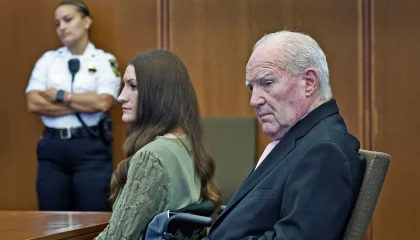
State prosecutors told the court that on the night of the children’s deaths, Clancy also attempted to take her own life. That attempt left her paralyzed and confined to a wheelchair, a fact that prosecutors wove into their narrative of intent and responsibility. The juxtaposition — a mother who killed her children and then tried to kill herself, yet now argues she was not mentally responsible for either act — gave the trial its particular emotional and legal complexity.
Postpartum Psychosis as a Legal Question
Postpartum psychosis is a rare but severe psychiatric condition that can emerge in the weeks following childbirth. It involves hallucinations, delusions, extreme agitation, and sometimes complete disorientation. In criminal law, a defendant who can demonstrate that such a condition rendered her incapable of understanding the nature and quality of her act, or of knowing it was wrong, may be found not guilty by reason of insanity or, under Massachusetts’ narrower formulation, “not guilty by lack of responsibility.”
The trial effectively became a contest over whether Clancy’s state of mind on that January night met the legal threshold for that defense. The jury’s deadlock indicates that reasonable jurors could look at the same medical records, expert testimony, and behavioral evidence and arrive at opposite conclusions about her culpability.
The Road Ahead: Retry, Negotiation, or Dismissal
Immediately after declaring the mistrial, Sullivan scheduled a status hearing for Tuesday, September 29, at which the court will determine what happens next. Plymouth County District Attorney Timothy Cruz declined, on Friday, to announce whether his office would seek a new trial. The decision, he indicated, would come after internal consultation.
Legal analysts see several possible paths. Brian Buckmire, a legal analyst who follows Massachusetts courts, noted that the prosecution could move quickly to retry the case, or it could elect to drop the charges entirely. A third route, less publicly discussed but legally available, is plea negotiation.
Peter Elikann, a Boston-based criminal defense attorney, described how such negotiations typically unfold after a hung jury:
“In many cases, the prosecution, after having a deadlocked jury, will kind of say to the defense, ‘Let’s compromise. We’ll break down the charges to something much lesser, and can we agree on that, that you’ll plead to something, a much more minor charge.'”
Buckmire cautioned, however, that prosecutors in a case involving three children’s deaths might resist reducing any of the three first-degree murder counts, preferring either a full retry or a complete dismissal rather than a negotiated middle ground.
What a Mistrial Means for Clancy
A mistrial does not acquit. It resets the procedural clock. Clancy remains charged, and the state retains the right to bring the case back before a new jury. Under state custody rules, she will return to a hospital facility for continued mental-health treatment while the next phase of proceedings is arranged. Her physical condition — paralysis from the suicide attempt — will factor into any future trial logistics, including whether she can appear in court or will need accommodations.
For the families of Cora, Dawson, and Callan, the mistrial offers neither closure nor exoneration. It leaves the question of what happened in that Duxbury home on January 24, 2023, formally unresolved, pending whatever decision emerges from the September 29 hearing and the choices the Commonwealth makes in the weeks that follow.
Related Reading
Frequently Asked Questions
What is Lindsay Clancy trial declared a mistrial?
Lindsay Clancy trial declared a mistrial is the main topic of this guide. The article explains the context, practical details, and next steps readers should understand.
Why does Lindsay Clancy trial declared a mistrial matter?
Lindsay Clancy trial declared a mistrial matters because readers are looking for a useful answer, not just a short summary. Good content should match search intent and help them decide what to do next.