
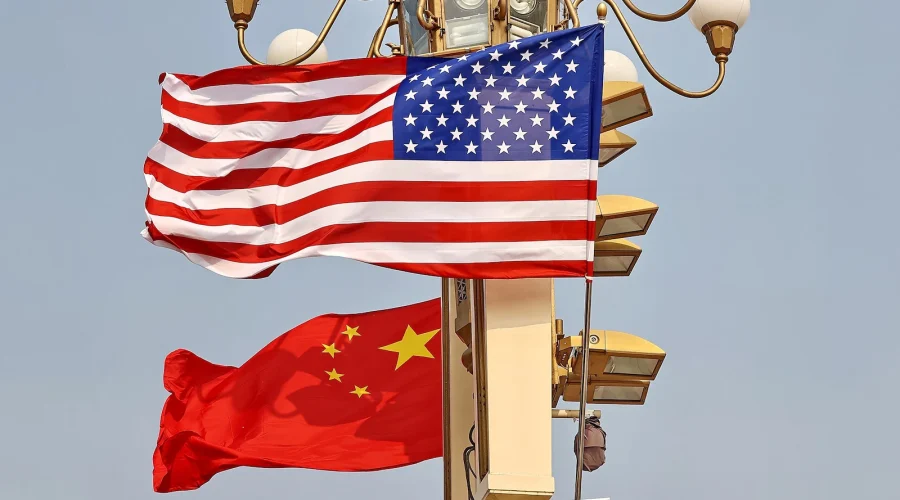
Washington Labels Two Chinese Detainments of Americans as “Wrongful” in Escalating Diplomatic Standoff
Cyberzenhub.com – The United States government has formally determined that China is holding two American citizens under circumstances it considers unjustified, a designation that sharpens an already tense bilateral relationship and underscores a pattern of detentions that Washington views as politically driven rather than purely legal.
The State Department made the announcement on Thursday, confirming that U Min Zin, a scholar specializing in Myanmar’s political landscape, was arrested in Yunnan province on June 6 after arriving in China at the invitation of Beijing’s own government. In a separate case, the department identified Youlin Chen, a seismologist based in Boston, as another American wrongfully held by Chinese authorities since November 2024.
The Min Zin Case
Min Zin’s detention carries particular weight given his background. He was an active participant in Burma’s democracy movement during the late 1980s and left the country in 1989 to escape arrest. Over the decades since, he built a career as a policy analyst and writer, serving as executive director of The Institute for Strategy and Policy (Myanmar) and contributing to multiple publications on the country’s governance and political development.
His trip to Yunnan was arranged through official Chinese channels, meaning he entered the country under what would ordinarily be understood as a state-extended invitation. Yet within days of his arrival, authorities moved to detain him. Chinese officials characterized the action as a lawful application of “criminal compulsory measures,” alleging that Min Zin was suspected of “engaging in espionage activities that endanger China’s national security.”
Washington did not accept that framing. Secretary of State for Global Public Affairs Dylan Johnson stated that the department reached its conclusion after “an extensive review” of the case. The formal designation of “wrongfully detained” signals that the State Department regards the espionage charges as questionable and potentially motivated by political considerations rather than genuine intelligence concerns.
“The safety and security of U.S. citizens is the State Department’s top priority. We will continue to advocate for Mr. Zin and call for the release of all U.S. citizens who are arbitrarily detained or exit-banned in China,” Johnson said in a statement.
The Chen Case
The second designation involves Youlin Chen, a seismologist who had been living in Boston. Chen was visiting family members in China when he was taken into custody in November 2024. Beijing’s stated rationale centered on research work Chen had conducted for the U.S. government, which authorities interpreted as grounds for an espionage accusation.
The State Department has publicly refuted those allegations, treating the detention as part of a broader pattern in which Chinese authorities use national-security statutes to hold Americans for extended periods, sometimes without clear charges, trial dates, or meaningful consular access.
Why the Designation Matters
The “wrongfully detained” label is not merely rhetorical. In U.S. diplomatic practice, it triggers a formal advocacy track: the State Department commits sustained pressure on the detaining government, coordinates with the family, and signals to allied governments that Washington views the case as a rights violation rather than an ordinary criminal matter. It also positions the issue for multilateral forums where the United States can raise the treatment of its nationals.
The timing adds context. Min Zin had been scheduled to deliver a talk at an event in Nepal set for weeks after his June arrest, suggesting his itinerary was already fixed and publicly known before his detention. The disruption of that plan, combined with the fact that his entry into China was government-arranged, has drawn criticism from observers who note the contradiction between extending an invitation and then arresting the invitee on espionage charges within days.
China’s use of national-security and espionage statutes to detain foreign nationals has become a recurring point of friction in U.S.-China relations. American officials have repeatedly raised the issue in bilateral meetings, and the State Department’s public statements now routinely reference “exit bans” — informal restrictions preventing detainees from leaving the country — as a parallel concern.
Broader Implications
For scholars, researchers, and professionals who travel between the United States and China, the two designations serve as a cautionary signal. They suggest that even invitations extended through official channels do not guarantee immunity from sudden detention, and that research affiliations with U.S. government agencies can become the basis for charges that Washington considers unfounded.
The State Department’s statement closed with an explicit call for the release of all Americans who are “arbitrarily detained or exit-banned in China,” framing the two named cases not as isolated incidents but as examples of a systemic practice the United States intends to challenge diplomatically and publicly.
Related Reading
Frequently Asked Questions
What is China wrongfully detaining US citizen State?
China wrongfully detaining US citizen State is the main topic of this guide. The article explains the context, practical details, and next steps readers should understand.
Why does China wrongfully detaining US citizen State matter?
China wrongfully detaining US citizen State matters because readers are looking for a useful answer, not just a short summary. Good content should match search intent and help them decide what to do next.