
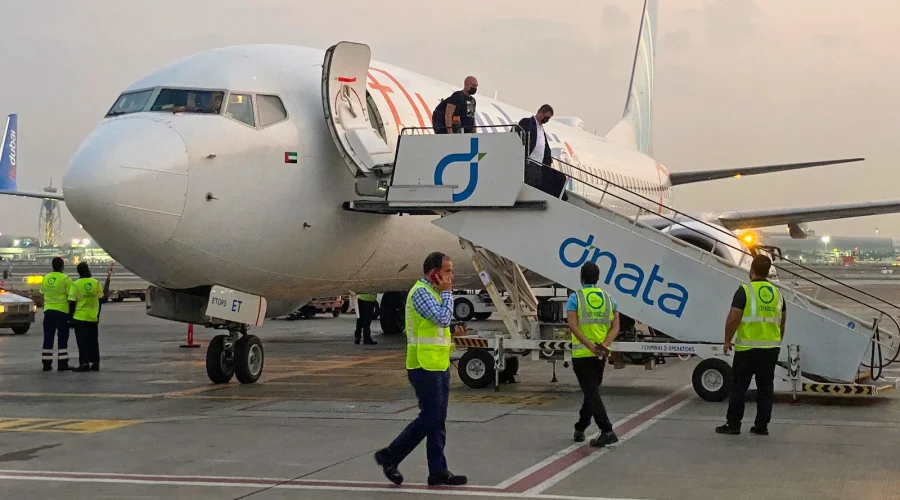
FlyDubai Service to Tel Aviv Lands in Saudi Arabia After Cockpit Incident
Cyberzenhub.com – A FlyDubai flight traveling from Dubai to Tel Aviv was diverted to Saudi Arabia on Wednesday morning following an apparent incident involving the pilots in the cockpit.
The aircraft, which had been operating on the route between the United Arab Emirates and Israel, landed safely in Saudi Arabia after the diversion. An Israeli security source indicated that the event was connected to activity among the flight crew rather than an onboard hijacking.
Initial Alarm Was Not a Hijacking
Early information surrounding the flight included reports that a hijacking signal had been transmitted. However, the Israeli security source said the situation was not a hijacking.
That distinction is significant because an emergency signal can trigger immediate concern among aviation authorities, security services, airports and travelers. Flights can be diverted for many reasons, including medical emergencies, technical concerns, weather, disruptive passenger behavior or operational issues involving crew members. In this case, the available information pointed to an incident inside the cockpit.
Details about what occurred between the pilots, what prompted the diversion, and whether the flight was expected to continue to Tel Aviv were not immediately clear.
Saudi Diversion Adds Regional Dimension
The diversion placed the aircraft in Saudi Arabia, a country located along routes frequently used by flights traveling across the Gulf and toward Israel. A diversion requires pilots and airline operations teams to make rapid decisions based on safety, fuel availability, airport access, air traffic control coordination and the condition of those on board.
When a flight changes course unexpectedly, the destination airport, the alternate airport, aviation regulators and airline staff may all need to coordinate. Passengers can also face lengthy delays while crews assess the aircraft, arrange replacement personnel if needed, or determine the safest next step for the journey.
For a flight bound for Tel Aviv, any security-related alert can draw particular attention because of the sensitive regional environment and the extensive security procedures associated with air travel to and from Israel. Still, the information available Wednesday did not establish that passengers faced a hijacking or another external security threat.
What Is Known So Far
The confirmed sequence of events is limited. The FlyDubai aircraft departed Dubai for Tel Aviv, an apparent cockpit incident occurred during the flight, and the plane was diverted to Saudi Arabia. It subsequently landed there.
Reports of a hijacking signal created initial uncertainty, but the Israeli security source said the matter was not a hijacking. No further explanation was immediately provided regarding the nature of the cockpit issue, the condition of the pilots, or the status of the passengers.
Airlines generally provide limited information during an unfolding operational or security event while they work with relevant authorities and verify facts. Early reports can change as flight data, crew accounts and airport information are reviewed. For travelers with relatives or colleagues on board, the most reliable updates are likely to come directly from the airline, airport authorities or official government channels.
Why Cockpit Events Receive Immediate Attention
The cockpit is central to every decision made during a flight, from navigation and communications to emergency planning. Any issue affecting pilots may lead to precautionary action even if the aircraft itself remains capable of flying safely. Diverting to a suitable airport can give the crew access to emergency services, airline support and a secure environment for evaluating what happened.
Aviation protocols are designed to prioritize safety before schedule. A diversion can inconvenience passengers and disrupt subsequent flights, but it can also reduce risk by allowing a situation to be handled on the ground rather than continuing toward the planned destination.
Emergency communications can be especially difficult for the public to interpret in real time. Signals, transponder codes and radio messages may indicate that a crew needs urgent attention or security support, but they do not always reveal the precise cause. Officials typically need time to separate confirmed facts from preliminary assumptions.
Investigation and Further Updates Expected
The circumstances surrounding the FlyDubai diversion remained under development after the aircraft arrived in Saudi Arabia. Investigators and airline personnel may review communications, flight records and other operational information to determine how the cockpit incident unfolded and why the diversion was necessary.
Until more details are released, it remains unclear whether the event will affect the airline’s Dubai-to-Tel Aviv service or lead to changes for passengers scheduled to travel on later flights. The safe landing in Saudi Arabia is the clearest immediate outcome from the incident.
The episode underscores how quickly an unusual event in the cockpit can reshape an international journey. What began as a routine flight from Dubai to Tel Aviv instead ended with an unscheduled landing in Saudi Arabia, amid early reports that were later narrowed by the Israeli security source’s statement that the incident was not a hijacking.
Related Reading
Frequently Asked Questions
What is Flight to Tel Aviv diverted to Saudi?
Flight to Tel Aviv diverted to Saudi is the main topic of this guide. The article explains the context, practical details, and next steps readers should understand.
Why does Flight to Tel Aviv diverted to Saudi matter?
Flight to Tel Aviv diverted to Saudi matters because readers are looking for a useful answer, not just a short summary. Good content should match search intent and help them decide what to do next.