U.S. and Iran Trade Blows as Fragile Peace Talks Stumble Over Hormuz
Cyberzenhub.com – The Middle East’s most volatile corridor has once again become the stage for a confrontation that draws the world’s attention. What began in late February with a sweeping aerial campaign has evolved into a protracted exchange of fire between Washington and Tehran, even as both capitals sit across a negotiating table attempting to draft a framework for ending the conflict. The situation, as of mid-year, remains one of simultaneous diplomacy and destruction — a pattern that has historically proven difficult to sustain.
The February Campaign
On February 28, President Donald Trump declared the launch of what he termed:
“major combat operations” against Iran
The announcement marked the opening of a coordinated air-and-missile campaign carried out jointly by American and Israeli forces. Targets spanned the full spectrum of Iranian state capability: active military installations, seats of government authority, and nodes of critical infrastructure. The scale of the initial wave was designed to degrade Iran’s capacity to project force across the region while signaling to domestic and allied audiences that the United States would not tolerate continued escalation from Tehran.
For readers unfamiliar with the geography of the conflict, the strikes touched sites across multiple provinces, from coastal batteries overlooking the Persian Gulf to inland command centers and energy-processing facilities. The joint nature of the operation — American long-range platforms working alongside Israeli precision assets — reflected a level of operational integration between the two militaries that had not been publicly displayed at this intensity since earlier decades of shared regional engagement.
A Diplomatic Window Opens in June
By June, the tempo of direct military confrontation had eased enough to permit a formal diplomatic track. Delegations representing both Washington and Tehran convened for talks whose stated objective was to produce a comprehensive agreement ending the war. The negotiations were anchored to a memorandum of understanding — a signed document establishing the broad principles and procedural rules under which both sides would negotiate their final settlement.
The memorandum framework, while not a binding peace treaty, created a structured environment in which technical teams could address questions of force withdrawal, compensation, maritime navigation rights, and the status of contested installations. Its existence signaled that both governments believed a negotiated exit from the conflict remained possible, even after months of sustained hostilities.
Strikes Persist; Hormuz Remains the Pressure Point
Yet the signing of a diplomatic framework did not produce an immediate ceasefire. American and Iranian forces continued to exchange strikes throughout the negotiation period, and the geography of those exchanges concentrated overwhelmingly on one narrow waterway: the Strait of Hormuz.
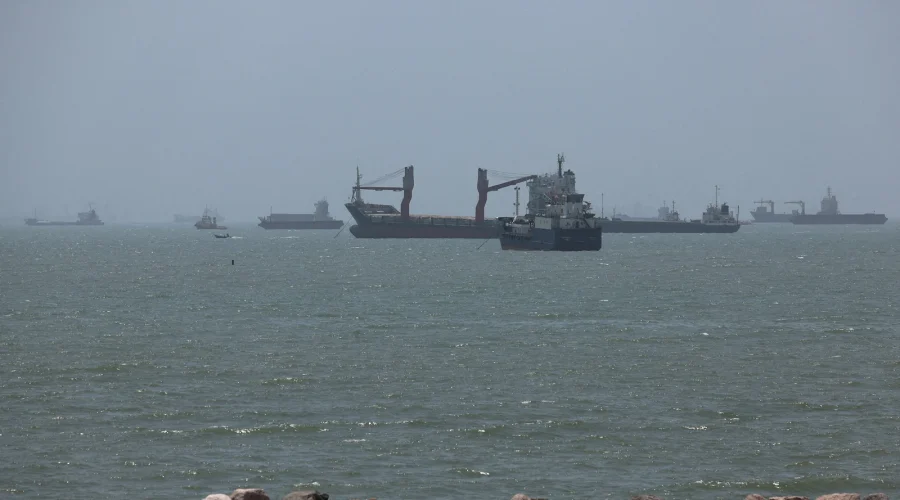
The strait, roughly 335 kilometers long at its widest and narrowing to about 33 kilometers at its tightest point between Oman and Iran, carries approximately one-fifth of the world’s daily oil supply. Tankers, LNG carriers, and naval vessels transiting the corridor face constant risk from shore-based missiles, naval mines, and small-boat swarms. For Tehran, control or disruption of Hormuz represents the single most powerful economic lever available to pressure Western economies and their trading partners. For Washington and its allies, keeping the waterway open is a matter of energy-market stability and alliance credibility.
The persistence of strikes in and around the strait during active negotiations raises a question that diplomats have long recognized: whether a party can credibly negotiate a durable settlement while simultaneously maintaining the capacity to inflict maximum economic damage on the other side’s commercial partners. Each missile launch or naval engagement in the corridor resets the trust deficit that the memorandum was designed to reduce, forcing negotiators to return to earlier positions and extending the timeline for any final accord.
Implications for Global Markets and Regional Alliances
The continued volatility in Hormuz has direct consequences beyond the two belligerents. Shipping insurers have raised premiums on Gulf transits, adding cost to every barrel of crude and every cargo container that moves through the corridor. Energy-importing nations in East Asia and Europe, which depend on steady Gulf supply, face the prospect of price spikes and supply disruptions if the exchange of fire escalates beyond its current tempo.
Regional states that host American military assets — from the Gulf monarchies to Turkey — find themselves in the uncomfortable position of being drawn into a conflict they did not initiate, while simultaneously hosting Iranian diplomatic envoys and maintaining trade relationships with Tehran. The dual-track reality of active strikes alongside active talks complicates their foreign-policy calculus considerably.
For the American public, the situation carries its own weight. A president who has announced “major combat operations” faces domestic expectations of either a swift, decisive conclusion or a clear, time-limited objective. Prolonged exchanges of fire without a visible endpoint to the diplomatic process risk eroding the political capital required to sustain either military or negotiating commitments.
What Comes Next
The memorandum of understanding remains on the table, unsigned in its final form. Negotiating teams continue to meet, and military planners continue to adjust targeting parameters. Whether the next development is a signed peace instrument or another salvo across the strait will depend on whether both sides can accept a settlement that leaves each with enough face domestically while conceding enough ground to make the arrangement durable. Until that threshold is crossed, the Strait of Hormuz will remain the world’s most watched waterway, and the risk of miscalculation will persist with every passing tanker and every radar ping.
Related Reading
Frequently Asked Questions
What is Iran live updates?
Iran live updates is the main topic of this guide. The article explains the context, practical details, and next steps readers should understand.
Why does Iran live updates matter?
Iran live updates matters because readers are looking for a useful answer, not just a short summary. Good content should match search intent and help them decide what to do next.