
JD Vance defends backing ‘great guy’ Orbán’s campaign after landslide defeat
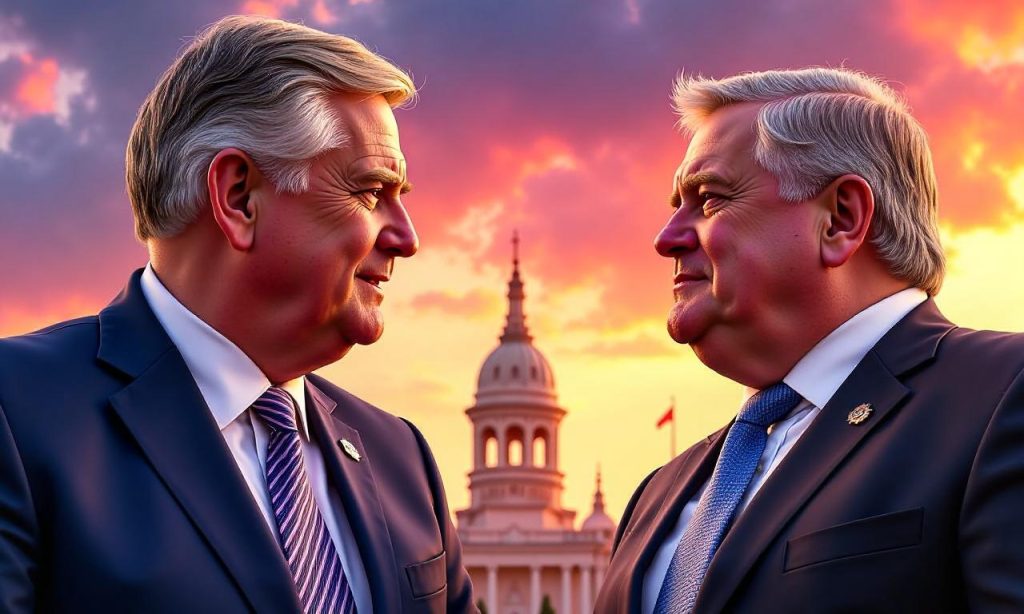
JD Vance Backs Orbán Despite Opposition Victory
Following a decisive electoral outcome, U.S. Vice President JD Vance defended his decision to support Hungarian Prime Minister Viktor Orbán’s campaign just days before the opposition party Tisza secured a sweeping win. Vance described Orbán as a “remarkable leader” who had made significant contributions, highlighting his willingness to challenge European bureaucratic norms. The vice president expressed confidence that the United States would maintain a productive relationship with the incoming government, even as Orbán’s tenure ended.
Magyar’s Response to Foreign Involvement
Péter Magyar, Tisza’s leader, initially criticized Vance’s intervention, arguing that foreign nations should not meddle in Hungarian elections. However, he later acknowledged the U.S. as a “key NATO ally” and stated he would engage with officials if contacted. Magyar emphasized that Orbán would remain in a caretaker capacity until his swearing-in, with parliament’s three main party leaders set to meet President Tamás Sulyok on Wednesday.
“No foreign country may interfere in Hungarian elections,” Magyar had warned earlier. Yet he added, “the U.S. is a strong and important partner, and I’d speak to them if they reached out.”
Presidential Role and Political Shifts
President Tamás Sulyok, tasked with forming Hungary’s new parliament and recommending a successor prime minister by 12 May, has resisted calls to resign. Magyar, however, called Sulyok a “puppet” of Orbán’s administration, urging swift action. He hinted that his party might assume power as early as 5 May, depending on the pace of the transition.
Magyar’s Commitment to Media and Governance
Magyar has pledged to ensure impartiality in public media, promising to suspend coverage until unbiased reporting is guaranteed. He proposed establishing a board to oversee state broadcaster independence, drawing parallels to institutions like the BBC. With a projected supermajority of 137 parliamentary seats, Magyar aims to address systemic corruption and unlock frozen EU funds, a move he claims will benefit Hungary’s economic recovery.
EU Concerns and Ukraine Aid
The European Commission’s Ursula von der Leyen highlighted the urgency of restoring rule of law in Hungary, noting Magyar’s potential to realign with shared European values. Meanwhile, EU leaders pressed Hungary to lift a veto on €90bn in Ukraine aid, which Orbán had imposed weeks before the election. Magyar dismissed the veto as irrelevant, explaining that Hungary had opted out of the loan alongside two other nations in December.
German Chancellor Friedrich Merz reiterated the need for rapid aid release, emphasizing the importance of Hungary’s new administration. Merz had previously met with Magyar in Munich, and the incoming leader plans to visit Berlin soon, marking a strategic shift in bilateral relations.
Challenges Ahead
Magyar’s government faces the daunting task of reversing Orbán-era policies, including reforms to the constitution and judicial independence. He pledged to create an Anti-Corruption Office and a National Asset Recovery and Protection Office, while also seeking to join the EU’s European Public Prosecutor’s Office. The party’s success in unseating Fidesz has raised hopes for progress, though the exact timeline for policy implementation remains uncertain.